Fuel Cells (Leaving Cert Chemistry): Revision Notes
📚Revision Notes
Fuel Cells
What are fuel cells?
A fuel cell is an electrochemical device that converts chemical energy stored in a fuel directly into electrical energy. Unlike traditional batteries, fuel cells require a continuous supply of fuel and an oxidising agent to operate. The most common type uses hydrogen as fuel and oxygen from the air as the oxidising agent.
Note
The key difference between fuel cells and chemical batteries is that fuel cells don't store energy internally - they generate electricity as long as fuel and oxygen are supplied. This makes them ideal for applications requiring continuous power over extended periods.
How fuel cells work
Fuel cells operate through a series of oxidation-reduction reactions occurring at two electrodes separated by an electrolyte. Let's examine the hydrogen-oxygen fuel cell process step by step:
Example
Worked Example: Hydrogen-Oxygen Fuel Cell Operation
The fuel cell process involves three key steps working together to generate electricity:
Step 1: Hydrogen oxidation at the negative electrode (anode)
At the negative electrode, hydrogen gas undergoes oxidation. The anode is made of porous carbon containing a platinum catalyst, which helps the reaction proceed efficiently.
Reaction at negative electrode:
The porous carbon structure allows hydrogen gas to flow through easily, whilst the platinum catalyst speeds up the oxidation reaction. This produces hydrogen ions (H⁺) and electrons.
Step 2: Ion movement through the electrolyte
The hydrogen ions (H⁺) produced at the anode travel through the electrolyte to reach the positive electrode. The electrolyte used is a proton exchange membrane - a special plastic sheet that allows only H⁺ ions to pass through.
Step 3: Oxygen reduction at the positive electrode (cathode)
At the positive electrode, oxygen gas combines with the hydrogen ions and electrons to form water. The cathode also contains a platinum catalyst to improve reaction efficiency.
Reaction at positive electrode:
Overall reaction:
Important
The proton exchange membrane serves three crucial functions:
- Allows H⁺ ions to move from negative to positive electrode
- Prevents electrons from passing through, forcing them to flow through the external circuit
- Keeps hydrogen and oxygen gases separated
The electrons cannot pass through the membrane, so they flow through an external circuit to the cathode, generating electrical current that can power devices. The only product of this reaction is water, making hydrogen fuel cells extremely environmentally friendly with zero carbon emissions.
Fuel cells in transport
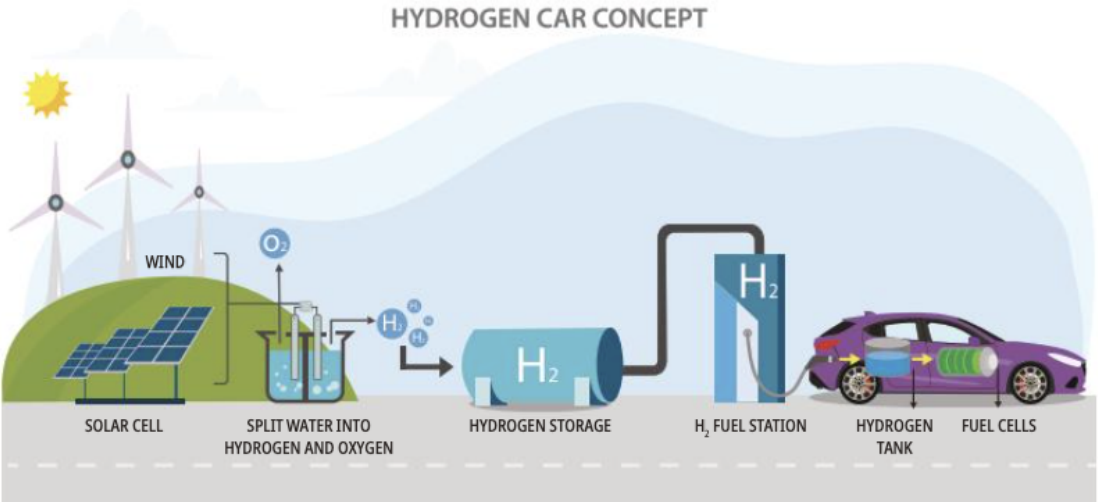
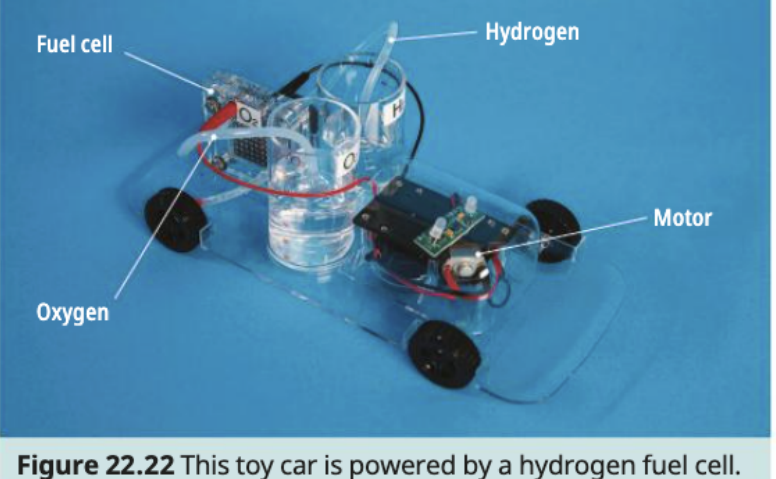
Fuel cells are increasingly being used to power vehicles, offering a clean alternative to petrol and diesel engines. A hydrogen-powered car contains a high-pressure hydrogen tank where hydrogen gas is stored.
Note
How hydrogen-powered vehicles operate:
During operation, the fuel cell system works as follows:
- Hydrogen gas flows to the fuel cell stack
- Oxygen is drawn from the air through vents
- The fuel cell generates electricity to power the electric motor
- Only water vapour is produced as exhaust
Advantages of fuel cell vehicles:
- Zero emissions at point of use (only water produced)
- Quick refuelling (similar to petrol cars)
- Long driving range
- Quiet operation
Current challenges:
- Limited hydrogen refuelling infrastructure
- High storage pressure requirements
- Cost of fuel cell technology
- Hydrogen production methods
Green hydrogen and environmental impact
The environmental benefits of fuel cells depend greatly on how the hydrogen fuel is produced. Green hydrogen refers to hydrogen produced by splitting water using electricity from renewable sources like wind and solar power. This process creates a completely clean energy cycle with no carbon emissions.
Important
The Complete Green Hydrogen Cycle:
The hydrogen production process involves:
- Renewable electricity generation (wind/solar)
- Electrolysis to split water:
- Hydrogen storage and distribution
- Fuel cell operation producing only water
When green hydrogen is used, this creates a completely sustainable energy system.
When green hydrogen is used, fuel cells offer significant environmental advantages over fossil fuels and even conventional batteries, which require mining of rare metals and create disposal problems.
Comparing fuel cells with chemical cells
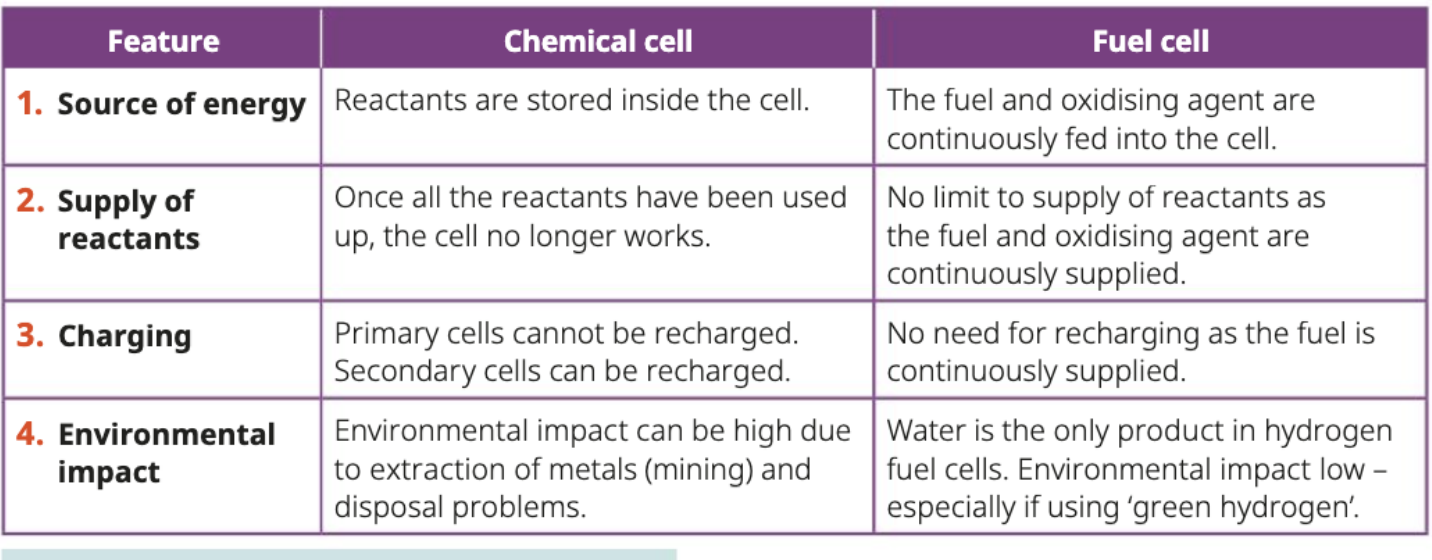
Fuel cells differ from traditional chemical cells (batteries) in several important ways:
Note
Key Differences Between Fuel Cells and Chemical Cells:
Energy source: Chemical cells store reactants internally, whilst fuel cells receive fuel and oxidising agents continuously from external sources.
Supply of reactants: Chemical cells stop working when internal reactants are depleted, but fuel cells operate indefinitely as long as fuel and oxygen are supplied.
Charging: Primary chemical cells cannot be recharged, and secondary cells need regular recharging. Fuel cells require no charging - they generate electricity continuously.
Environmental impact: Chemical cells can have high environmental impact due to mining of materials and disposal issues. Fuel cells, especially those using green hydrogen, have very low environmental impact.
Summary
Key Points to Remember:
- Fuel cells convert chemical energy directly to electrical energy through continuous oxidation-reduction reactions
- The hydrogen-oxygen fuel cell produces only water as a waste product, making it environmentally clean
- The proton exchange membrane allows H⁺ ions to pass through but blocks electrons, forcing current through external circuits
- Green hydrogen (produced using renewable electricity) makes fuel cells completely carbon-neutral
- Fuel cells offer advantages over batteries including continuous operation, quick refuelling, and long range for transport applications