Introduction to Oxidation and Reduction (Leaving Cert Chemistry): Revision Notes
📚Revision Notes
Introduction to Oxidation and Reduction
Understanding oxidation and reduction reactions is fundamental to chemistry, and you'll find these processes happening all around you every day! From the food you eat to the metal objects around you, these chemical reactions are constantly occurring.
What is oxidation?
Oxidation occurs when a substance combines with oxygen or loses electrons. The simplest way to remember this is that oxidation involves the addition of oxygen to a substance.
Here are some key characteristics of oxidation:
- The substance gains oxygen atoms
- Energy is often released in the process
- The substance may change colour or appearance
- It can happen slowly (like rusting) or quickly (like burning)
Common examples of oxidation
Burning (combustion) is one of the most familiar oxidation reactions. When you burn methane gas, for example:
The methane combines with oxygen to produce carbon dioxide and water, releasing energy in the process.
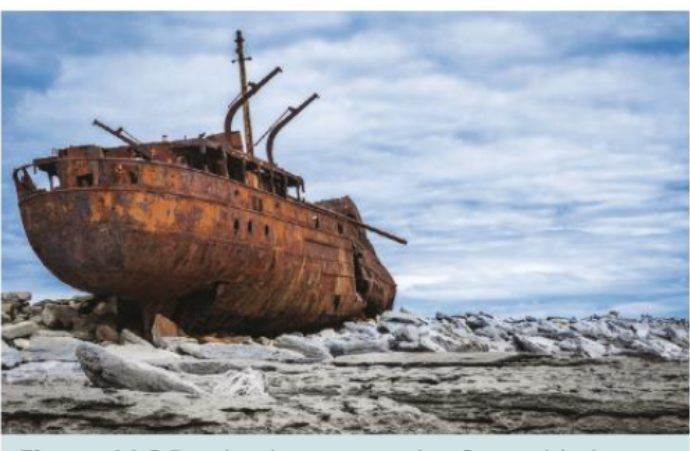
Rusting is another everyday example of oxidation. When iron reacts with oxygen in the air, it forms iron oxide (rust):
Respiration in your body is also an oxidation reaction! Your cells use glucose and oxygen to produce energy:
Note
Notice how all these oxidation reactions involve the addition of oxygen to the original substance. Whether it's methane becoming carbon dioxide, iron becoming iron oxide, or glucose being broken down in your cells, the pattern is always the same - oxygen is being added!
Real-world oxidation: the Statue of Liberty
The Statue of Liberty provides a perfect example of oxidation happening slowly over time. When it was first built in 1886, the statue had a shiny brown copper colour. However, over many years, the copper reacted with oxygen and other substances in the air to form a green coating called verdigris.
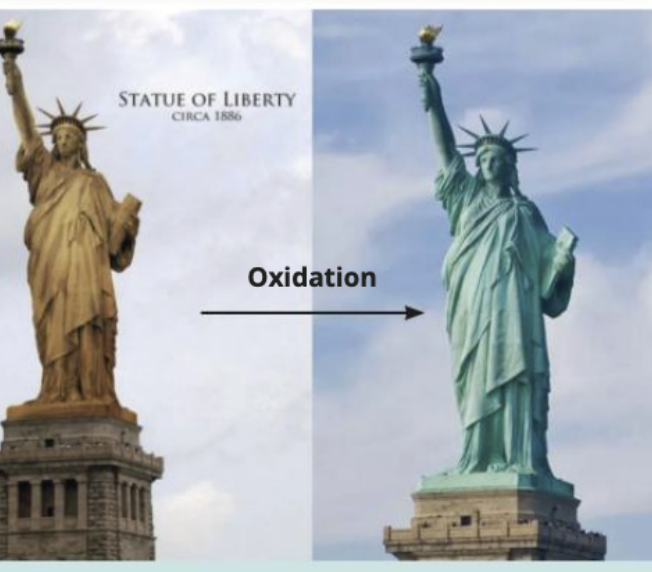
This green patina actually protects the underlying copper from further corrosion - it's like nature's own protective coating!
What is reduction?
Reduction is essentially the opposite of oxidation. It occurs when a substance loses oxygen or gains hydrogen. You can think of reduction as "taking oxygen away" from a compound.
Key features of reduction:
- Oxygen is removed from a substance
- Sometimes hydrogen is added instead
- Often requires heating or special conditions
- Commonly used to extract metals from their ores
Reduction in action
A classic example of reduction is when copper oxide is heated with hydrogen gas:
The copper oxide loses its oxygen (reduction) to form pure copper metal. This type of reaction was historically important for extracting metals from their ores.
Example
Worked Example: Identifying Oxidation and Reduction
In the reaction:
Step 1: Look at what happens to oxygen
- Copper oxide (CuO) loses oxygen → This is reduction
- Hydrogen (H₂) gains oxygen to form water → This is oxidation
Step 2: Identify the processes
- Copper oxide is reduced (oxygen removed)
- Hydrogen is oxidised (oxygen added)
The connection between oxidation and reduction
Important
Here's something important to remember: oxidation and reduction always happen together! When one substance is oxidised (gains oxygen), another substance must be reduced (loses oxygen or provides the oxygen). These paired reactions are called redox reactions.
This is why we can never have oxidation without reduction - if one substance is gaining oxygen, that oxygen must be coming from somewhere else!
Corrosion: oxidation in everyday life
Corrosion is a general term for the gradual breakdown of metals through chemical reactions with their environment. Rusting of iron and steel is the most common type of corrosion you'll encounter.
Note
Why does corrosion matter?
Understanding corrosion is crucial because:
- It weakens metal structures like bridges and buildings
- It costs billions of pounds annually in repairs and replacements
- Understanding it helps us develop better protective coatings
- It shows oxidation happening slowly in real-time
Key definitions to remember
Summary
Essential Terms:
- Oxidation: The addition of oxygen to a substance
- Reduction: The removal of oxygen from a substance (or addition of hydrogen)
- Corrosion: The gradual breakdown of metals through chemical reactions
- Verdigris: The green coating that forms on copper when it oxidises
- Redox reaction: A reaction where both oxidation and reduction occur together
Exam tips
Important
Exam Strategy for Oxidation and Reduction:
When identifying oxidation and reduction reactions in your exams:
- Look for oxygen being added (oxidation) or removed (reduction)
- Check if substances are gaining or losing hydrogen
- Remember that both processes usually happen in the same reaction
- Practice writing word equations and chemical equations for common examples
Remember!
Summary
Key Points to Remember:
- Oxidation involves adding oxygen to a substance - think of burning, rusting, or respiration
- Reduction involves removing oxygen from a substance - commonly used to extract pure metals
- These processes always occur together in redox reactions
- Real-world examples include the Statue of Liberty turning green, iron rusting, and fuel combustion
- Both slow and fast reactions can involve oxidation and reduction - from years of weathering to instant combustion