Alexander vs Caesar – Empire-Building (Leaving Cert Classical Studies): Revision Notes
📚Revision Notes
Alexander vs Caesar – Empire-Building
Approaches to conquest
Understanding how Alexander the Great and Julius Caesar approached their military campaigns reveals fundamental differences in their empire-building philosophies. These contrasting approaches shaped not only their immediate success but also the lasting impact of their empires.
Alexander's military strategy
Alexander demonstrated remarkable military genius in major pitched battles, particularly at Granicus, Issus, and Gaugamela. However, his approach went beyond mere tactical brilliance. When circumstances demanded harsh action, such as the destruction of Thebes or the massacre at Tyre, Alexander proved he could be ruthless. What set him apart was his perspective on his enemies – rather than dismissing Persians simply as "barbarians," he viewed them as worthy rivals deserving of respect.
Note
Alexander's revolutionary attitude towards his enemies marked a significant departure from traditional Greek thinking. While most Greeks viewed Persians as inferior barbarians, Alexander recognised their military prowess and cultural achievements, setting the foundation for his later integration policies.
Alexander's vision extended beyond conquest to unification. He saw his campaigns as a means to bridge the gap between East and West, creating a unified world under his rule. This ambitious goal influenced every aspect of his empire-building strategy.
Caesar's pragmatic warfare
Caesar operated as a military pragmatist and flexible commander, adapting his strategies as demonstrated in campaigns at Alesia and Pharsalus. His approach to conquest in Gaul was notably brutal, including the massacre at Avaricum and widespread enslavements. Unlike Alexander, Caesar explicitly portrayed the Gauls as "barbarians" in his Commentaries, using this characterisation to justify his harsh treatment of conquered peoples.
Caesar's primary motivation differed significantly from Alexander's – conquest served as a pathway to personal glory and political dominance within Roman society rather than any grand vision of cultural unity.
Governance and cultural policy
The two leaders' contrasting approaches to ruling their conquered territories reveal their different philosophies about empire. Where Alexander sought integration, Caesar pursued assimilation under Roman superiority.
Alexander's cultural integration
Alexander adopted a revolutionary approach by embracing Persian customs, including wearing Persian dress and practising proskynesis (the Persian custom of prostrating before the king). He married into Persian nobility and actively encouraged intermarriage, particularly through the mass weddings at Susa. This wasn't merely political calculation – Alexander genuinely integrated Persians into his administration and army.
Example
Example: The Susa Weddings (324 BCE)
Alexander orchestrated mass weddings where he and 80 of his officers married Persian noblewomen. Alexander himself married Stateira, daughter of Darius III. This ceremony symbolised his vision of cultural fusion – not just political alliance, but genuine integration of Greek and Persian elites into a unified ruling class.

His ultimate goal was cultural fusion rather than simple domination. As Plutarch observed, Alexander "desired to fuse into one body all men, by mixing their lives, customs, and marriages." This represents a fundamentally different approach to empire-building than traditional Greek or Roman methods.
Caesar's romanisation programme
Caesar implemented a systematic Romanisation policy throughout his conquered territories. This involved imposing Latin as the official language, establishing Roman colonies, and offering Roman citizenship to selected elites. Unlike Alexander, Caesar deliberately avoided adopting Gallic customs, maintaining clear Roman cultural superiority.
Caesar's integration policy was selective and strategic, aimed primarily at securing the loyalty of Gallic aristocracy rather than creating genuine cultural unity. As Plutarch noted, Caesar's "ambition was boundless and desired no less a prize than absolute power."
Barbarian vs civilised
Important
The concept of "barbarian vs civilised" represents one of the most crucial distinctions for understanding how these leaders viewed their role in the world. This divide fundamentally shaped their treatment of conquered peoples and their vision of empire.
Alexander's revolutionary perspective
Traditional Greek thinking classified Persians as "barbarians" – meaning foreigners who were considered uncivilised. Alexander fundamentally challenged this divide by adopting Persian customs and treating Persian culture as worthy of respect. This created tension with some of his own men, who viewed his behaviour as betraying Greek identity.
Note
The resistance Alexander faced from his own troops over his Persian policies highlights how radical his approach was. The conspiracy of Philotas and the protests over proskynesis demonstrate that even his closest allies struggled with his vision of cultural equality.
Plutarch's observation that Alexander "considered himself a god, and was believed to be one" suggests his vision of universal kingship transcended traditional cultural boundaries.
Caesar's reinforcement of roman superiority
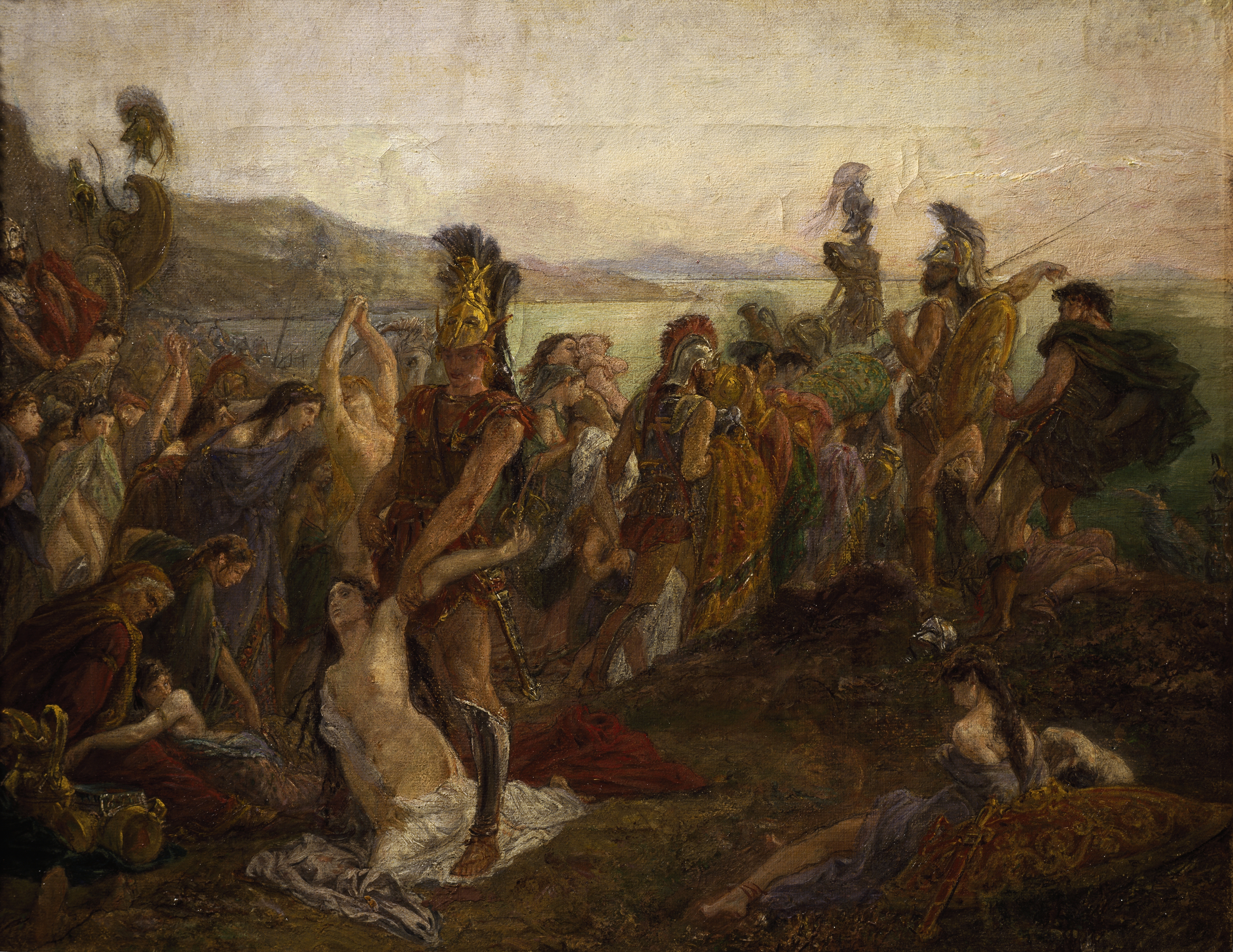
Caesar explicitly framed Gauls as barbari in Roman discourse, emphasising their supposed uncivilised and dangerous nature. His Commentaries systematically reinforced the Roman self-image as civilised bringers of order, contrasting sharply with what he portrayed as savage Gauls.
Rome's superiority was reinforced through military discipline, legal systems, and systematic cultural assimilation. Caesar's famous opening line – "All Gaul is divided into three parts" – reflects the scientific, ordered Roman perspective on what they considered "barbarian" territory.
Legacy of empire-building
The long-term impact of these two leaders' approaches to empire-building shaped the ancient world in fundamentally different ways, creating lasting cultural and political transformations.
Alexander's transcontinental vision
Alexander created the first genuine transcontinental empire, stretching from Greece to India. His most enduring legacy was the Hellenistic world – a remarkable fusion of Greek and Eastern cultures that influenced art, language, philosophy, and political structures for centuries.
Alexander's cultural ambition was extraordinary – he genuinely sought to become king of "all mankind." As Plutarch noted, "His empire was boundless, yet his ambition greater still."
Caesar's political transformation
Caesar's conquest of Gaul permanently expanded Roman territory and demonstrated the military potential for individual commanders to dominate the state. His legacy fundamentally changed Roman politics – as Appian observed, "Rome was no longer governed by the Senate and people, but by one man alone."
Caesar's empire-building marked the end of the Roman Republic and paved the way for the rise of the Empire under Augustus. His political ambition focused on Rome being dominated by a single individual.
Important
Essential Exam Strategy
- Always contrast fusion vs assimilation: Alexander blurred the "civilised/barbarian" divide through cultural fusion, while Caesar reinforced it by portraying Gauls as inferior and requiring Roman civilisation
- Use specific case studies: Reference Thebes/Tyre for Alexander's ruthlessness and Avaricum/Alesia for Caesar's brutal pragmatism
- Demonstrate understanding of text bias: Arrian idealises Alexander's ambitions, while Caesar's own Commentaries justify his brutality with the "barbarian" label
- Include key quotes to anchor your arguments:
- Alexander's vision: "fuse into one body all men" (Plutarch)
- Caesar's approach: "All Gaul is divided into three parts"
- Political legacy: "One man alone" (Appian)
Summary
Key Points to Remember:
- Alexander sought cultural fusion – he adopted Persian customs and married Persian nobility to create a unified East-West empire
- Caesar enforced Roman superiority – he systematically imposed Roman culture while portraying conquered peoples as barbarians requiring civilisation
- Different motivations drove their conquests – Alexander aimed for universal kingship, Caesar pursued personal political dominance in Rome
- Their legacies transformed different worlds – Alexander created the Hellenistic cultural fusion, Caesar ended the Roman Republic
- The barbarian vs civilised concept is crucial – Alexander challenged this divide, Caesar reinforced it for political justification