The Temple of Vesta (Leaving Cert Classical Studies): Revision Notes
📚Revision Notes
The Temple of Vesta
Architectural features and unique design
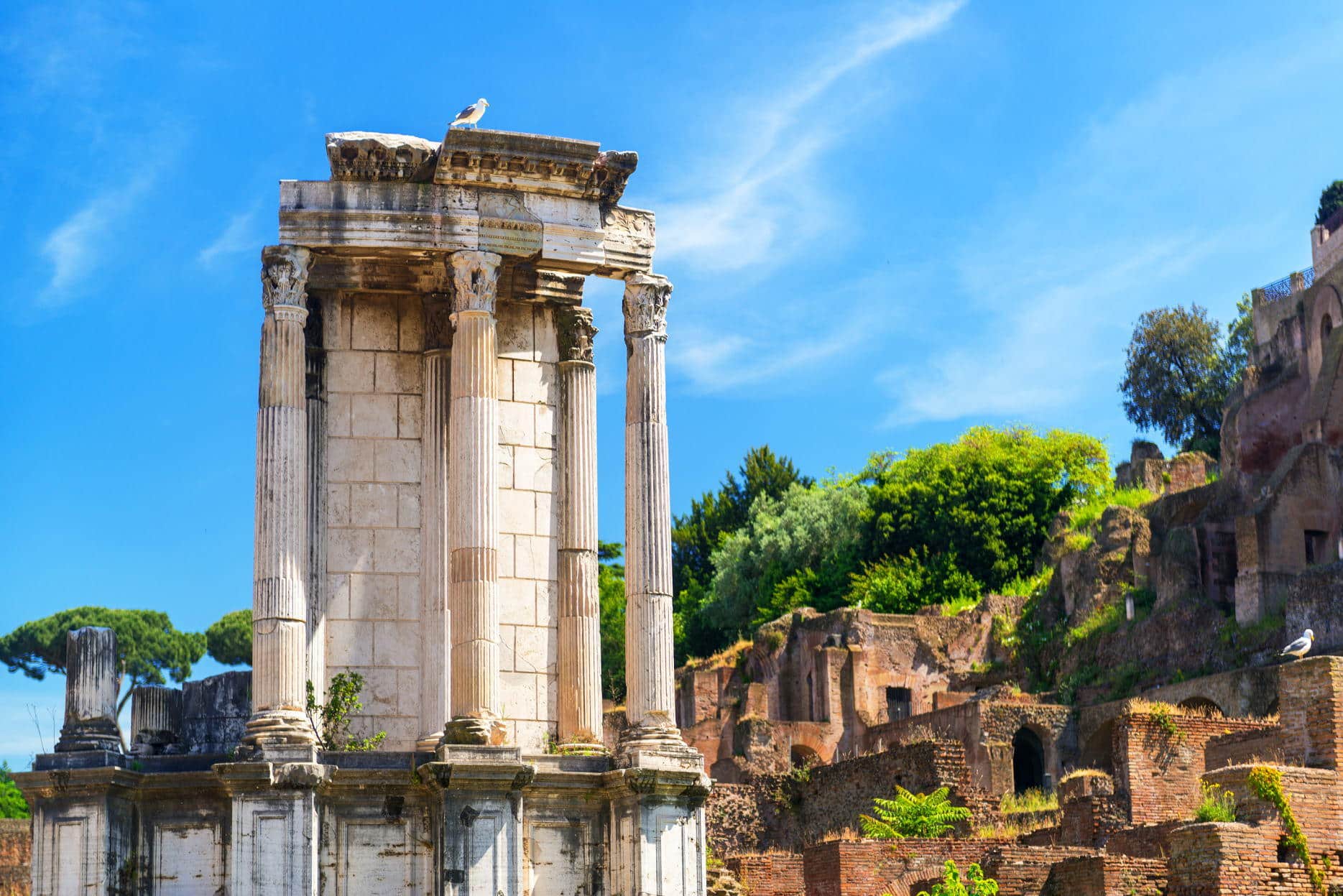
The Temple of Vesta stood as one of Rome's most distinctive religious buildings, positioned prominently within the Roman Forum. This sacred structure was dedicated to Vesta, the goddess who protected the hearth and home, making her central to Roman domestic and civic life.
What made this temple particularly remarkable was its circular design, which set it apart from the typical rectangular Roman temples. This round plan, known as tholos-style architecture, was deliberately chosen to echo the form of ancient huts and symbolically represent the eternal heart of Rome itself.
Note
The circular design was not merely aesthetic - it carried deep symbolic meaning, representing the unbroken cycle of life and Rome's eternal nature. This architectural choice connected the temple to ancient traditions while establishing it as a unique landmark in the Forum.
Key architectural elements
The temple featured several distinctive characteristics that enhanced its sacred atmosphere:
- Circular plan: The small, intimate circular structure created a sense of closeness and reverence, unlike the grand, imposing rectangular temples found elsewhere
- Corinthian columns: The exterior featured elegant Corinthian-style columns arranged in a circular colonnade around the building
- Cella (inner chamber): The central inner room housed the most sacred element - the eternal flame that represented Vesta's divine presence
- No cult statue: Rather than containing a traditional statue of the goddess, the temple's sacred focus was entirely on the continuously burning flame
- Multiple reconstructions: The building underwent several rebuildings throughout history, notably restored by Septimius Severus following a fire in AD 191

Important
The absence of a traditional cult statue was revolutionary for Roman religious architecture. This design choice emphasised the living, dynamic nature of Vesta's presence through the eternal flame rather than static representation through sculpture.
Impact on worshippers and visitors
The temple's unique design and sacred function created a profound effect on all who encountered it. Unlike other Roman temples that emphasised grandeur and public display, the Temple of Vesta fostered a more intimate and mystical experience.
The sacred fire burned continuously within the cella, creating a powerful sense of divine presence and Rome's eternal destiny. This eternal flame served as a constant reminder of the city's unbroken connection to the gods and its destined survival.
Access to the interior was strictly restricted to Vestal Virgins and certain officials, which heightened the sense of mystery and sanctity surrounding the temple. For ordinary Romans, religious participation meant observing rituals from outside the building, though the visible flame and the Vestals themselves reinforced the strong connection between civic and religious identity.
Important
The restricted access wasn't simply about exclusivity - Romans believed that maintaining the purity of the sacred space was essential for the city's survival. Any contamination of the temple's sanctity could bring disaster upon the entire state.
The temple's atmosphere was deliberately intimate, sacred, and symbolic rather than monumental, emphasising spiritual continuity over architectural impressiveness. As Ovid wrote: "Vesta is fire, and fire is the heart of the city" - this quote captures how the temple served as Rome's spiritual centre.
Roles and responsibilities of temple officials
Vestal Virgins
The Vestal Virgins held a unique and essential position in Roman society, serving as the temple's primary caretakers. These women were chosen as young girls from elite families, typically between the ages of six and ten, and committed to thirty years of service.
Their daily responsibilities included maintaining the sacred fire, preparing ritual substances, and guarding precious sacred objects such as the Palladium. The Vestals lived in the specially built House of the Vestals, located directly beside the temple, emphasising their constant dedication to their duties.
Note
The thirty-year commitment was divided into three stages: ten years of learning, ten years of service, and ten years of teaching younger Vestals. After completing their service, they were free to marry and return to civilian life, though few chose to do so.
These priestesses enjoyed remarkable privileges for women in Roman society, including legal independence and places of honour at public games. However, their vows of chastity were taken extremely seriously - any Vestal who broke her vow faced severe punishment, reflecting the belief that their purity was essential for Rome's welfare.
Important
The punishment for breaking chastity vows was severe - burial alive - because Romans believed that spilling a Vestal's blood would bring additional curse upon the city. This extreme consequence reflected how seriously Romans viewed the connection between the Vestals' purity and Rome's safety.
Other officials
The Pontifex Maximus held overall responsibility for overseeing the Vestals and ensuring proper conduct of the temple rituals. This high religious office demonstrated the temple's importance within Rome's state religion.
Citizens could participate in temple activities, particularly during festivals such as the Vestalia in June, when they could observe ceremonies and show reverence to the goddess. The public's role involved demonstrating respect for the temple and flame, reinforcing the communal nature of this sacred space.
Political and civic significance
The Temple of Vesta held profound importance that extended far beyond its religious function, becoming central to Roman political and civic identity.
Symbol of Rome's survival
The eternal flame represented Rome's eternal existence - Romans believed that if the fire was ever extinguished, it would signal impending disaster for the state. This made the temple a powerful symbol of continuity and divine protection over the Roman people.
Important
Historical records show that whenever the sacred fire was accidentally extinguished, it was considered an omen of catastrophe. The Vestal responsible faced severe punishment, and elaborate purification rituals were required to restore the gods' favour.
The unique status of the Vestal Virgins demonstrated the crucial link between religious observance and civic welfare. Their role showed how individual dedication to the gods directly supported the broader community's wellbeing.
Centre of civic unity
Located at the heart of the Forum, the temple reinforced Vesta's role as guardian of Rome. Its central position meant that daily civic activities occurred within sight of this sacred space, constantly reminding citizens of their spiritual obligations.
The temple held special imperial significance, with emperors often connecting their authority to the preservation of Rome's hearth. Augustus notably restored the temple and emphasised traditional religious practices, using Vesta's worship to strengthen his political legitimacy.
Note
The temple's location in the Forum was strategically significant - it placed the most sacred religious site at the heart of Roman political, commercial, and social life, ensuring that Vesta's presence permeated all aspects of civic activity.
Contrast with Greek religious architecture
Unlike Greek temples that focused heavily on monumental sculpture and artistic display, the Temple of Vesta emphasised sacred symbolism and ritual continuity. This reflected distinctly Roman religious priorities that valued practical spiritual function over aesthetic grandeur.
As Dionysius of Halicarnassus observed: "The safety of the city depends on the maintenance of the fire of Vesta" - this quote illustrates how Romans viewed the temple as essential to their collective survival and prosperity.
Summary
Key Points to Remember:
- Unique circular design: The temple's round plan distinguished it from typical rectangular Roman temples and symbolised Rome's eternal hearth
- Sacred eternal flame: Instead of housing a cult statue, the temple's focus was the continuously burning fire representing Vesta's presence and Rome's survival
- Vestal Virgins' crucial role: These priestesses from elite families maintained the sacred fire and enjoyed exceptional status in Roman society
- Political symbolism: The temple served as a powerful symbol of Rome's eternity and divine protection, linking religious observance directly to civic welfare
- Central location: Positioned in the Roman Forum, the temple reinforced the connection between daily civic life and sacred duty