Load-Bearing Walls (Leaving Cert Construction Studies): Revision Notes
📚Revision Notes
Load-bearing walls
What are load-bearing walls?
Load-bearing walls form the structural backbone of buildings. These walls carry the weight from roofs, floors and other structural elements, transferring these loads safely down to the foundations. Without properly constructed load-bearing walls, buildings would lack structural stability and could collapse.
Note
Load-bearing walls differ from non-load-bearing partition walls because they provide essential structural support. They are typically constructed from strong materials like concrete blocks, bricks, or treated timber to handle the significant loads they must carry.
Functions of load-bearing walls
Load-bearing walls serve multiple important purposes in building construction:
Structural support: The primary function is carrying loads from floors, roofs and other building elements down to the foundations. This load transfer prevents structural failure and maintains building stability.
Weather protection: External load-bearing walls create a protective barrier against rain, wind, temperature changes and other weather conditions that could damage the building interior.
Space division: These walls help divide larger spaces into functional rooms and areas within the building.
Privacy and security: Load-bearing walls provide privacy between different areas and contribute to the overall security of the building.
External load-bearing walls
Traditional construction methods
Note
Older building techniques used very thick external walls to handle both structural loads and moisture protection. These thick walls worked because moisture could penetrate partway through the wall material, but the wall thickness prevented moisture from reaching the interior surface.
While this approach provided good structural strength, it used large quantities of materials and created very thick walls that reduced internal space.
Modern cladding systems
Contemporary construction often employs external cladding systems using waterproof materials. Commercial buildings commonly use plastic or aluminium cladding systems that completely prevent moisture penetration.
This approach places a waterproof barrier on the exterior surface, stopping moisture before it can enter the wall structure. However, these systems can be expensive, making them less common in residential construction.
Cavity wall construction
The most widely used modern method involves cavity wall construction. This system uses two separate walls - an inner leaf and an outer leaf - with a gap (cavity) between them.
Example
How Cavity Walls Work:
Step 1: The outer leaf absorbs moisture from weather exposure Step 2: The cavity prevents this moisture from reaching the inner leaf Step 3: This separation provides excellent moisture protection while using materials efficiently
Construction details: Both wall leaves rest on the same foundation. The inner leaf carries the structural loads, while the outer leaf primarily provides weather protection. The cavity between the walls initially provided moisture protection, but modern construction also fills this space with insulation materials to improve thermal performance.
Wall ties and structural connection
Important
Wall ties are essential components that connect the inner and outer leaves of cavity walls. Without proper wall ties, cavity walls cannot function as a unified structural system.
Wall ties serve several critical functions:
Structural unity: Wall ties bind the two separate walls together so they function as a single structural unit. This connection improves overall wall stability and helps distribute loads evenly.
Load distribution: The ties help transfer loads between the wall leaves and reduce shear stress that could cause structural failure.
Insulation support: In modern construction, wall ties also help hold insulation materials in position within the cavity.
Moisture management: Wall ties include built-in drip features that prevent moisture from travelling along the tie from the outer leaf to the inner leaf.
Different building methods use different wall tie types. Concrete block cavity walls typically use concrete ties that reduce shear stress, while timber frame construction uses ties that anchor frame panels to the masonry walls.
Moisture control systems
Damp proof course installation
All ground-level external walls require damp proof course (DPC) installation. This system addresses moisture that rises from below ground level, which occurs through a process called capillary action.
Note
Understanding capillary action: Ground moisture can rise upward through tiny pores in building materials, working against gravity. The finer these pores, the higher moisture can travel. This rising moisture can cause significant damage to wall materials and create unhealthy indoor conditions.
DPC protection: The damp proof course creates a barrier that prevents rising moisture from travelling up through the wall structure. This protection is essential for maintaining structural integrity and preventing moisture-related problems.
Internal load-bearing walls
Internal load-bearing walls require proper foundations just like external walls. These walls must provide adequate strength and stability to support upper floors and roof structures safely.
Strength and stability factors
Several factors determine the effectiveness of internal load-bearing walls:
Material strength: The strength depends not only on the blocks or bricks used, but also on the mortar that bonds them together. High-quality mortar is essential for creating strong wall structures.
Load distribution: Loads must be centred on walls to prevent buckling or tilting. Proper load placement ensures even stress distribution through the wall structure.
Slenderness ratio: This measures the relationship between wall height or length compared to wall thickness. Shorter, thicker walls provide greater strength and stability than tall, thin walls. Understanding this ratio helps ensure walls can safely carry their intended loads.
Wall bonding techniques
Bonding refers to the method of overlapping bricks or blocks when building walls. This technique ensures loads transfer evenly through the entire wall structure rather than creating weak points.
Example
Bonding Pattern Benefits:
- Structural benefits: Proper bonding prevents load concentration at specific points, distributing forces throughout the wall
- Construction patterns: Different bonding patterns exist, including running bond, English bond, and Flemish bond
- Aesthetic considerations: Bonding patterns also contribute to the finished appearance of exposed brickwork
Performance requirements
Fire resistance
Important
Load-bearing walls must maintain structural stability during fire emergencies. Building regulations require these walls to remain structurally sound for at least thirty minutes during a fire in domestic buildings.
Material advantages: Concrete block construction naturally provides good fire resistance due to concrete's inherent fire-resistant properties.
Timber protection: When load-bearing walls use timber construction, the structural timbers require fire-resistant treatments and protection. Non-combustible insulation materials provide additional fire protection.
Sound insulation
Load-bearing walls contribute significantly to sound control within buildings. Cavity walls provide superior sound insulation compared to single-leaf walls.
Note
Sound absorption process: Sound first encounters the outer leaf, then the cavity reduces sound transmission between the walls, and finally the inner leaf prevents remaining sound from entering the building interior.
Material density effects: Concrete cavity walls, being denser than timber frame walls, allow more sound transmission. Timber frame construction often includes quilted insulation between frame members, which acts as both thermal insulation and sound absorption.
Support for openings
Lintel requirements
Openings for windows and doors interrupt the continuity of load-bearing walls, requiring special support systems called lintels. Lintels are horizontal structural elements that span across openings and transfer loads to either side of the opening.
Material options: Lintels can be constructed from reinforced concrete, steel, or timber, depending on the loads they must carry and the wall construction type.
Important
Cavity wall considerations: Cavity wall construction requires lintels at each wall leaf. The inner leaf lintel typically uses reinforced concrete or steel because this leaf carries the structural loads.
Aesthetic factors: For brick outer leaves, steel lintels often provide the best solution because they allow the brick pattern to continue across the opening front, maintaining visual consistency.
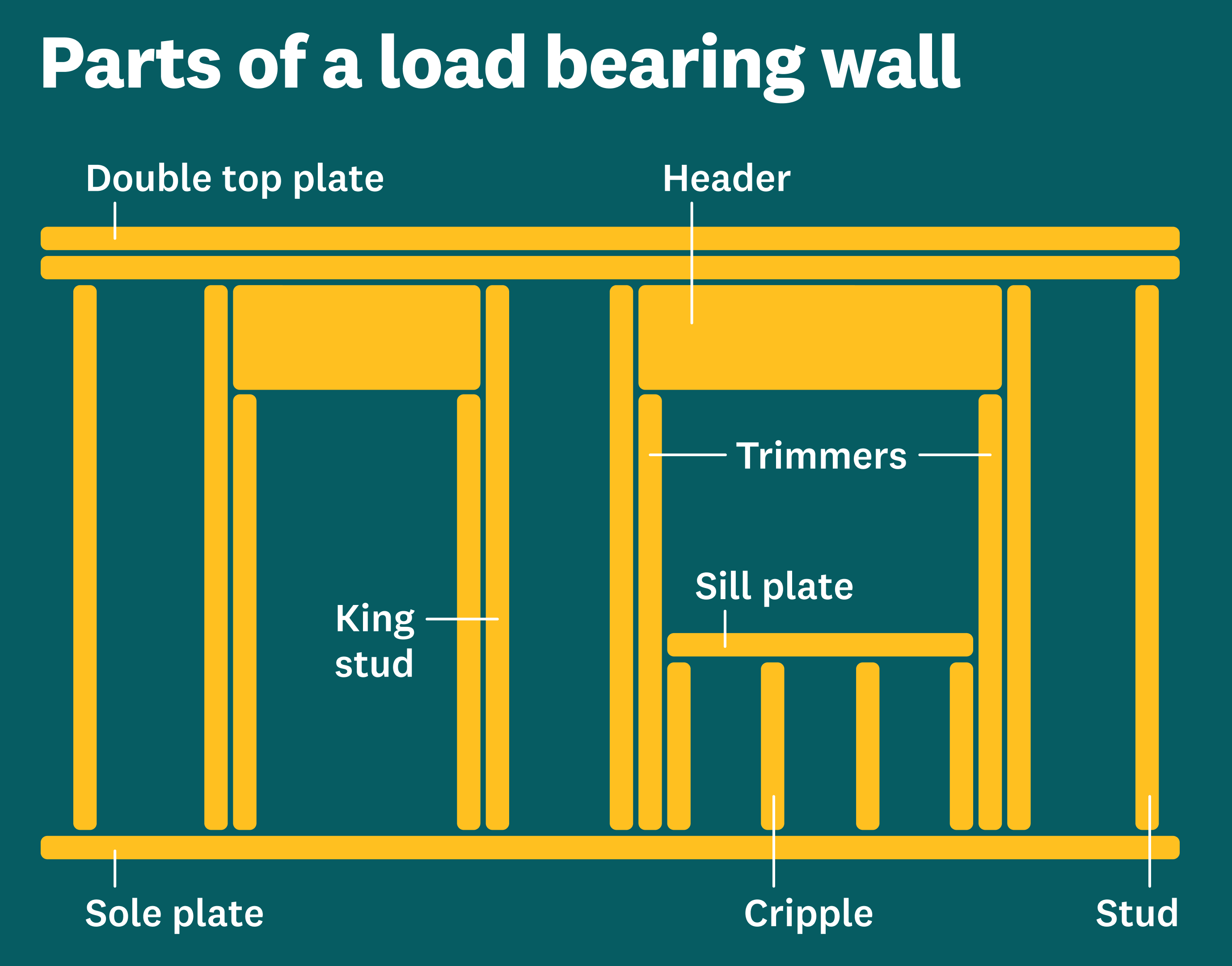
Timber frame systems: Timber frame buildings use timber lintels supported by trimmer studs - vertical frame members that transfer loads around the opening.
Summary
Key Points to Remember:
- Load-bearing walls provide essential structural support by transferring building loads safely to foundations
- Cavity wall construction uses inner and outer leaves with wall ties connecting them for moisture protection and structural unity
- Proper wall bonding distributes loads evenly and prevents structural weak points
- All load-bearing walls require fire resistance and must include damp proof courses at ground level
- Lintels provide necessary structural support over window and door openings in load-bearing walls