Safe System of Work Plan (SSWP) (Leaving Cert Construction Studies): Revision Notes
📚Revision Notes
Safe System of Work Plan (SSWP)
What is a Safe System of Work Plan?
A Safe System of Work Plan (SSWP) is a comprehensive checklist that helps construction site managers systematically approach safety on their sites. The plan serves as a structured document that enables site managers to:
- List all activities taking place on the construction site
- Determine possible hazards associated with each activity
- Identify specific methods to eliminate or reduce these hazards
- Ensure worker protection during dangerous operations
The SSWP acts as a proactive safety tool, requiring managers to think through potential risks before work begins rather than reacting to accidents after they occur.
Note
The key difference between proactive and reactive safety management is timing. A well-implemented SSWP helps prevent accidents before they happen, rather than responding to incidents after workers have been injured.

Legal requirements
Important
Under current health and safety legislation in Ireland, the site manager must, by law, complete a Safe System of Work Plan. This legal requirement emphasises the critical importance of systematic safety planning in the construction industry.
The legislation recognises that construction sites are inherently dangerous environments where large machinery, high-powered electrical tools, and heavy materials are used regularly. As a result, building sites are classified as high-risk areas requiring formal safety documentation.
Hazard identification and prevention
Understanding hazards
A hazard represents a potential source of harm to a person and is therefore considered a major safety concern. The SSWP must identify any hazards that may exist on the construction site before work commences.
Common construction site hazards
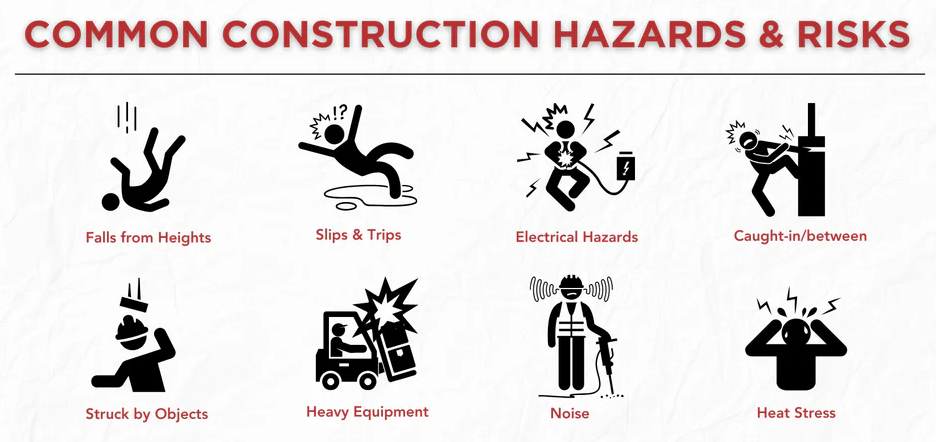
Building sites contain numerous potential hazards that workers and visitors may encounter. The most frequent hazards include:
Height-related risks:
- Working at heights on scaffolding, roofs, or elevated platforms
- Falling materials from upper levels
Ground and excavation hazards:
- Excavations and trenches
- Unstable ground conditions
Electrical dangers:
- Electrical injuries from power tools and installations
- Overhead power lines
Mechanical and material hazards:
- Large plant machinery operations
- Heavy loads requiring lifting or moving
- Dangerous materials and substances
Environmental factors:
- High noise levels from equipment and machinery
Note
Hazard identification is an ongoing process. New hazards can emerge as work progresses, weather conditions change, or when different trades begin working in the same area simultaneously.
Hierarchy of risk control
When a hazard is identified through the SSWP process, there is a specific hierarchy that must be followed to ensure maximum safety for everyone on site. This hierarchy prioritises the most effective control measures:
Important
The 5-Step Hierarchy of Risk Control:
1. Eliminate the risk where possible
The most effective approach involves completely removing the hazard from the workplace. This might mean changing work methods or avoiding certain activities altogether.
2. Substitute the hazard with a lesser risk
If elimination isn't possible, replace the hazardous activity, material, or equipment with a safer alternative that poses less risk to workers.
3. Isolate the hazard
When substitution isn't viable, separate the hazard from workers by creating physical barriers, restricted access zones, or designated safe areas.
4. Use controls
Implement engineering controls, administrative procedures, or safety systems to reduce the likelihood or severity of potential incidents.
5. Wear personal protective equipment (PPE)
As the final line of defence, ensure appropriate personal protective equipment is worn by all workers exposed to remaining risks.
Understanding risk vs hazard
When evaluating hazards through the SSWP, it's important to consider both the likelihood of an incident occurring and the potential risk to the person carrying out the task.
Example
Practical Example: Water Spill Hazard Management
Scenario: Water is spilled on a floor
Hazard: Someone could slip and fall on the wet surface
Risk Assessment: If the area is cordoned off immediately, the hazard remains present but the risk to workers is significantly reduced
Control Measure: Cordoning off the area, placing warning signs, and cleaning up the spill
Any measure implemented to reduce or eliminate risk is called a control.
Site visitors and safety requirements
Construction sites don't only accommodate workers - visitors are also permitted on building sites under specific safety conditions. However, these visitors must follow strict guidelines to protect themselves and others during their time on site.
To officially gain access to a construction site as a visitor, a person must possess certification confirming they have completed a one-day training course as part of the Safe Pass programme. This requirement ensures that even temporary site visitors understand basic safety principles and can recognise common hazards.
Note
The Safe Pass programme covers essential topics including hazard recognition, emergency procedures, and basic site safety rules. This training is mandatory for anyone who needs regular or occasional access to construction sites in Ireland.
Summary
Key Points to Remember:
- SSWP is legally mandatory - All site managers must complete a Safe System of Work Plan by law
- Follow the hierarchy - Always try to eliminate risks first, then substitute, isolate, control, and finally use PPE as the last resort
- Hazards are everywhere - Construction sites contain multiple hazards including heights, electricity, machinery, and materials
- Controls reduce risk - Any action taken to reduce or eliminate risk is considered a control measure
- Everyone needs training - Even visitors must complete Safe Pass training before entering construction sites