Safety Signage and PPE (Leaving Cert Construction Studies): Revision Notes
📚Revision Notes
Safety signage and PPE
Visitor safety requirements
When entering any building site, visitors must follow strict safety protocols to protect themselves and others. All individuals entering the site must carefully read and follow the signs displayed at the entrance. These signs communicate essential safety information that applies to everyone on site.
Visitors are required to wear appropriate protective clothing and any protective equipment that the specific site demands. This requirement ensures that everyone maintains the same safety standards, regardless of their role or duration on site.
Important
Fundamental Site Rule: All visitors must report to the site office upon arrival. This system allows the person in charge to maintain accurate records of who is present on site at any given time. This knowledge is crucial for emergency situations and general site management.
Visitors cannot explore the site independently. For their own protection, they must always be accompanied by an authorised person who understands the site's hazards and safety procedures. This escort system helps prevent accidents caused by unfamiliarity with site conditions.
Note
The escort system serves multiple purposes: it ensures visitors stay in safe areas, provides immediate assistance if needed, and helps maintain site security protocols.
Finally, visitors bear personal responsibility for staying alert to potential dangers. They must remain aware of hazards such as scaffolding, trenches, overhead loads, cables, and other risks that commonly exist on construction sites.
Safety signage system
Construction sites use a standardised signage system to communicate health and safety information effectively. This system relies on visual communication rather than text, making it universally understandable regardless of language barriers.
Important
Since 2007 Regulation: New safety signs must not contain text as their primary means of communication. This regulation helps overcome language barriers and prevents misunderstandings. While supplementary signage may include text, it must not interfere with the main safety message.
Safety signs are positioned at site entrances where they can be clearly seen by everyone entering. These signs establish the basic safety requirements and inform the general public about access restrictions.
The signage system uses minimal colours and simple, direct illustrations to ensure quick and easy understanding. This design approach allows people to identify hazards and safety requirements instantly.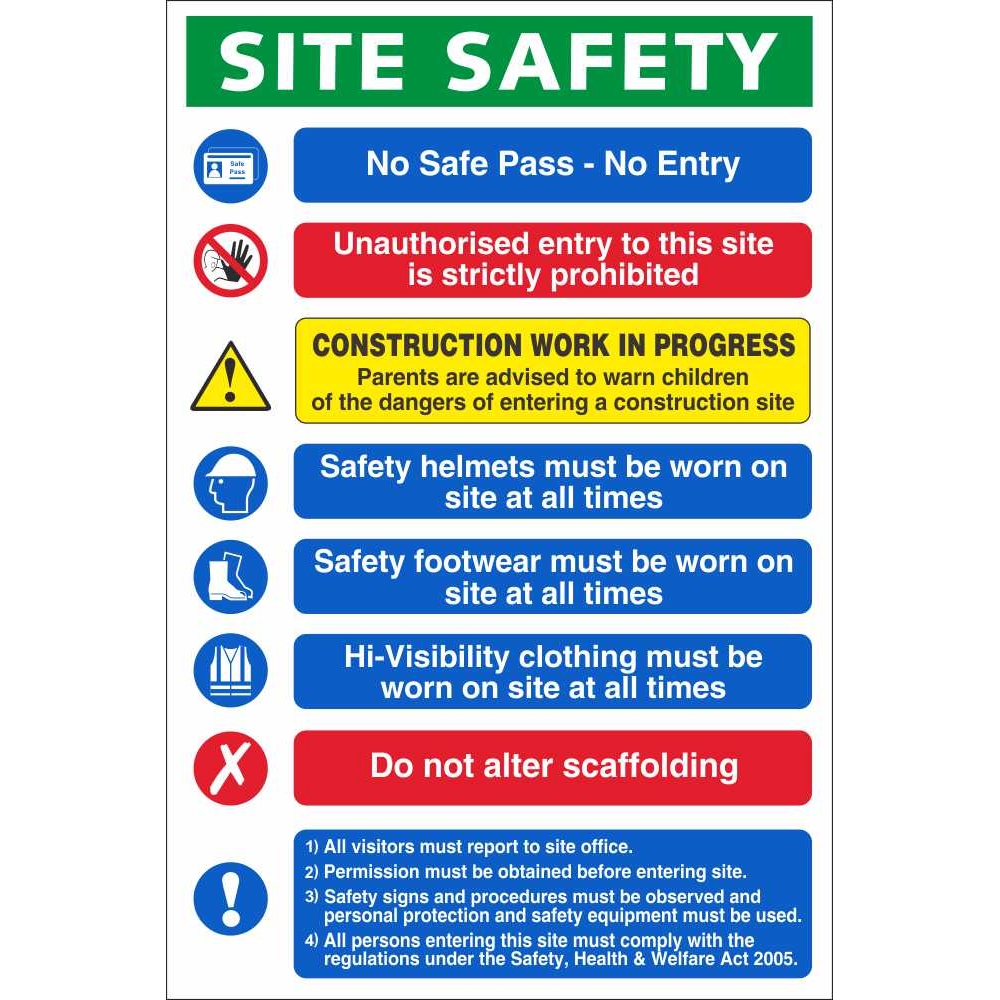
Four categories of safety signs
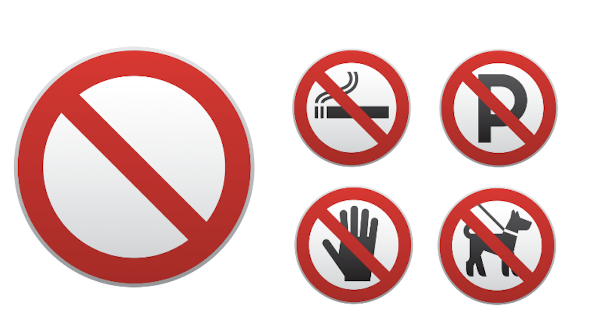
Red prohibition signs
Round red signs with diagonal lines indicate actions that are forbidden in specific areas. These signs serve as clear warnings about what must not be done to maintain safety standards.
Example
Common Prohibition Signs:
- No entry to unauthorised personnel
- No smoking in designated areas
- No parking in restricted zones
The distinctive red colour and circular shape with a diagonal bar make these signs immediately recognisable as prohibition notices.
Yellow warning signs
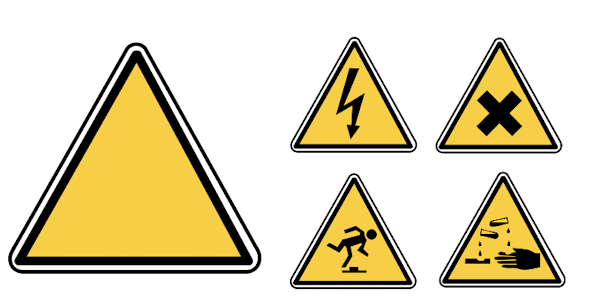
Triangular yellow signs alert people to potential hazards and risks in the area. These signs help everyone become aware of dangers that exist so they can take appropriate precautions.
Important
When individuals see warning signs, they have a personal responsibility to take suitable safety measures.
Example
Common Warning Signs:
- Chemical irritants present
- Trip hazards on walkways
- Steps requiring attention
- Electrical hazards nearby
- Corrosive chemicals in use
The triangular shape and bright yellow colour make these hazard warnings highly visible and easily distinguished from other sign types.
Blue mandatory signs
Round blue signs specify actions that people must take in particular situations. These signs illustrate the required behaviour or protective equipment that individuals must follow or wear.
The most common mandatory signs relate to personal protective equipment requirements:
Example
Typical Mandatory PPE Signs:
- Wearing safety goggles for eye protection
- Using ear protection in noisy environments
- Wearing hard hats in designated areas
- Using protective gloves when handling materials
These blue signs clearly communicate what actions are compulsory rather than optional.

Green safe condition signs
Square or rectangular green signs provide information about emergency procedures and safety facilities. These signs guide people to safety resources and emergency exits when needed.
Example
Safe Condition Signage:
- Fire exit locations and routes
- First aid stations and equipment
- Fire assembly points for evacuation
- Emergency contact information
The green colour and rectangular shape help people quickly identify safety resources during both normal operations and emergency situations.

Personal protective equipment (PPE)
Personal protective equipment consists of clothing, accessories, and safety devices designed to protect workers from injury. PPE serves as the last line of defence against workplace hazards when other safety measures cannot eliminate risks completely.
Workers using loud tools must wear appropriate ear protection to prevent hearing damage. The type and level of protection required depends on the specific noise levels and duration of exposure.
Essential PPE for construction sites
Construction workers typically require several types of protective equipment:
Head and face protection:
- Safety helmets protect against falling objects and impact injuries
- Face shields guard against flying debris and chemical splashes
Eye and respiratory protection:
- Goggles prevent eye injuries from dust, chemicals, and particles
- Dust masks philtre harmful airborne particles from breathing
Body protection:
- High-visibility jackets ensure workers remain visible to machinery operators
- Protective gloves shield hands from cuts, chemicals, and abrasions
Foot protection:
- Hard-toed safety boots protect feet from falling objects and puncture wounds
Hearing protection:
- Ear muffs reduce exposure to damaging noise levels from power tools and machinery
Note
The general PPE requirements for each site are indicated by mandatory blue signage at the entrance. However, workers must also pay attention to specific signage about particular tools or specialist areas that may require additional protective equipment.
PPE selection and use
When using tools or entering areas with specific hazards, workers must assess the signage and select appropriate additional PPE beyond the basic site requirements.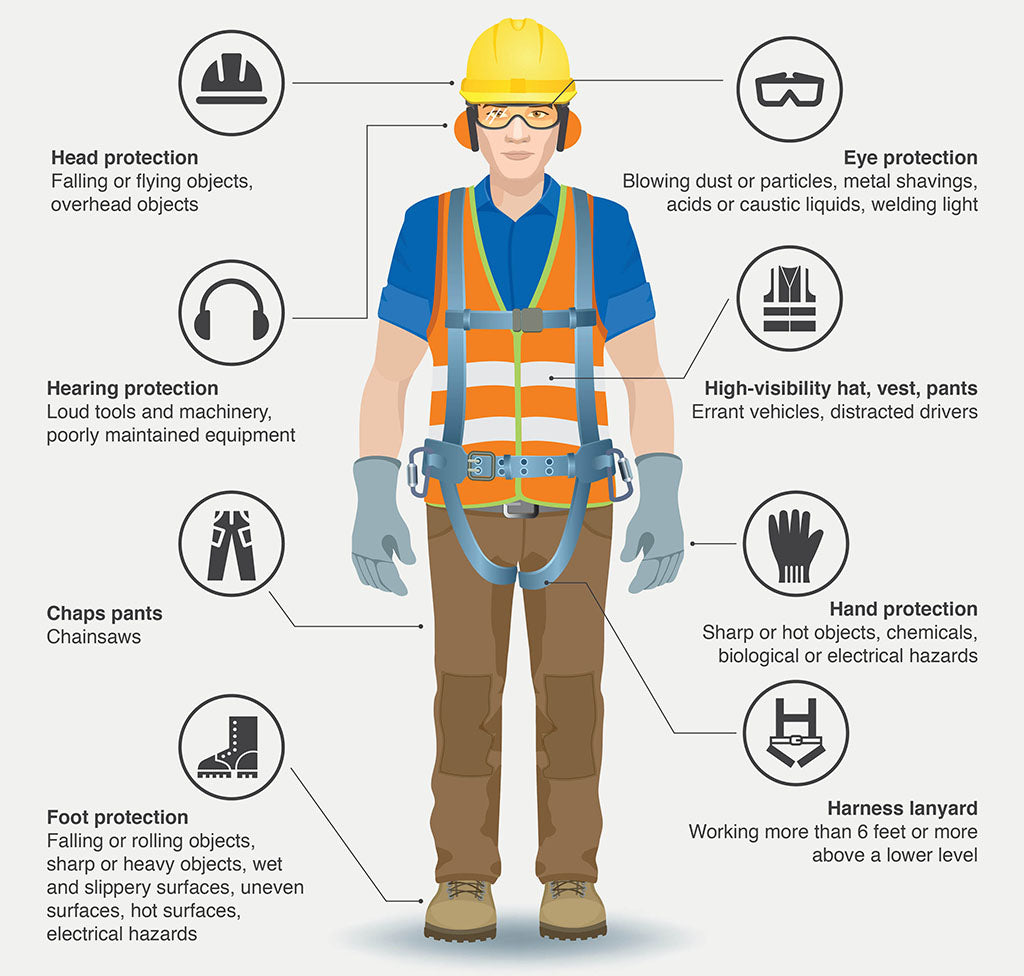
Summary
Key Safety Points to Remember:
- All visitors must report to the site office and be accompanied by authorised personnel at all times
- Safety signs use four colour-coded categories: red (prohibition), yellow (warning), blue (mandatory), green (safe condition)
- PPE is essential protective equipment including helmets, high-vis jackets, goggles, gloves, and safety boots