Economics as a Way of Thinking (Leaving Cert Economics): Revision Notes
📚Revision Notes
Economics as a Way of Thinking
What is economics?
Economics is the study of how individuals, businesses, and governments make decisions about scarce resources to satisfy unlimited wants. This fundamental concept sits at the heart of economic thinking - we live in a world where resources are limited, but our desires and needs are endless.
Economics examines several key areas including choices, incentives, trade-offs, and consequences. Understanding these elements helps us make sense of how societies organise themselves and allocate their limited resources.

Important
The core economic problem: Scarcity vs Unlimited Wants
This fundamental tension drives all economic decision-making and forms the basis for understanding why choices must be made and why every choice involves trade-offs.
The role of models
Models serve as simplified frameworks that help us understand reality. They deliberately strip away unnecessary detail to highlight the most important relationships between economic variables. Think of them as useful simplifications that make complex economic systems easier to grasp.
Example
Key Economic Models:
- Circular flow of income - demonstrates how money and goods flow between households, firms, and government
- Supply and demand model - shows how prices adjust when supply or demand changes
Models are valuable because they allow economists to make predictions and provide frameworks that are easier to understand than the messy reality of actual economies. However, they do have limitations.
Note
Limitations of Economic Models:
- Models rely on assumptions (such as "all consumers act rationally") which may not hold true in practice
- Unexpected events like COVID-19 can make models inaccurate when circumstances change dramatically
The role of concepts
Concepts form the building blocks of economic thinking. They provide the vocabulary and tools needed to analyse economic situations effectively.
Key economic concepts include:
-
Opportunity cost - the benefit of the next best alternative that is forgone when making a choice
-
Elasticity - how responsive demand or supply is to changes in price or income
-
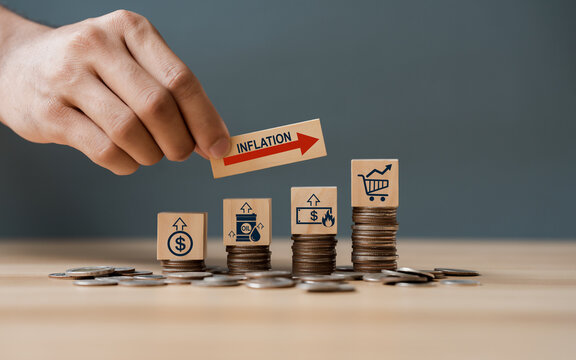
Inflation - the sustained rise in the general price level of goods and services
-
Economic growth - increase in output measured by GDP
Important
Why Economic Concepts Matter:
These concepts give students and policymakers a structured way to analyse problems and compare different solutions. They provide a common language for economic discussion and analysis.
The role of data
Economists rely heavily on data to test ideas, measure performance, and evaluate policies. In Ireland, key data sources include the CSO (Central Statistics Office), as well as international organisations like Eurostat, OECD, IMF, and World Bank.
Note
How Data Informs Economic Decisions:
- CSO unemployment figures help design training programmes and evaluate job schemes
- Inflation data informs ECB interest rate decisions
- Economic indicators guide government policy decisions
However, data has limitations. Information can be misinterpreted, and time lags mean data may be outdated by the time policies are implemented. Sometimes governments may present data selectively to support particular policies, which can lead to biassed decision-making.
Positive vs normative statements
Understanding the difference between positive and normative statements is crucial for economic analysis.
Positive statements are factual, objective, and can be tested against evidence. Normative statements are opinion-based value judgements that cannot be proven true or false.
Example
Distinguishing Positive from Normative:
Positive statement: "Ireland's GDP contracted by 3.5% in 2020."
- This can be verified using official data
Normative statement: "The government should increase minimum wage."
- This reflects a view on what ought to happen, rather than what actually is happening
Why this distinction matters
Positive statements provide evidence and describe what is happening in the economy. Normative statements reflect views on what should be happening. In real life, political and media debates often mix both types of statements.
Important
Critical Analysis Skill:
During budget discussions, the Finance Minister may present positive data (tax revenue figures, unemployment rates) but also make normative claims ("we should protect middle-income families"). Understanding this distinction helps you evaluate arguments more critically.
Why do solutions differ?
Economists may agree on identifying a problem but disagree strongly on the best solution. This happens for several important reasons.
Different schools of thought
Economic thinking is influenced by different theoretical approaches:
Keynesian economics supports government spending and intervention during recessions. Keynesians believe markets don't always self-correct and governments should actively manage the economy.
Monetarist/Neoclassical economics emphasises controlling inflation and limiting government involvement. This school trusts market mechanisms to solve economic problems.
Behavioural economics highlights psychological influences and irrational behaviour in economic decision-making, challenging traditional assumptions about rational actors.
Different national priorities
Countries may prioritise different goals - one government may focus on economic growth, while another prioritises equality and social welfare. These different priorities naturally lead to different policy solutions.
Cultural and political influences
Cultural values significantly shape economic policies. Scandinavian countries value social welfare, leading to high taxes and strong safety nets. The US traditionally values free markets, resulting in less government regulation. These cultural differences explain why similar economic problems receive different solutions across countries.
Solutions change over time
Economic thinking evolves as circumstances change. In the 1980s, free-market policies like privatisation and deregulation dominated economic thinking. However, after the 2008 financial crash, regulation and government intervention became more widely accepted as necessary tools for economic stability.
Economics and real-world events
Case study 1: The Great Depression (1930s)
Example
Case Study: The Great Depression Impact
The Great Depression represented a global economic collapse with unemployment exceeding 25% in the US and trade falling sharply worldwide. Classical economic theory assumed markets would "self-correct," but this didn't happen.
Key Outcome: This crisis led to the development of Keynesian economics, where governments are encouraged to increase spending to stimulate demand during economic downturns.
Case study 2: Irish economic crisis of the 1950s
Example
Case Study: Ireland's 1950s Economic Stagnation
The Problem: Ireland was heavily reliant on agriculture, had weak industry, and experienced high emigration. The country faced economic stagnation with very low growth and high unemployment.
The Solution: The policy response involved moving away from protectionism (closing off trade) to trade liberalisation and encouraging foreign investment from the 1960s onwards.
The Lesson: This demonstrates how openness to trade and foreign investment can boost economic development.
Case study 3: The Great Recession (2007-2009)
Example
Case Study: The Great Recession
The Trigger: Crisis sparked by the collapse of the US housing market, leading to a banking crisis.
Irish Impact: Ireland experienced a severe property crash, banking collapse, and required a bailout from the EU/IMF in 2010. Unemployment peaked at approximately 15%.
Key Results:
- Greater focus on banking regulation
- Shift towards fiscal discipline and EU-level cooperation
- Important lessons for housing policy regarding sustainable lending and building regulation
Other examples
The COVID-19 pandemic (2020-2021) disrupted global supply chains through lockdowns. Ireland responded with wage subsidy schemes and increased government borrowing. This crisis demonstrated the importance of government's role in stabilising the economy during unprecedented shocks.
Using data to understand economics

Students must develop several key data skills:
- Collect data from sources like CSO, government reports, and media sources
- Organise data into graphs, charts, and tables for clarity
- Present data clearly for analysis purposes
- Analyse and interpret - identify trends, causes, and potential policy responses
- Evaluate policies using both theoretical frameworks and empirical evidence
Example
Worked Example: Housing Data Analysis
When given CSO data on Irish housing completions, students might need to:
- Identify if supply is rising or falling
- Explain causes (such as planning restrictions, costs, or demand factors)
- Assess whether government policies are proving effective
Exam tips
Summary
Essential Exam Strategies:
- Define first: Always start answers with clear definitions of key terms
- Examples get marks: Link theories to real-world examples, particularly Irish housing, ECB interest rate policy, or COVID-19 supports
- Case studies are gold: Use historical or Irish case studies to push your answer into higher grade bands
- Balanced answers: When evaluating policies, always show both advantages and disadvantages
- Data questions: Follow a clear structure - describe the data (trends/patterns), explain causes, discuss economic consequences, then evaluate policies
- Use current Irish context: Examiner reports indicate this approach earns higher marks
Remember!
Summary
Key Points to Remember:
- Economics centres on choices and consequences in a world where resources are scarce but wants are unlimited
- Models, concepts, and data are essential tools for understanding economic behaviour and outcomes, though each has limitations
- Positive statements describe facts while normative statements express opinions - distinguishing between these is crucial for clear economic analysis
- Different solutions exist because of varying schools of economic thought, cultural values, and changing historical circumstances
- Major economic crises (1930s Depression, 1950s Irish stagnation, 2007-2009 recession, COVID-19) have reshaped economic thinking and policymaking approaches