Robots in Manufacturing (Leaving Cert Engineering): Revision Notes
📚Revision Notes
Robots in Manufacturing
Introduction
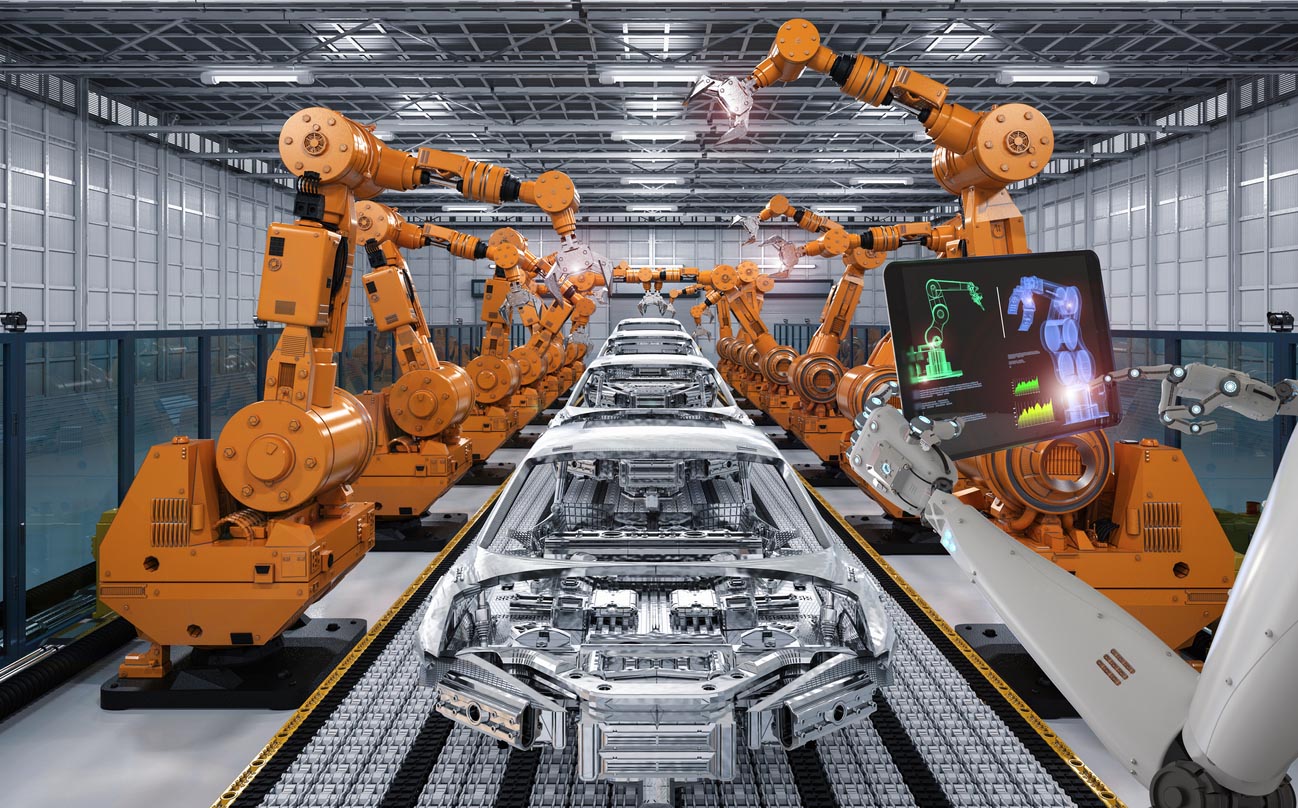
Industrial robots are programmable machines designed to perform manufacturing tasks with high precision and consistency. When considering automation in manufacturing, it's essential to evaluate both the benefits and challenges of implementing robotic systems. Manufacturing companies must carefully assess their needs before investing in robotic technology.
Note
The decision to implement robotic systems requires comprehensive evaluation of current manufacturing processes, available budget, workforce capabilities, and long-term production goals. This assessment helps ensure successful integration and return on investment.
Advantages of industrial robots
Quality improvements
Industrial robots excel at enhancing product quality through their ability to perform tasks with exceptional precision and repeatability. Every operation is executed with consistent accuracy, achieving a level of reliability that is difficult to match through manual processes. This consistency ensures uniform product standards across all manufactured items.
Note
The precision of industrial robots can often achieve tolerances measured in fractions of millimetres, far exceeding typical human capabilities in repetitive manufacturing tasks.
Enhanced production capabilities
Robotic systems significantly boost throughput speeds, directly improving overall manufacturing output. Unlike human workers, robots operate continuously without requiring breaks, holidays, or rest periods. This constant operational capacity allows them to maintain steady production rates and potentially exceed human productivity levels.
Improved workplace safety
Workplace safety benefits substantially from robotic implementation. Human workers transition into supervisory roles, removing them from potentially dangerous manufacturing operations. Remote control capabilities allow operators to manage robotic systems from safe distances, keeping personnel away from hazardous environments during production processes.
Financial benefits
Enhanced worker safety translates into significant cost savings for manufacturers. Reduced workplace injuries lead to lower healthcare and insurance expenses for employers. Additionally, robots deliver reliable performance that minimises material waste, creating further economic advantages through improved efficiency.
Hazardous environment operation
Robotic control systems can be specially protected to operate in dangerous conditions. These machines can be shielded from harmful substances or designed to withstand harsh environmental factors that would be unsafe for human workers. This capability extends manufacturing possibilities into previously inaccessible areas.
Example
Practical Application: Nuclear Industry
In nuclear facilities, robots can perform maintenance tasks in radioactive environments where human exposure would be dangerous. These specialised robots are equipped with radiation-hardened electronics and can operate in areas with high radiation levels for extended periods.
Maintenance and replacement
Industrial robots offer practical advantages through their replaceable and repairable nature. When components fail or require updating, individual parts can be serviced or entire systems can be replaced without major disruption to manufacturing operations.
Disadvantages of industrial robots
High initial costs
The initial investment for robotic systems represents a substantial financial commitment, particularly challenging for businesses with limited budgets. Companies must consider automation costs within their broader financial planning. Regular maintenance requirements also contribute to ongoing operational expenses that must be factored into long-term budgeting.
Technical expertise requirements
Employee training becomes necessary when introducing robotic equipment. Workers must develop skills in programming and interacting with new robotic systems. This training process requires both time and financial investment, potentially disrupting normal operations during the transition period.
Note
Training programmes typically include robot operation, basic programming, troubleshooting, and safety procedures. The duration can range from several weeks to several months depending on the complexity of the robotic systems.
New safety challenges
While robots eliminate some workplace hazards, they simultaneously create different safety concerns. The presence of robotic systems introduces new types of risks that must be carefully evaluated and managed. These emerging dangers require updated safety protocols and worker awareness programmes.
Employment implications
Robotic automation leads to job displacement for human operators in manufacturing roles. Traditional manual positions may become redundant as machines take over previously human-performed tasks, creating workforce management challenges for employers.
Work envelope limitations
Important
Critical Safety Concept: Work Envelope
Work envelope represents a critical safety concept in robotic operations. This term describes the three-dimensional space created when a manipulator extends forwards, backwards, upward, and downward to its maximum reach limits. The envelope's dimensions depend on the robot arm length and axis design.
Humans must always remain outside the work envelope during robotic operation to prevent serious injury.
Manufacturing applications
Industrial robotic systems perform diverse manufacturing tasks across various industries:
- Welding operations on automotive panels
- Spray painting applications
- Assembly processes for component parts
- Component placement on circuit boards
- Quality testing of manufactured parts
- Material handling in industrial settings
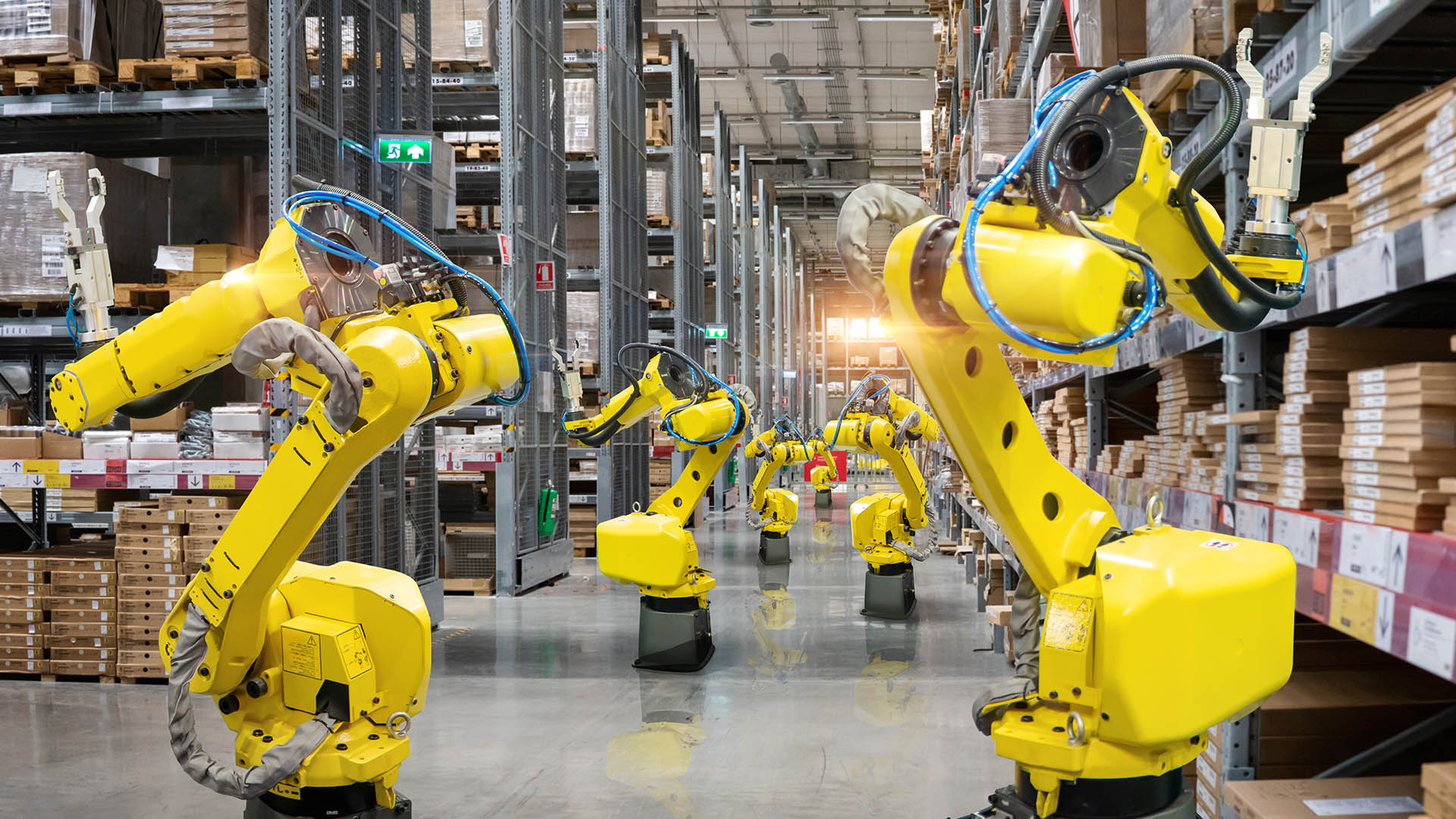
These applications demonstrate the versatility of robotic systems in modern manufacturing environments.
Example
Automotive Assembly Line Application
Step 1: Robot receives component from conveyor system Step 2: Vision system verifies correct part orientation Step 3: Robot positions component with precise alignment Step 4: Automated fastening system secures component Step 5: Quality sensor confirms successful assembly
This process can be completed in seconds with consistent accuracy across thousands of units.
Remember!
Summary
Key Points to Remember:
- Industrial robots improve quality through precision and repeatability but require significant initial investment
- Safety benefits include removing workers from hazardous tasks, though new safety risks may emerge
- Work envelope defines the dangerous zone around operating robots that humans must avoid
- Production increases and cost savings provide long-term economic benefits despite high setup costs
- Training requirements and job displacement represent key challenges in robotic implementation