Upcut Milling (Conventional Milling) (Leaving Cert Engineering): Revision Notes
📚Revision Notes
Upcut Milling (Conventional Milling)
What is upcut milling?
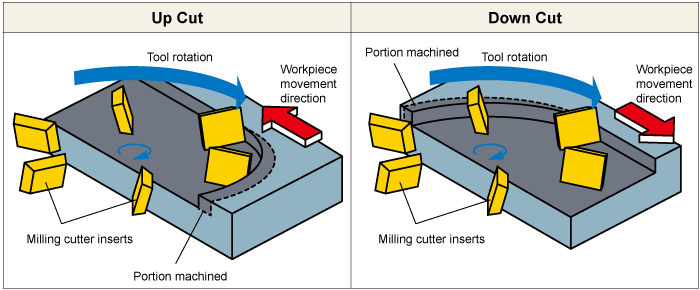
Upcut milling, also known as conventional milling, is the most frequently used type of milling operation in machining. This process involves the milling cutter rotating in the opposite direction to the workpiece feed direction. The cutter essentially moves against the direction that the workpiece is being fed into the cutting zone.
Note
The term "conventional milling" is widely used in industry because this method was the standard approach before the development of more advanced milling techniques. Understanding this fundamental process is essential for all machining operations.
How the process works
The fundamental principle of upcut milling centres on the opposing movements of the cutter and workpiece. When the cutter rotates clockwise, the workpiece feeds from right to left (or vice versa), creating a cutting action where the tool cuts "up" into the material as it removes chips.
During this cutting process, chip formation follows a distinctive pattern. The chips begin very thin at the point where the cutter tooth first contacts the workpiece material. As the cutting tooth continues through its path, the chips gradually become thicker until they are finally separated from the workpiece. This progressive chip formation is a key characteristic that distinguishes upcut milling from other milling methods.
Note
Understanding Chip Formation
The progressive chip formation in upcut milling is crucial to understanding why this method produces such smooth cutting action. Unlike other cutting methods where chips maintain constant thickness, upcut milling's variable chip thickness contributes to the even distribution of cutting forces.
Advantages of upcut milling
The opposing motion between cutter and workpiece creates several significant benefits:
Smooth cutting action is achieved because the cutting forces are distributed evenly throughout each cutting cycle. This results in consistent material removal and reduces vibration during the machining process.
Reduced machine stress occurs because the cutting forces are gradually applied rather than suddenly imposed. This gentler approach extends the life of both the cutting tool and the milling machine itself.
Better surface finish is typically achieved because the gradual cutting action reduces tool marks and creates more uniform surface textures on the finished workpiece.
Disadvantages and critical safety considerations
The primary drawback of upcut milling is the lifting effect that occurs during the cutting process. As the cutter rotates against the workpiece feed, it creates an upward force that attempts to lift the workpiece away from the machine table.
Important
Critical Safety Warning: Lifting Effect
The lifting effect in upcut milling poses serious safety and quality risks:
- The workpiece may shift position during machining, leading to dimensional inaccuracies
- Poor surface finish can result from workpiece movement
- Safety hazards may arise if the workpiece becomes dislodged
Very secure clamping is absolutely essential and must be capable of resisting lifting forces throughout the entire machining cycle.
This lifting effect presents serious challenges that machining operators must address through proper setup and safety procedures. The clamping system must be capable of resisting the lifting forces generated throughout the entire machining cycle. Inadequate clamping is one of the most common causes of machining failures and safety incidents in upcut milling.
Note
Professional Tip
Experienced machinists often perform a "clamping test" by gently trying to lift the workpiece by hand after clamping but before starting the machine. If any movement is detected, additional clamping is required.
Exam tips
When answering questions about upcut milling, remember to:
- Clearly explain the opposing motion between cutter and workpiece
- Describe the progressive chip formation from thin to thick
- Always mention the lifting effect as the main disadvantage
- Emphasise the critical importance of secure clamping
Summary
Key Points to Remember:
- Upcut milling is the most common milling method where cutter rotation opposes workpiece feed direction
- Chip formation progresses from thin to thick as the cut develops
- Smooth cutting action provides advantages including reduced machine stress and better surface finish
- Lifting effect is the major disadvantage requiring extremely secure workpiece clamping
- Proper clamping is essential for both safety and machining accuracy in all upcut milling operations