Turning (Leaving Cert Engineering): Revision Notes
📚Revision Notes
Surface Finish
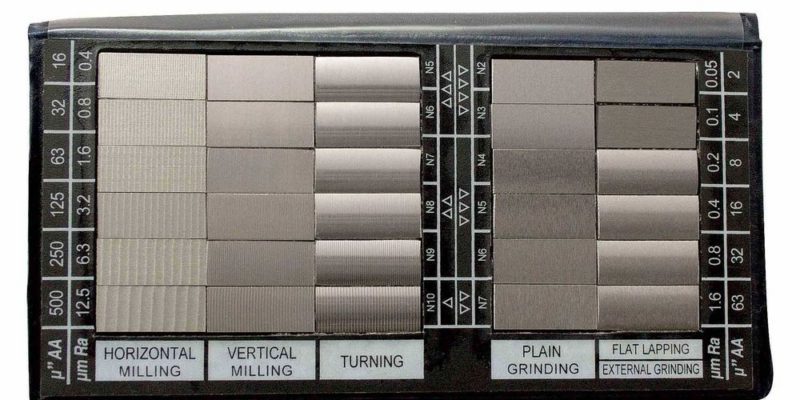
Surface finish quality is a critical aspect of turning operations that determines the final appearance and functionality of machined components. Understanding how different factors affect surface finish helps engineers produce high-quality parts efficiently.
Tool positioning and surface finish
The height at which the cutting tool is positioned relative to the workpiece centre line significantly impacts both cutting performance and surface finish quality. Proper tool positioning ensures optimal cutting angles and prevents machining problems.
Note
Tool height positioning is one of the most fundamental setup considerations in turning operations. Even experienced machinists regularly check and adjust tool height to maintain optimal cutting conditions throughout the machining process.
Tool below centre
When the cutting tool sits too low relative to the workpiece centre, several problems occur that negatively affect surface finish. The rake angle becomes reduced, making the cutting edge less sharp and less effective at removing material cleanly. Simultaneously, the clearance angle increases beyond the required amount, which weakens the tool tip and makes it more prone to breaking.
Important
This positioning makes facing operations impossible and typically leaves a dimple or depression on the face of the workpiece. The poor cutting geometry results in rougher surface finishes and potential tool failure.
Tool above centre
Setting the tool too high above the workpiece centre creates different but equally problematic conditions. The rake angle increases significantly, making the tool very sharp but causing the tip to lose proper contact with the workpiece surface. The clearance angle decreases and may be completely eliminated if the tool is raised too high.
Important
This setup leads to excessive friction between the tool and workpiece, causing heat buildup and rapid tool wear. The increased friction and heat generation severely degrades surface finish quality and can damage both the cutting tool and the laith itself.
Surface finish improvement techniques
Several factors can be controlled during turning operations to achieve better surface finishes. Understanding these variables allows machinists to optimise their processes for specific quality requirements.
Tool nose radius
The nose radius of the cutting tool plays a crucial role in determining surface finish quality. While a sharp pointed tool might appear ideal for precise cutting, it actually produces inferior surface finishes compared to tools with carefully designed nose radii.
Tools with larger nose radii create smoother surface finishes by reducing the sharp fluctuations that occur during cutting. The curved nose distributes cutting forces more evenly and produces a more consistent surface texture. All properly designed cutting tools incorporate a slight nose radius to balance cutting performance with surface finish quality.
Note
The relationship between nose radius and surface finish is not linear - there is an optimal range for each application. Too large a nose radius can cause chatter and vibration, while too small a radius creates the rough surface texture described above.
Cutting fluids
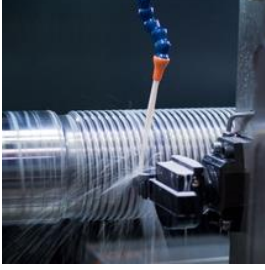
Cutting fluids serve multiple essential functions in turning operations, though they are typically not used in school workshop environments. In professional engineering production facilities, these fluids are vital for achieving high-quality surface finishes.
Note
Benefits of Cutting Fluids:
- Cooling: They prevent excessive heat buildup at the cutting tool, which can degrade surface finish
- Lubrication: They reduce friction between the tool and workpiece, enabling smoother cutting action
- Swarf removal: They wash away metal chips and debris that could scratch the finished surface
- Tool protection: They extend cutting tool life by reducing wear and thermal stress
Spindle speed
The spindle speed, measured in RPM (Revolutions Per Minute), directly affects surface finish quality. Higher spindle speeds generally produce better surface finishes because they reduce the feed marks left by the cutting tool on each revolution.
The spindle is located in the laith headstock and rotates via the machine motor and gearbox system. The chuck, which holds the workpiece, attaches directly to the spindle. When seeking excellent surface finishes, high spindle speeds should be used, though this may be limited by factors such as workpiece size, material properties, or safety considerations.
Note
The improvement in surface finish with increased spindle speed follows the principle that more cutting tool passes per unit of workpiece travel results in finer surface texture. However, very high speeds can introduce other problems such as vibration or heat generation.
Feed rate
Feed rate refers to the speed at which the cutting tool moves along or across the workpiece surface. This parameter significantly influences both surface finish quality and machining efficiency.
A slower feed rate consistently produces much better surface finishes but requires more time to complete the machining operation. In professional machining environments, this leads to the use of different cutting strategies:
- Roughing cycles: Use high feed rates to remove material quickly, prioritising speed over finish quality
- Finishing cycles: Use slower feed rates for final passes to achieve the required surface finish
The operator controls feed rate and must balance production time requirements against surface finish specifications for each specific application.
Example
Practical Example: Two-Stage Machining Strategy
Stage 1 - Roughing: Feed rate = 0.5 mm/rev, removes 3mm of material quickly Stage 2 - Finishing: Feed rate = 0.1 mm/rev, final 0.2mm pass for surface quality
This approach reduces total machining time while achieving the required surface finish.
Summary
Key Points to Remember:
- Tool positioning is critical - tools must be set at the correct height relative to the workpiece centre to achieve proper cutting angles and good surface finish
- Larger nose radius equals better finish - tools with appropriate nose radii produce smoother surfaces than sharp pointed tools
- Speed and feed work together - higher spindle speeds and slower feed rates both contribute to improved surface finish quality
- Cutting fluids provide multiple benefits - cooling, lubrication, and chip removal all help achieve better surface finishes in production environments
- Balance quality with efficiency - use roughing cycles for material removal followed by finishing cycles for final surface quality