Overview of Turning (Leaving Cert Engineering): Revision Notes
📚Revision Notes
Overview of Turning
What is turning?
Turning is a fundamental machining process used in engineering to shape cylindrical materials. This process takes place on a machine called a centre lathe, which is specifically designed for creating round or cylindrical components.
The turning process works by securing a workpiece in a horizontally mounted holding device where it rotates around its axis using the machine spindle. Meanwhile, a sharp cutting tool moves along and across the rotating workpiece, gradually removing material until the desired shape and dimensions are achieved.
Note
The key principle of turning is that the workpiece rotates while the cutting tool remains stationary relative to the machine - this is the opposite of drilling operations where the tool rotates and the workpiece remains stationary.
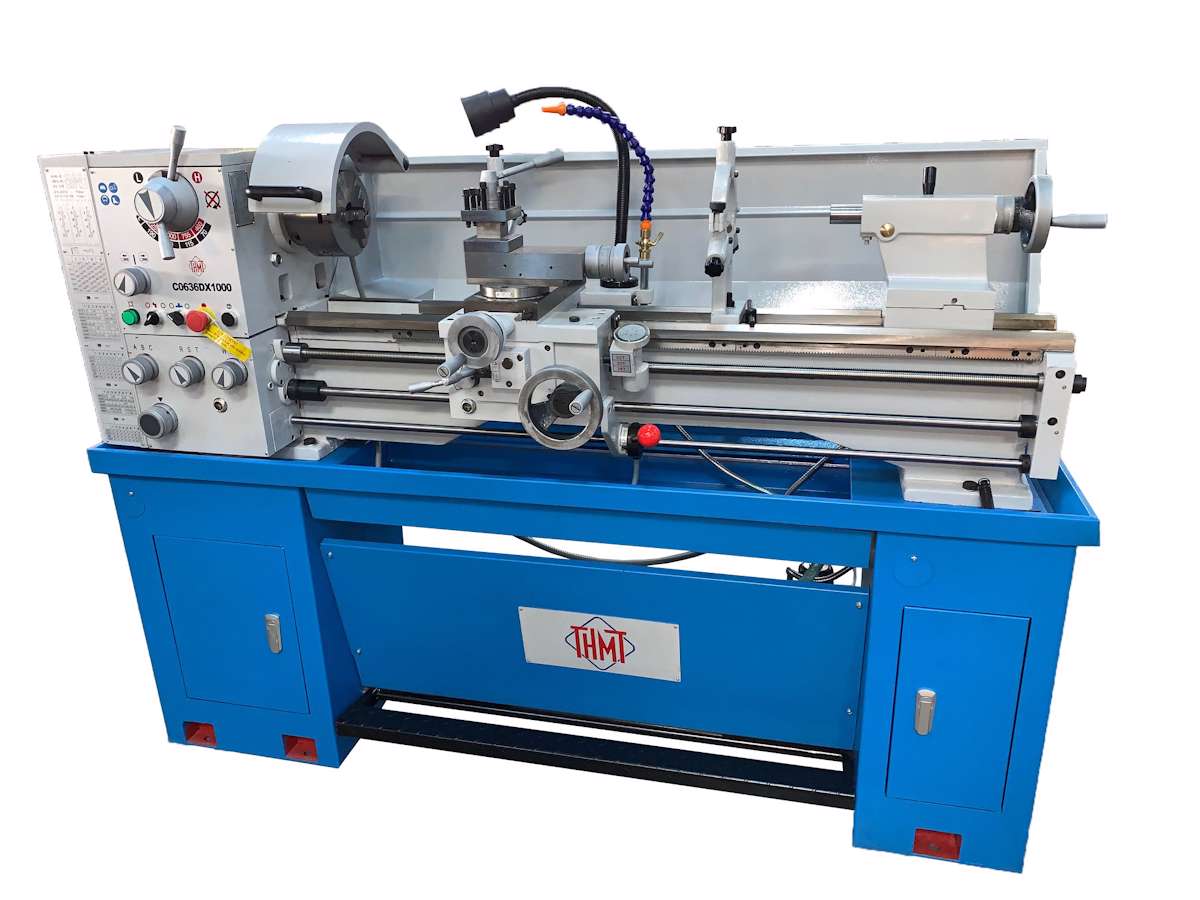
The centre laith
A centre lathe is the primary machine tool used for turning operations. It consists of several key components that work together to hold, rotate, and shape the workpiece with precision.
Note
Centre lathes are versatile machines that can perform multiple operations beyond basic turning, including facing, drilling, threading, and creating tapered surfaces, making them essential tools in manufacturing and machining workshops.
Main parts of the laith
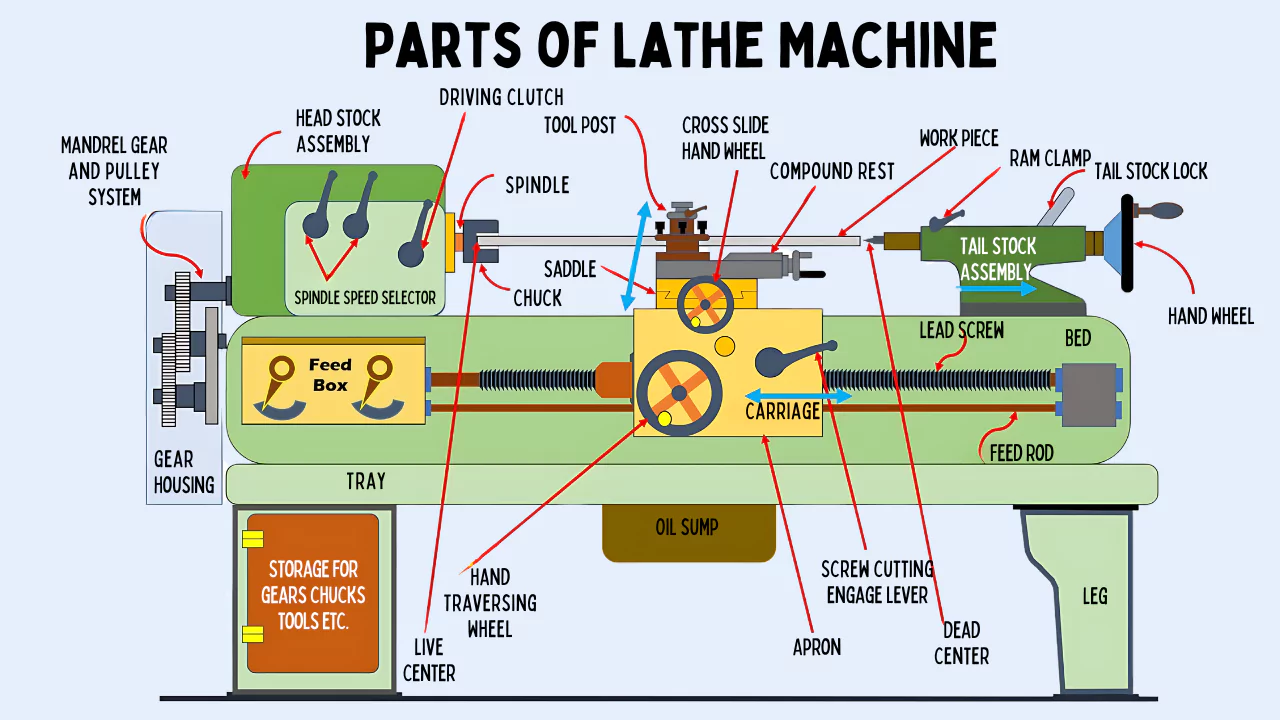
Understanding the main components of a centre laith is essential for effective turning operations. Each part has a specific function that contributes to the overall machining process:
- Headstock - Houses the gearbox and machine spindle that provides the rotational power to turn the workpiece
- Chuck - Securely holds and grips the workpiece during the turning operation
- Saddle - Supports and enables the movement of the cutting tool along the length of the laith bed
- Bed - Provides a smooth, precise track that allows the saddle to slide along the laith's length
- Cross slide - Enables the cutting tool to move across the workpiece, allowing for different cutting depths and operations
- Compound slide - Pivots the cutting tool at various angles, particularly useful for creating tapered surfaces
- Tailstock - Supports longer workpieces and enables drilling operations on the laith
- Toolpost - Holds and positions a variety of cutting tools used for different machining operations
Important
The combination of these components allows the centre laith to perform various operations including turning, facing, drilling, and threading on cylindrical workpieces. Understanding how each component functions is crucial for safe and effective laith operation.
Summary
Key Points to Remember:
- Turning shapes cylindrical materials by rotating the workpiece and moving a cutting tool against it
- The centre laith is the main machine used for turning operations
- The workpiece rotates while the cutting tool moves - this is the opposite of drilling operations
- Key components include the headstock (power), chuck (holding), and various slides (tool movement)
- Each laith component has a specific function that contributes to the overall turning process