Magnetic Particle Test (Leaving Cert Engineering): Revision Notes
📚Revision Notes
Magnetic Particle Test
What is magnetic particle testing?
Magnetic particle testing (MPT) is a non-destructive testing method used to detect surface and near-surface defects in ferromagnetic materials. This technique works by using magnetic fields to locate cracks, discontinuities, and other flaws that could compromise the integrity of a component.
Note
Ferromagnetic materials are substances that can be strongly magnetised, such as iron, steel, and nickel. This property is essential for magnetic particle testing to work effectively.
The test operates on a simple but effective principle: when a ferromagnetic component is magnetised, it creates a magnetic field with a clear and identifiable pattern. Any defects or cracks in the material will disrupt this magnetic field pattern, making them visible and detectable.
How the test works
The magnetic particle testing process follows several key steps that work together to reveal hidden defects. Understanding each step is crucial for proper test execution and accurate results.
Example
Step-by-Step Process: Magnetic Particle Testing
Step 1: Magnetisation An electromagnetic yoke is positioned on or near the test component. This device creates a strong magnetic field that passes through the ferromagnetic material being tested.
Step 2: Particle application Fine iron filings or magnetic dust are sprayed or sprinkled over the surface of the test piece. These particles are attracted to magnetic fields and will arrange themselves according to the field pattern.
Step 3: Pattern observation Under normal conditions, the iron particles distribute evenly across the surface following the magnetic field lines. However, when a crack or defect is present, it interrupts the magnetic field pattern.
Step 4: Defect identification Defects appear as clusters or lines of iron particles that have gathered at the location of the flaw. These concentrations are easily visible and clearly indicate the position and approximate size of the defect.
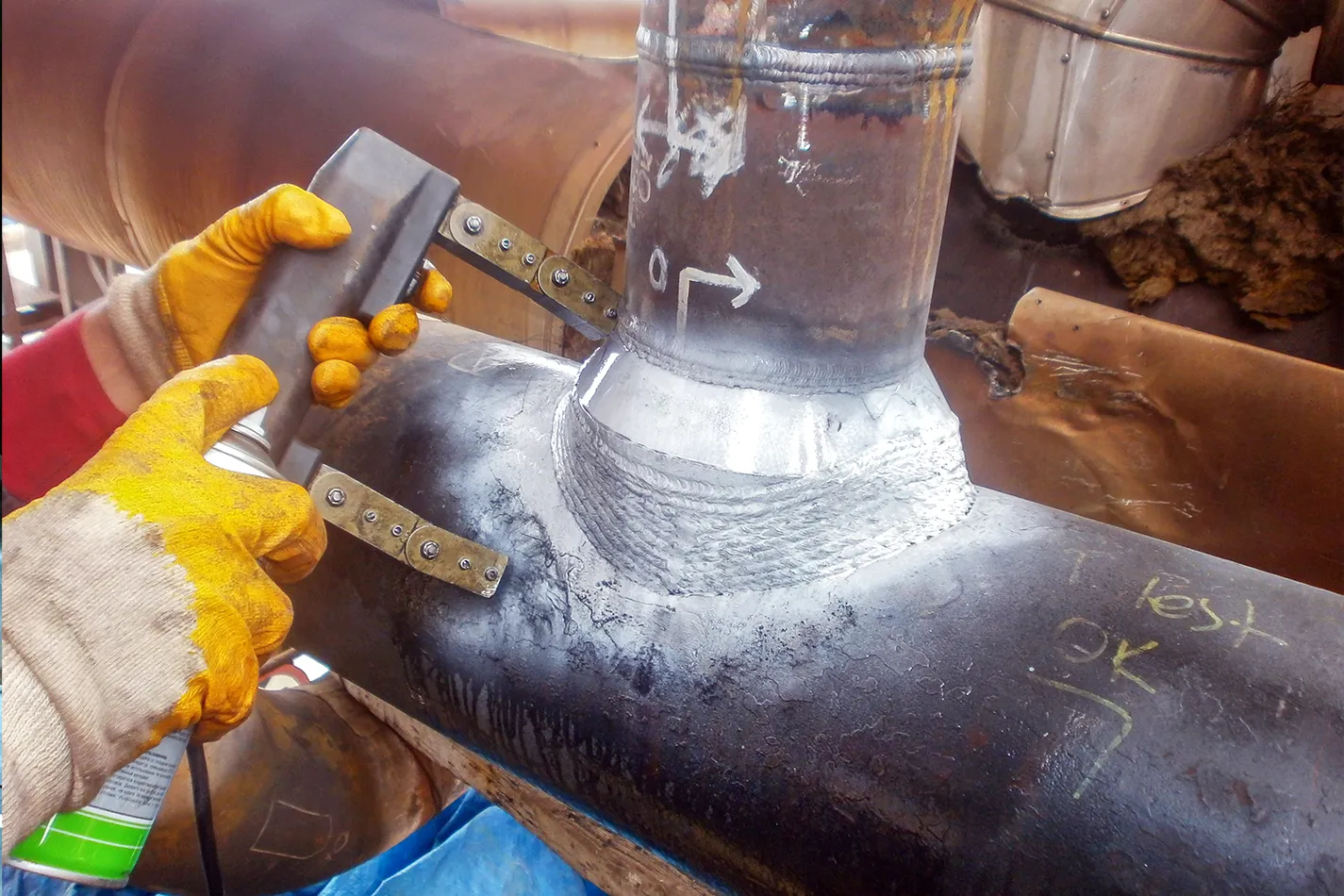
Equipment used
The primary equipment for magnetic particle testing includes specialised tools that work together to create and visualise magnetic field patterns:
- Electromagnetic yoke: Creates the magnetic field needed for the test
- Iron filings or magnetic powder: Fine particles that reveal the magnetic field pattern
- Power source: Provides electricity to operate the electromagnetic equipment
- Cleaning materials: Used to prepare the surface before testing
Important
Proper equipment calibration and maintenance is essential for accurate results. The electromagnetic yoke must generate sufficient magnetic field strength to detect defects while iron particles must be fine enough to show clear patterns.
Applications
Magnetic particle testing is particularly valuable in the automotive industry where component failure can have serious safety consequences. The method provides critical quality assurance for high-stress components.
Automotive industry applications include:
- Engine blocks: Checking for cracks that could lead to coolant or oil leaks
- Piston heads: Detecting stress fractures from repeated heating and cooling cycles
- Crankshafts: Finding fatigue cracks that could cause catastrophic engine failure
The method is also used in other industries for testing welds, castings, and forged components where surface integrity is critical for safety and performance.
Advantages of magnetic particle testing
Magnetic particle testing offers numerous benefits that make it a preferred choice for surface defect detection in ferromagnetic materials:
- Quick and efficient: Results are visible immediately during the test
- Sensitive detection: Can find very small surface and near-surface cracks
- Cost-effective: Relatively inexpensive equipment and materials
- Portable: Equipment can be taken to the component location
- Visual results: Defects are clearly visible without complex interpretation
These advantages make magnetic particle testing an ideal choice for both field inspections and laboratory testing environments.
Limitations
While magnetic particle testing is highly effective, it does have important limitations that must be understood before selecting this testing method:
Important
Critical Limitations to Consider:
- Material restrictions: Only works on ferromagnetic materials (iron, steel, nickel)
- Surface preparation: Requires clean surfaces free from paint, rust, or oil
- Magnetic interference: Other magnetic fields can affect results
- Depth limitation: Cannot detect deep internal flaws effectively
Understanding these limitations is essential for proper test planning and ensuring that magnetic particle testing is the appropriate method for your specific application.
Key terminology
Note
Important Terms in Magnetic Particle Testing:
- Ferromagnetic materials: Materials that can be strongly magnetised (iron, steel, nickel)
- Discontinuities: Interruptions in the material structure such as cracks or voids
- Electromagnetic yoke: U-shaped electromagnet used to create the magnetic field
- Magnetic field lines: Invisible lines showing the direction of magnetic force
- Workpiece: The component being tested
Remember!
Summary
Key Points to Remember:
- Magnetic particle testing uses magnetism to reveal surface and near-surface cracks in ferromagnetic materials
- Iron particles cluster at defect locations where the magnetic field is disrupted
- The method is quick, visual, and highly effective for detecting small cracks
- It's widely used in automotive applications for testing critical engine components
- Only ferromagnetic materials can be tested using this method