Tungsten Inerth Gas Welding T.I.G (Leaving Cert Engineering): Revision Notes
📚Revision Notes
Tungsten Inert Gas Welding (T.I.G)
What is TIG welding?
Tungsten Inert Gas (TIG) welding is a specialised welding process designed for metals that have hard outer oxide layers, such as aluminium and stainless steel. These metals are extremely difficult to weld using conventional methods because their oxide layers prevent proper penetration of the weld pool between the parent metals.
Note
The oxide layers on aluminium and stainless steel act as barriers that traditional welding methods cannot effectively penetrate. This is why specialised techniques like TIG welding were developed to overcome these metallurgical challenges.
The key advantage of TIG welding is its ability to overcome the challenges posed by these tough oxide layers through the use of alternating current (AC) and inert gas shielding.
How TIG welding works
The TIG welding process uses several important components working together:
The electrode system
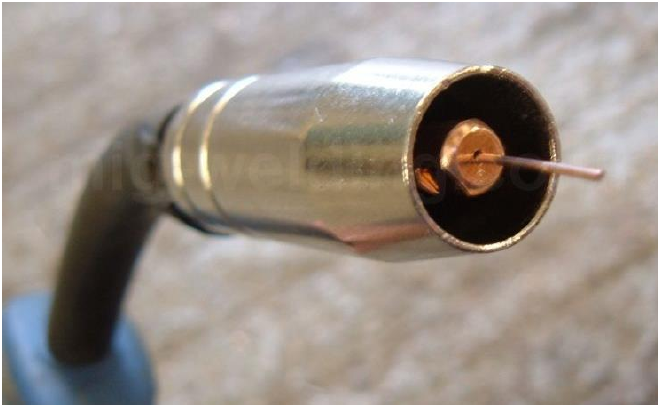
- A tungsten electrode is used because tungsten has a very high resistance to heat
- The electrode is not consumed during the welding process
- Alternating Current (AC) is applied, which has a peeling and breaking effect on oxide layers
- This allows the weld pool to form fully between the parent metals
Important
The alternating current is critical for TIG welding success. The AC current creates a cathodic cleaning action that breaks down oxide layers - without this, proper weld penetration would be impossible on metals like aluminium.
Gas shielding system
- An inert gas (typically argon) protects the weld pool from atmospheric contamination
- The gas is supplied from a pressurised cylinder through a flowmeter and regulator
- This creates a protective shield around the welding area
Filler material
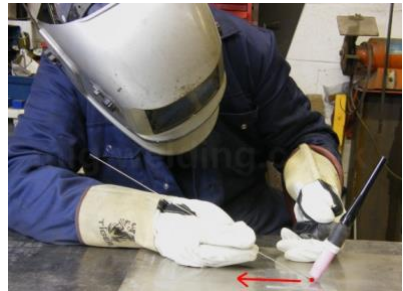
- A filler rod is normally used as an off-cut of the metal being welded
- This provides additional material to form a strong weld joint
TIG welding equipment setup
The complete TIG welding system includes:
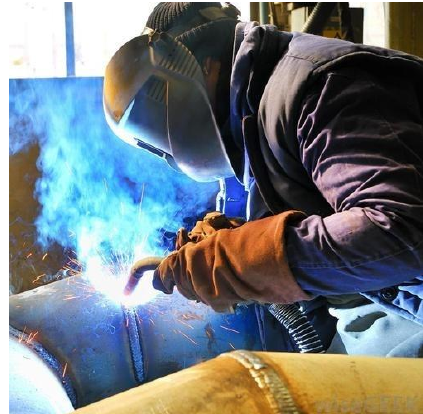
- Welding torch with tungsten electrode
- Power source (providing AC current)
- Shielding gas cylinder with flowmeter and regulator
- Work return cable (earth connection)
- Optional water cooler for torch cooling during extended use
- Optional remote control for precise parameter adjustment
Note
The water cooling system becomes essential for extended welding operations, as the tungsten electrode and torch can reach extremely high temperatures that would otherwise damage the equipment or affect weld quality.
Applications of TIG welding
TIG welding is particularly useful in industries where precision and clean welds are essential. The process requires considerable skill and precise timing, making it a specialist welding technique.
Example
Practical Applications of TIG Welding:
Aluminium bicycle frames - Requires precise, clean welds for both structural integrity and aesthetic appeal. The thin-walled tubing demands exact heat control that only skilled TIG welders can provide.
Car exhaust tailpipes - Stainless steel components need corrosion-resistant joints that can withstand high temperatures and road conditions.
Stainless steel fabrication - Applications where both appearance and strength matter, such as architectural features, food processing equipment, and marine components.
Aluminium welding with TIG
Aluminium presents special challenges in welding applications. The metal oxidises very quickly when heated, creating additional barriers to successful joining.
Important
Aluminium Oxidation Challenge:
Aluminium forms a tenacious oxide layer almost instantly when exposed to heat and oxygen. This oxide layer has a much higher melting point than the base aluminium, creating a barrier that prevents proper weld pool formation. Without proper technique, the weld will be weak and porous.
The tenacious oxide layer must be overcome using:
- Inert gas protection (argon)
- Cathodic action of the arc on the workpiece
- Proper AC current settings
This combination allows aluminium to be welded successfully using the TIG process.
Summary
Key Points to Remember:
- TIG welding uses tungsten electrodes and inert gas to weld metals with oxide layers like aluminium and stainless steel
- Alternating Current (AC) breaks down oxide layers, allowing proper weld penetration
- Argon gas provides essential protection from atmospheric contamination during welding
- TIG welding requires high skill levels and precise timing for successful results