Components of an Earthquake (Leaving Cert Geography): Revision Notes
📚Revision Notes
Components of an Earthquake
Introduction to earthquakes
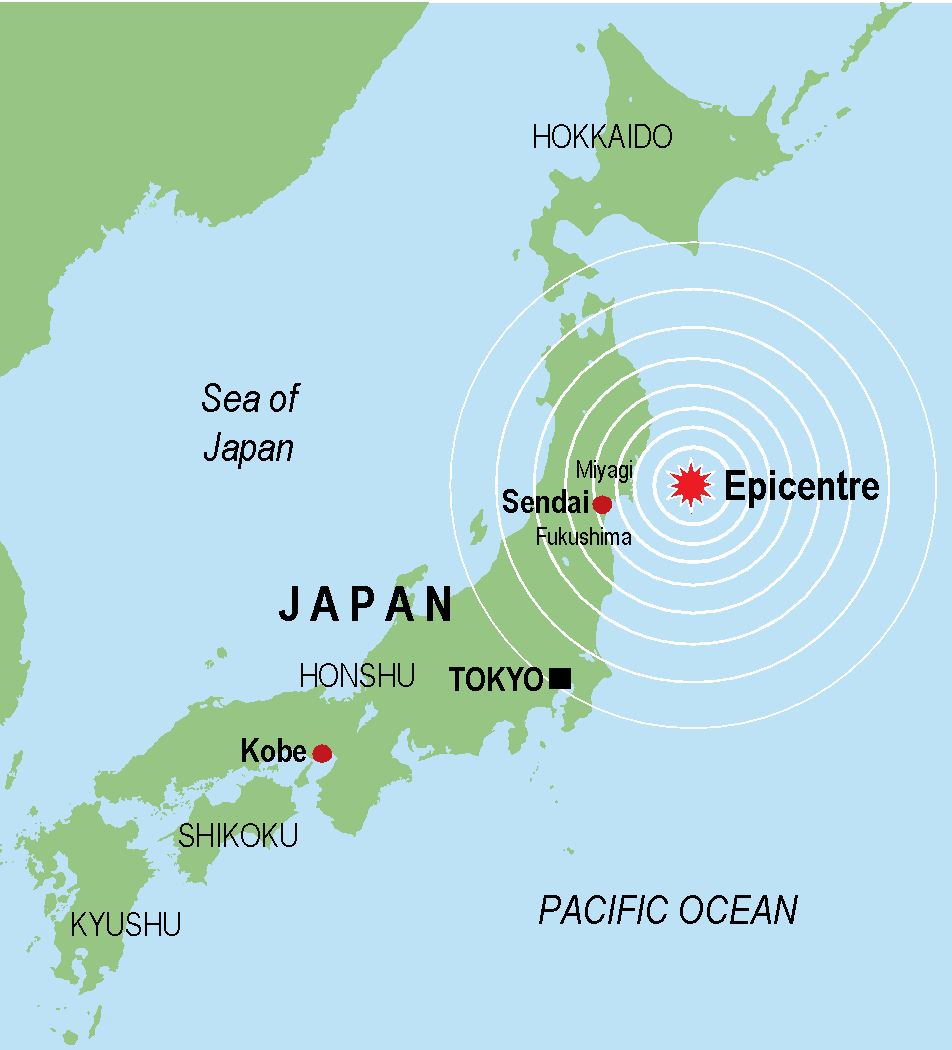
Earthquakes occur frequently around the world, with several hundred happening each day. While most are minor and cause little damage, the major earthquake zones are located along fault lines at tectonic plate boundaries. When large earthquakes do occur, such as the Indonesian earthquake of 2004 and the Japanese earthquake of 2011, the effects can be devastating and may trigger destructive waves called tsunamis.
Important
Magnitude refers to the power or strength of an earthquake, measured using the Richter scale - a base-ten scale where each increase of one unit means the earthquake is ten times stronger.
Seismic waves
When tectonic plates move and cause an earthquake, they create vibrations of energy known as seismic waves (also called shockwaves). These waves travel at different speeds and arrive at different times, which is why seismographs can detect the various wave patterns during an earthquake event.
Note
Understanding seismic wave behaviour is essential for earthquake detection and measurement. The time differences between wave arrivals help scientists determine both the location and strength of earthquakes.
Primary waves (P-waves)
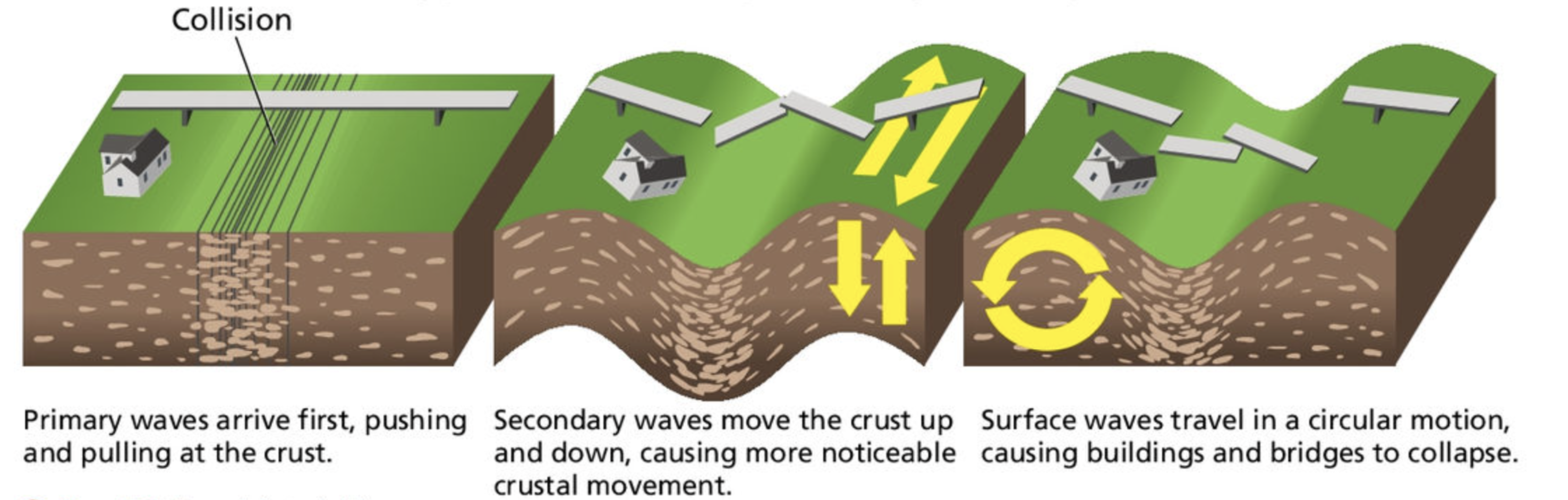
These are the fastest-moving waves and arrive first at any location. P-waves can travel through liquids, solids, and gases. Despite being the quickest, they carry relatively little energy and cause minimal damage. P-waves create a pushing and pulling motion as they move through rock, similar to how sound waves move through air. If you were to slam a door, the resulting vibration in nearby windows demonstrates how P-waves affect rock during an earthquake.
Secondary waves
Secondary waves arrive after P-waves and carry much more energy. These waves make the ground move up and down, creating more noticeable shaking than P-waves produce. The increased energy in secondary waves means they can cause more structural damage to buildings and infrastructure.
Surface waves
Surface waves are the last to arrive but are responsible for almost all earthquake damage. They move slowly along the Earth's surface, causing the ground to move both up and down as well as from side to side. This complex motion causes buildings, roads, and other infrastructure to sway violently, often leading to collapse.
Important
Seismic waves are vibrations of energy created by plate movement during an earthquake, recorded by instruments called seismographs.
Key components of an earthquake
Scientists called seismologists have identified four main parts that help describe and understand earthquakes.
Focus
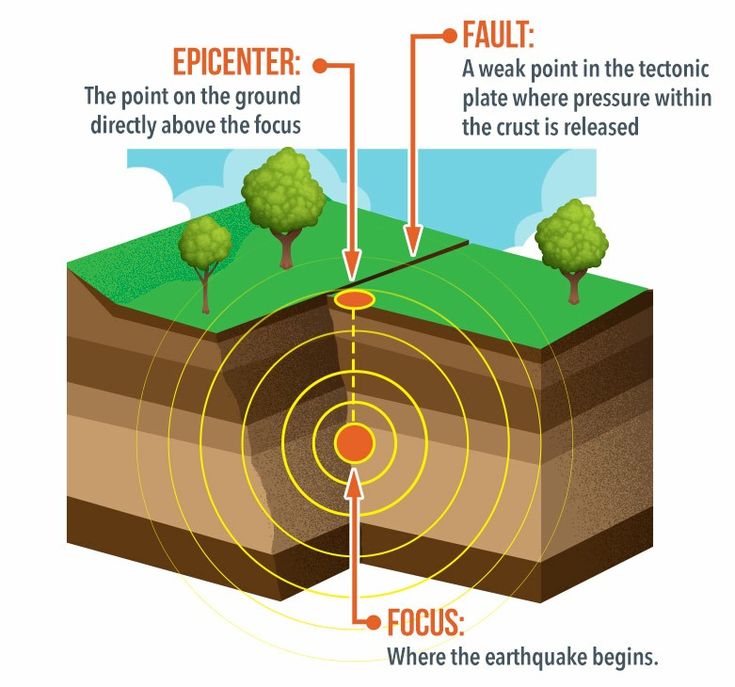
The focus represents the point inside the Earth's crust where the earthquake originates. This is where the initial rupture occurs along a fault line as tectonic plates move against each other. The focus can occur at different depths:
- Shallow focus earthquakes occur within 0-70 km of the surface and are typically the most dangerous because seismic waves have less distance to travel before reaching populated areas
- Intermediate focus earthquakes occur between 70-300 km below the surface
- Deep focus earthquakes occur more than 300 km below the surface, usually where oceanic and continental plates collide at convergent boundaries
Note
The depth of an earthquake's focus is crucial for determining its potential impact. Shallow earthquakes pose the greatest threat to human populations because their energy has less distance to dissipate before reaching the surface.
Epicentre
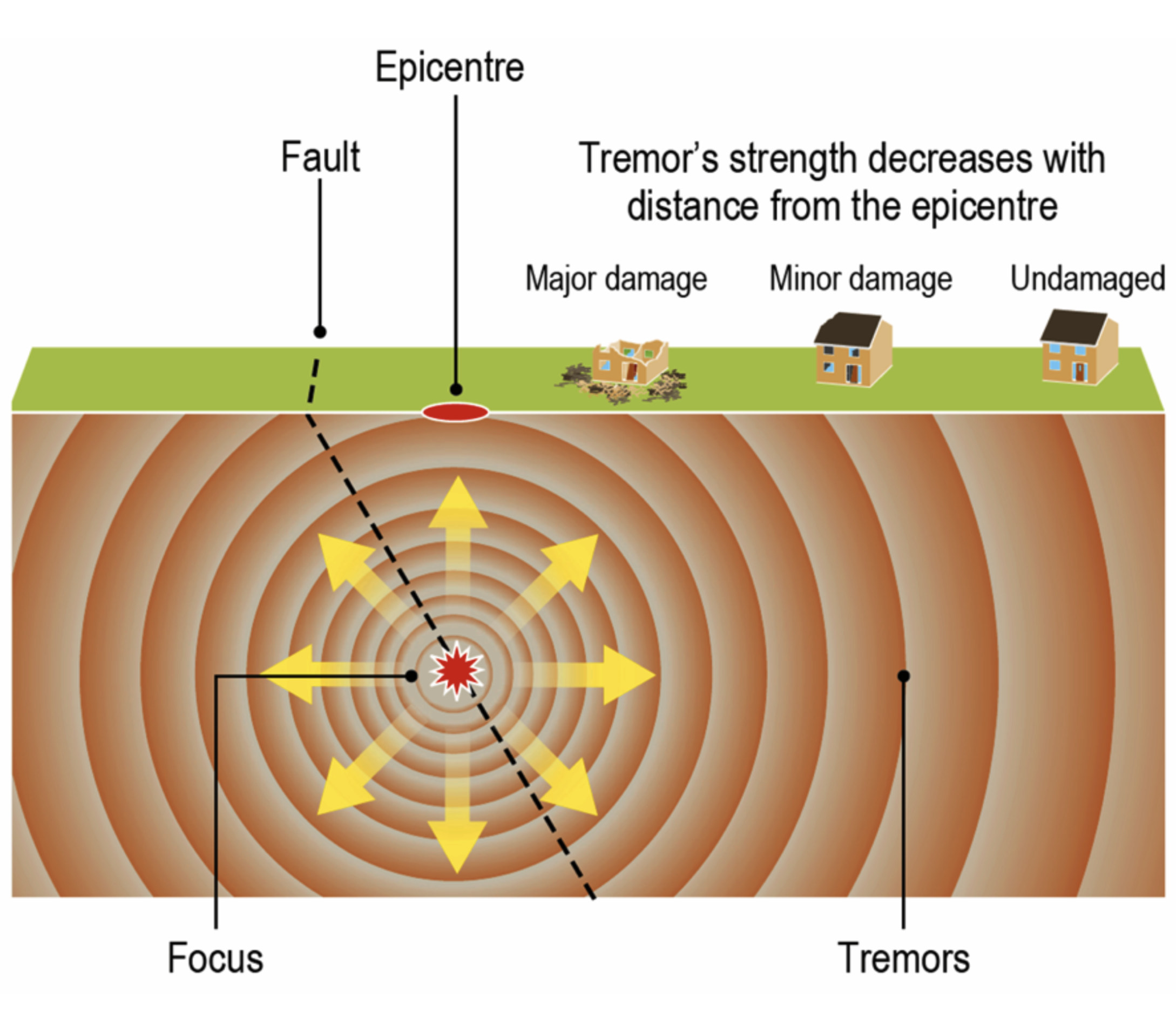
The epicentre is located directly above the focus on the Earth's surface. This point experiences the strongest earthquake effects because it represents the shortest distance seismic waves must travel from their source. When earthquakes occur near urban areas, the epicentre location determines which communities face the greatest risk of damage and loss of life.
Fault line
Fault lines are fractures or gaps in the Earth's crust that form when tectonic plates move against each other. Nearly all earthquakes originate along fault lines due to massive pressure build-up between plates. As plates attempt to move past each other, friction between rock layers causes them to become stuck. Pressure accumulates over many years until a rock layer finally breaks, allowing the plates to jolt free and creating an earthquake.
Example
Understanding Fault Line Mechanics:
Step 1: Tectonic plates attempt to move past each other Step 2: Friction causes rock layers to stick and lock together Step 3: Pressure builds up over many years as plates continue pushing Step 4: Rock layer eventually breaks under extreme pressure Step 5: Plates suddenly jolt free, releasing stored energy as an earthquake
Seismic waves (tremors)
These shock waves radiate outward from the focus in all directions. The waves are strongest at the epicentre and gradually lose energy as they travel further from their source. Understanding this pattern helps explain why earthquake damage typically decreases with distance from the epicentre.
Aftershocks
Aftershocks are additional seismic events that occur after the main earthquake. These happen as the Earth's crust continues to adjust and settle following the initial rupture. While usually smaller than the original earthquake, aftershocks can still cause damage, particularly to structures already weakened by the main event.
Summary
Key Points to Remember:
-
Focus is the underground point where earthquakes begin, while the epicentre is the surface point directly above it where effects are strongest
-
Three types of seismic waves: P-waves (fastest, least damage), secondary waves (medium speed, more energy), and surface waves (slowest but most destructive)
-
Shallow focus earthquakes (0-70 km deep) are the most dangerous because seismic waves travel shorter distances to reach the surface
-
Fault lines are fractures in the Earth's crust where tectonic plates meet, and most earthquakes occur along these boundaries
-
Aftershocks continue after the main earthquake as the crust adjusts, and can still cause significant damage to weakened structures