Social and Political Decisions: Economic Migrants (Leaving Cert Geography): Revision Notes
📚Revision Notes
Social and political decisions: Economic migrants
What is migration?
Migration describes the movement of people from one location to another across geographical boundaries such as national borders, oceans, or rivers. This geographical concept involves two main categories of people who relocate:
Note
Two Main Categories of Migration:
- Economic migrants - people seeking better financial opportunities
- Political refugees - people fleeing persecution or conflict
This topic focuses specifically on economic migrants and how social and political decisions influence their movement patterns.
Economic migrants
An economic migrant is someone who relocates from their home country seeking better financial opportunities and improved living standards elsewhere. These individuals are driven by the desire to escape poverty, unemployment, and limited prospects in their homeland whilst pursuing a more secure and prosperous future.
Push and pull factors
Economic migrants face various push factors that compel them to leave their home countries and pull factors that attract them to destination countries.
Important
Push Factors (forces that drive people away):
- Economic instability and poor job markets
- Lack of employment opportunities
- Political instability affecting economic conditions
- Social challenges that limit quality of life improvements
Pull Factors (forces that attract people):
- Better-paying employment opportunities
- Higher living standards and quality of life
- Access to superior education and healthcare systems
- Brighter future prospects for their families
Global scale of economic migration
As of 2023, over 281 million people worldwide are international migrants, representing of the global population. A substantial proportion of these are economic migrants. For instance, many people from African nations migrate to Europe seeking enhanced job opportunities and living conditions.
Note
Economic migrants make significant contributions to their host countries' economies by filling labour shortages in both low-skilled and high-skilled sectors, thereby boosting productivity and economic growth. However, this migration also presents challenges including integration difficulties, language barriers, cultural differences, and potential exploitation that require careful attention and support systems.
Case study: Migration in Ireland
Ireland's economic transformation over recent decades has made it an attractive destination for economic migrants, particularly from European Union countries and beyond.
Current immigration patterns
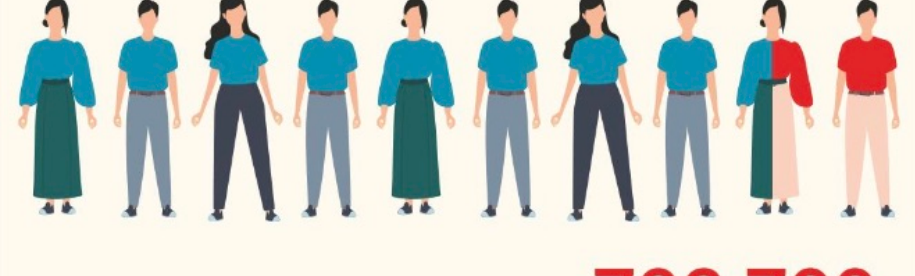
The 2022 Census revealed that 703,700 non-Irish nationals live in Ireland, originating from over 200 countries worldwide. This figure represents of Ireland's total population and marks a significant increase from the 2016 Census. The largest non-Irish communities are Polish and UK citizens, followed by people from India, Romania, and Lithuania. Other substantial groups include Brazilian, Italian, Latvian, and Spanish nationals.
Social decision: EU enlargement and the Celtic Tiger
EU enlargement in Central and Eastern Europe coincided with Ireland's rapid economic development during the Celtic Tiger period. This social decision created a pathway for increased migration from Eastern European countries, particularly Poland and Lithuania, to Ireland.
Example
Migration Pattern Example: Polish Migration to Ireland
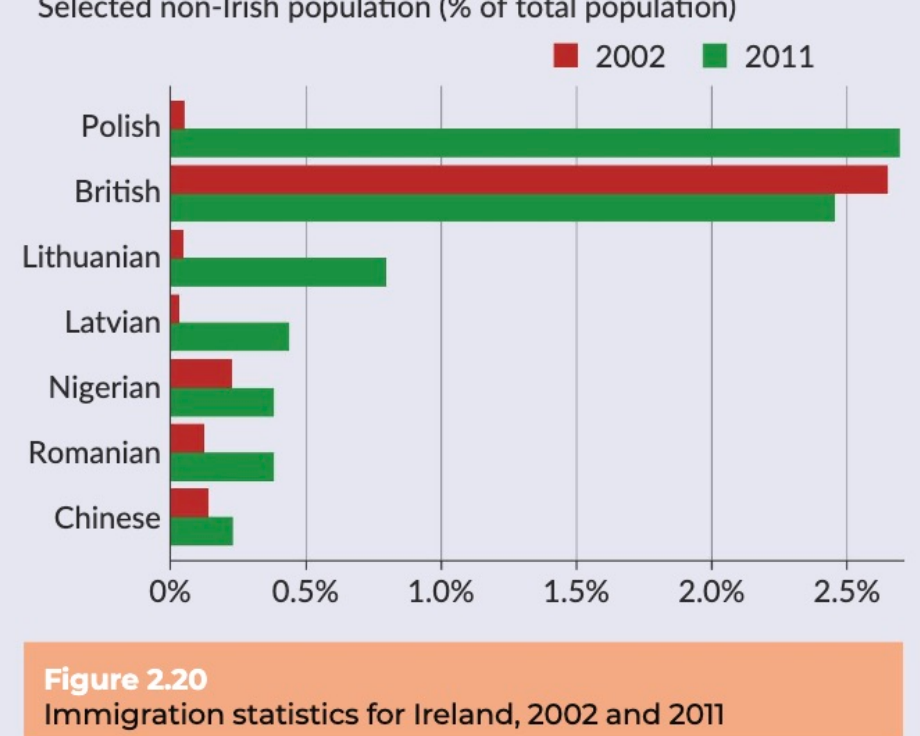
The migration statistics demonstrate dramatic changes between 2002 and 2008:
- Polish migration increased from virtually zero to over of the total population by 2011
- Polish nationals became the largest immigrant group
- An estimated 200,000 Eastern Europeans were living in Ireland by 2007-2008
- This represented approximately of the total population
Ireland's attractiveness stemmed from having one of Europe's lowest unemployment rates at during this period. The additional workforce benefited Ireland's economy by generating increased government revenue through higher tax collections. Immigration positively impacted Irish GDP by increasing labour supply and moderating wage growth rates.
Political decision: EU Blue Card policy
The EU Blue Card represents a migration policy tool introduced in 2011 to attract highly skilled non-EU workers to fill job vacancies in member states. To qualify for an EU Blue Card, non-EU workers must secure a valid job offer for highly qualified employment, meet specific education and experience requirements, and earn a minimum salary determined by the member state.
This policy addresses skilled worker shortages whilst creating legal pathways for regulated migration. Ireland issued 29,000 EU Blue Cards to economic migrants in 2021, significantly encouraging economic migration into the country.
Example
Healthcare Sector Example: International Medical Professionals
The healthcare sector exemplifies this policy's impact:
- Many doctors, nurses, and healthcare professionals from other countries have migrated to Ireland
- They bring valuable expertise and knowledge that improves healthcare service quality
- This enhances the industry's competitiveness
Key Statistics:
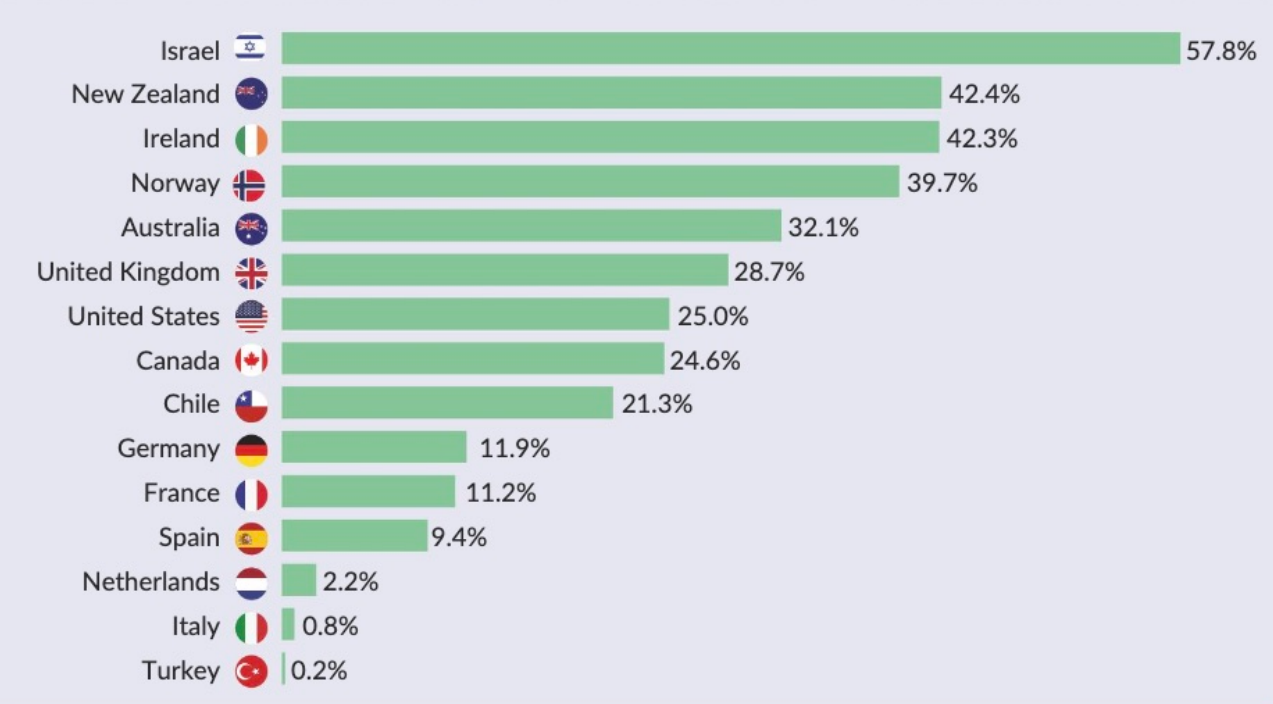
- Over of doctors registered in Ireland received training outside the European Union
- Primary countries of origin: India, Pakistan, and the Philippines
- Smaller numbers from Nigeria, Sudan, and other countries
- Over of nurses and midwives registered to work in Ireland in 2020 were trained outside the country
Important
Ireland ranks third globally for foreign-trained doctors at , behind only Israel () and New Zealand (), demonstrating the significant role of international medical professionals in the Irish healthcare system.
Social decision: Impact on Irish emigration
EU membership grants Irish citizens visa-free travel rights to other EU member states, enabling younger Irish people to seek employment opportunities abroad. This became particularly evident following the Celtic Tiger's collapse in 2008, when Ireland experienced renewed high emigration levels.
Between 2008 and 2012, over 200,000 Irish nationals emigrated as economic collapse led to rising unemployment. Although emigration from Ireland decreased over the past decade, the recent cost of living crisis has triggered increased Irish emigration. In 2022, 59,600 Irish people emigrated, representing an increase of 4,800 compared to the previous year's figures.
Summary
Key Points to Remember:
-
Economic migrants relocate seeking better financial opportunities and living conditions, driven by push factors (poverty, unemployment) and attracted by pull factors (better jobs, higher living standards)
-
Globally, 281 million people are international migrants ( of world population), with economic migrants forming a substantial proportion
-
Ireland's non-Irish population reached 703,700 people () by 2022, with Polish and UK citizens forming the largest groups following EU enlargement during the Celtic Tiger period
-
The EU Blue Card policy facilitates skilled migration, with Ireland issuing 29,000 cards in 2021, particularly benefiting healthcare with of doctors being foreign-trained
-
EU membership enables Irish emigration during economic downturns, with 200,000 leaving between 2008-2012 and emigration increasing again during the recent cost of living crisis