The First Trial (The Trial of the 16) (Leaving Cert History): Revision Notes
📚Revision Notes
The First Trial (The Trial of the 16)
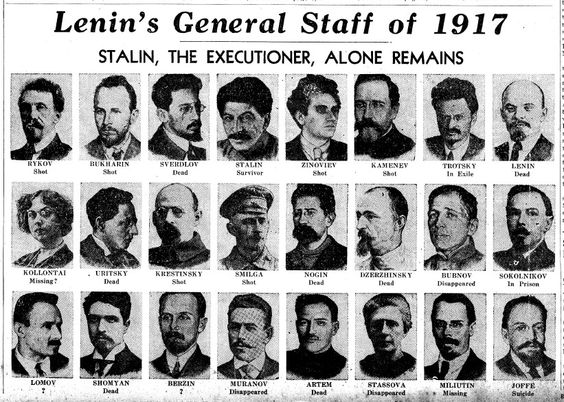
The Trial of the Sixteen was the first of the infamous Moscow Show Trials during Stalin's Great Purge. Held in August 1936, this trial marked the beginning of a series of public trials aimed at eliminating Stalin's rivals and consolidating his power. The defendants were prominent Bolshevik leaders who had been close to Lenin, making their downfall particularly shocking.
Key Figures
- Grigory Zinoviev: A former close associate of Lenin and a key figure in the Communist Party.
- Lev Kamenev: Another prominent Bolshevik and ally of Lenin, who had also played a significant role in the party.
Charges
The sixteen defendants were accused of being part of a vast conspiracy to assassinate Soviet leaders, including Stalin, and to overthrow the Soviet government. They were charged with:
- Treason
- Espionage
- Terrorism
- Plotting with exiled leader Leon Trotsky to sabotage the Soviet state.
A Brief Note on the Nature of the Trial
- Show Trial: The trial was highly publicised and orchestrated by Stalin to serve as a warning to others. The outcome was predetermined, and the defendants were forced to confess under extreme pressure and torture.
- Confessions: The accused confessed to the crimes, although these confessions were extracted through coercion and likely false. The confessions were used to justify their execution and to demonstrate the supposed threat posed by these "enemies of the state."
- All sixteen defendants were found guilty and sentenced to death.
- They were executed shortly after the trial, sending a clear message of Stalin's ruthlessness and the fate that awaited those who opposed him.
Impact and Significance
- The Trial of the Sixteen was a key event in Stalin's Great Purge, which saw the elimination of many old Bolsheviks and potential rivals.
- It instilled fear within the Communist Party and the Soviet populace, ensuring greater control for Stalin.
- The trial was a tool of propaganda, depicting Stalin as the protector of the Soviet Union against traitors and conspirators.
- It marked the beginning of a period of intense political repression, where thousands would be purged in subsequent trials.
Key Quotes
- "The enemies of the people must be destroyed like mad dogs." - Stalin's propaganda message during the trials.
- "I am guilty of everything of which I am accused." - Grigory Zinoviev's forced confession.
- "It is better to die than to live dishonestly." - Lev Kamenev, reflecting the hopelessness of the accused.
The Importance of the Trial of the Sixteen for Stalin's Control of Russia
- The Trial of the Sixteen was crucial for Stalin's control of Russia as it marked the beginning of the Great Purge, a campaign of political repression aimed at eliminating all potential threats to his authority.
- By targeting prominent Bolshevik leaders like Grigory Zinoviev and Lev Kamenev, Stalin demonstrated that no one was beyond his reach, even those who had been close to Lenin. The highly publicised confessions, obtained through torture and coercion, served as propaganda to justify the elimination of these "enemies of the state." This created a climate of fear, discouraging dissent and consolidating Stalin's power within the Communist Party.
- The trial also allowed Stalin to remove key figures who could oppose his policies or challenge his leadership. It sent a clear message to other party members and the Soviet populace that any opposition would be met with severe consequences.
- The Trial of the Sixteen thus played a pivotal role in establishing Stalin's totalitarian regime, ensuring his unchallenged control over the Soviet Union by systematically eradicating his rivals and instilling widespread fear.