The Popular Front Government and the Government of National Defence (Leaving Cert History): Revision Notes
📚Revision Notes
The Popular Front Government and the Government of National Defence
The Popular Front Government - Key Context
- The Popular Front government emerged in response to the events of February 1934 and the rise of right-wing leagues. This coalition brought together left-wing parties, including the Socialists, Communists, and the Radical Party.
- The main motivation for the Communists, driven by directives from Moscow to counter the rise of Nazism in Germany, was to collaborate with other parties against Fascism.
- On Bastille Day, July 14, 1935, nearly 400,000 people marched in Paris, showing strong support for the Popular Front. In early 1936, they published their programme, advocating for economic and social reforms, collective security, and the abolition of the leagues.
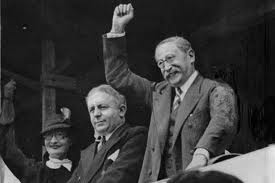
- Their slogan, "Bread, Peace, and Liberty," emphasised their focus on social justice.
- The Popular Front won the 1936 general election with a clear majority, and Socialist leader Léon Blum became Prime Minister. This victory marked a significant shift in French politics, aiming to address the economic hardships and social inequalities of the time.
Sit-in Strikes and the Matignon Agreement
-
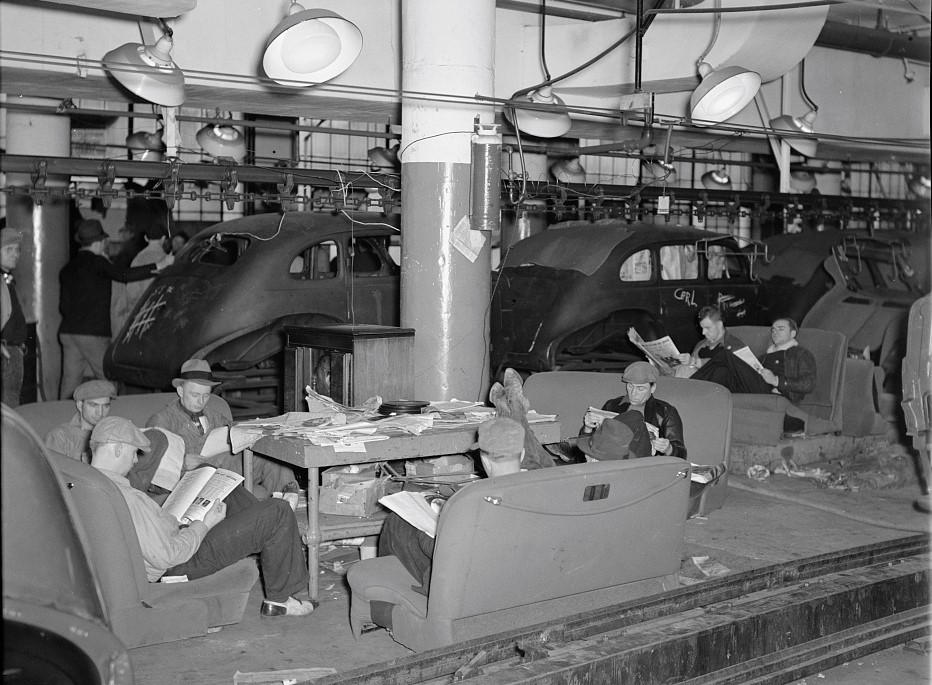
The victory of the Popular Front raised workers' expectations for improved conditions. This led to a spontaneous wave of sit-in strikes across the country, bringing industry to a halt.
-
Faced with this crisis, Prime Minister Blum convened a conference at the Hotel Matignon with employers and the CGT, the trade union federation.
-
The resulting Matignon Agreement included significant concessions: a 12 percent wage increase, a forty-hour workweek with paid holidays, and the nationalisation of the armaments industry and the Bank of France. These measures were initially well-received, as they addressed workers' demands while avoiding revolutionary upheaval.
Pause in Reforms
- Despite initial successes, economic problems persisted.
- The government's borrowing to cover costs led to the devaluation of the franc, reducing export competitiveness. Inflation remained high, and industrial production struggled to recover.
- By March 1937, Blum called for a pause in reforms, recognising the need to stabilise the economy.
Collapse of the Popular Front
- Blum's attempts to implement economic policies through decree laws were thwarted by the Senate, leading to his resignation in June 1937.
- Frustrated by repeated blockages, he stated, "Everything I attempted to do has been blocked." Subsequent Popular Front governments also failed to resolve France's economic difficulties.
- By April 1938, the Popular Front collapsed, replaced by the conservative Government of National Defence, headed by Edouard Daladier of the Radical Party.
Government of National Defence
- The new government reversed many of the Popular Front's reforms, favouring policies that benefited business interests.
- They rolled back the forty-hour work week and cut government spending. In response, the CGT organised a one-day strike in November 1938, which was met with a harsh crackdown by the government. This response weakened the left-wing, reducing union membership and diminishing their influence.
Problems Continue
- By 1939, France's societal issues remained unresolved. The population was affected by the loss of 1.3 million men in World War I, and a declining birth rate exacerbated labour shortages. The reliance on migrant labour increased social and political tensions.
- Agriculture remained inefficient, protected by tariffs that kept farm prices high. The industrial sector struggled with small-scale production, impeding economic reform efforts. Overall, France's economy remained backwards, characterised by significant class conflict and political instability.
- The frequent changes in government between 1920 and 1939, driven by the interests of small producers, traders, and farmers, prevented substantial improvements and left France ill-prepared for the challenges of World War II.