Larkin's Rift with the TUC and the End of the Strike (Leaving Cert History): Revision Notes
📚Revision Notes
Larkin's Rift with the TUC and the End of the Strike
Trade Union Congress (TUC)
- The Trade Union Congress (TUC), founded in 1868, is a national federation of trade unions in the United Kingdom.
- The TUC was a central organisation that coordinated the activities of its affiliated unions, representing millions of workers across various sectors.
- It aims to advance the interests of working people by advocating for better working conditions, wages, and employment rights.
- The TUC also engages in political lobbying and campaigns for social justice and provides a collective voice for labour in national policy discussions.
- During the 1913 Dublin Lockout, the TUC supported the striking workers and their families through financial aid and solidarity efforts.
Larkin's Rift with the TUC
- James Larkin, a charismatic and militant labour leader, initially had strong support from the Trade Union Congress (TUC) during the 1913 Dublin Lockout.
- However, tensions arose as Larkin's approach became increasingly radical. Larkin criticised the TUC for what he perceived as their cautious and conservative stance, which he felt was insufficiently supportive of the intense struggle in Dublin.
- He accused the TUC leadership of being more interested in maintaining good relations with employers than fighting for workers' rights.
- This rift culminated in Larkin's public denouncement of the TUC, which strained relationships and highlighted the ideological differences within the labour movement.
- Despite this, the TUC continued to provide some financial support, although the solidarity between the British and Irish labour movements was tested.
Setup of the Irish Citizen Army
-
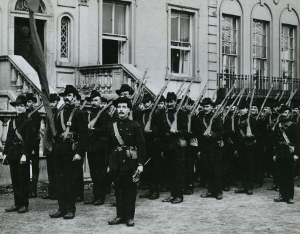
The Irish Citizen Army (ICA) was established in 1913 by James Connolly and other leaders as a direct response to the police brutality against strikers during the Dublin Lockout.
- Initially formed to protect workers from violent attacks, the ICA soon evolved into a well-organised armed force advocating for both labour rights and Irish independence.
- Composed mainly of ITGWU members, the ICA provided security during strikes and demonstrated a willingness to confront both employers and the state.
-
Connolly's leadership infused the ICA with a strong socialist ideology, linking the fight for workers' rights with the broader struggle for national liberation.
-
The ICA played a significant role in the Easter Rising of 1916, symbolising the intersection of labour and nationalist movements in Ireland.
The End of the Strike
-
The 1913 Dublin Lockout ended in January 1914, after nearly seven months of intense struggle.
-
Key figures like James Larkin and James Connolly continued to lead and inspire the workers, but the protracted nature of the conflict and the severe hardship endured by families forced many to return to work out of necessity.
-
The strike officially ended without achieving its primary goals, as the employers, led by William Martin Murphy, refused to recognise the ITGWU or significantly improve working conditions.
-
However, the end of the strike was symbolic of the working class's resilience and determination. It highlighted the urgent need for labour reforms and galvanised future efforts.
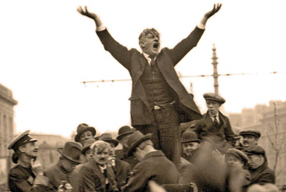
- The Lockout underscored the power of collective action and left a lasting legacy in the history of the labour movement in Ireland, paving the way for future advancements in workers' rights and union recognition.
Essay Preparation - Was the Dublin Lock-out a short-term victory for employers? Explain.
Whilst essays are very personal in their approach, it can never hurt to have a detailed road map to help guide your ideas or answers. Here is a quick and easy essay plan for a question that could well appear as a 40-marker in a DBQ on the significance of the strike and lock-out for the workers in the short term.
Introduction Paragraph (Keep it brief)
- Brief overview of the 1913 Dublin Lockout.
- Introduce the question of whether it was a short-term victory for employers.
- State the thesis that while employers won in the short term, the lockout had significant long-term consequences that eventually favoured the labour movement.
Paragraph 1-2 - Short-term Victory for Employers
Immediate Outcomes:
- Employers' refusal to recognise the ITGWU and maintain their anti-union stance.
- The lockout's economic impact forced many workers to return to work without achieving their demands.
Use of Lockouts and Ultimatums:
- Employers successfully used lockouts to force workers to choose between union membership and their jobs.
- High-profile employer figures like William Martin Murphy led a coordinated response to the strike.
Tactics and Support:
- Employers received financial and logistical support, including donations from business leaders like Lord Iveagh.
- Police protection and use of strikebreakers (scabs) helped maintain business operations.
Paragraph 2-3 Hardships for Workers
Economic Hardship:
- Many workers and their families faced severe poverty, hunger, and eviction due to prolonged unemployment.
- Limited strike pay and aid could not sustain the large number of affected families.
Failure to Achieve Immediate Goals:
- Workers failed to secure recognition for the ITGWU or significant improvements in working conditions.
- Short-term demoralisation of the labour movement and depletion of union resources.
Social and Health Impact:
- Increased social and health issues among the working class due to the prolonged dispute.
Paragraph 3-4 Long-term Impact on Labour Movement
- Despite the short-term defeat, the ITGWU and labour movement emerged more unified and determined.
- The lockout galvanised broader support for workers' rights and unionism in Ireland.
- Public sympathy and awareness of workers' plight increased, influencing future labour legislation.
- The lockout highlighted the need for social and economic reforms, paving the way for improved labour laws and protections.
- Key figures like James Larkin and Connolly became enduring labour struggle symbols.
- The Irish Citizen Army's formation and involvement in the Easter Rising linked the labour movement to the broader fight for Irish independence.
Conclusion Paragraph (Paragraph 4-5)
- Summarise the key points made in the essay.
- Reiterate the thesis that while the Dublin Lockout was a short-term victory for employers, its long-term consequences significantly bolstered the labour movement.
- Conclude by reflecting on the lasting legacy of the lockout in shaping labour rights and unionism in Ireland.