Answering Key Questions (Leaving Cert History): Revision Notes
📚Revision Notes
Answering Key Questions
- Why were the activities of the Apprentice Boys a source of tension in Derry?
- The Apprentice Boys' parades commemorated the Siege of Derry, a Protestant victory over Catholic forces, which many Catholics saw as a celebration of their historical defeat.
- The parades often passed through or near Catholic areas, leading to feelings of intimidation and provocation among the Catholic community.
- The symbolism of the parades, with Union flags and Protestant imagery, reinforced Protestant dominance and made Catholics feel excluded and marginalised.
- The parades were seen by many Catholics as a reminder of ongoing discrimination and inequality in areas like housing, jobs, and political representation.
- Catholics in Derry viewed the Apprentice Boys as upholding Protestant supremacy, especially in a city where they were the majority population yet felt politically and socially sidelined.
- The parades were organised and supported by the unionist community, which was often in direct opposition to the goals of the Catholic civil rights movement.
- The refusal of the Apprentice Boys to alter their parade routes to avoid Catholic areas was seen as a refusal to acknowledge Catholic grievances.
- Tensions were heightened during the 1960s, a time when the civil rights movement was gaining momentum, making the parades a flashpoint for wider conflicts.
- How did sectarian tensions impact the Apprentice Boys of Derry parades?
- Sectarian tensions made the parades increasingly contentious, with both communities viewing them through the lens of their historical and political grievances.
- Catholics in Derry saw the parades as a provocative display of Protestant power, leading to increased hostility and resistance from the Catholic population.
- The parades became a battleground for broader issues, such as civil rights and the struggle for equality, making them more than just traditional celebrations.
- As tensions rose, the parades were often accompanied by heavy policing, which further antagonised the Catholic community, who viewed the police as biassed.
- The presence of the Royal Ulster Constabulary (RUC) at the parades, perceived by Catholics as a Protestant force, added to the sense of intimidation and conflict.
- Sectarian divisions meant that any attempt to alter or cancel the parades was met with strong resistance from the Protestant community, who saw them as a crucial part of their cultural identity.
- The parades sometimes led to violent clashes between Catholics and Protestants, increasing the sense of mistrust and fear on both sides.
- The parades became a symbol of the deep divisions in Derry, with each year bringing renewed tensions and the potential for violence.
- What events led to violence following the Apprentice Boys parade on 12 August 1969?
- In the weeks leading up to the parade, tensions in Derry were already high due to civil rights protests and clashes between Catholics and the RUC.
- The Bogside area, a predominantly Catholic district, was heavily barricaded by residents in anticipation of trouble during the parade.
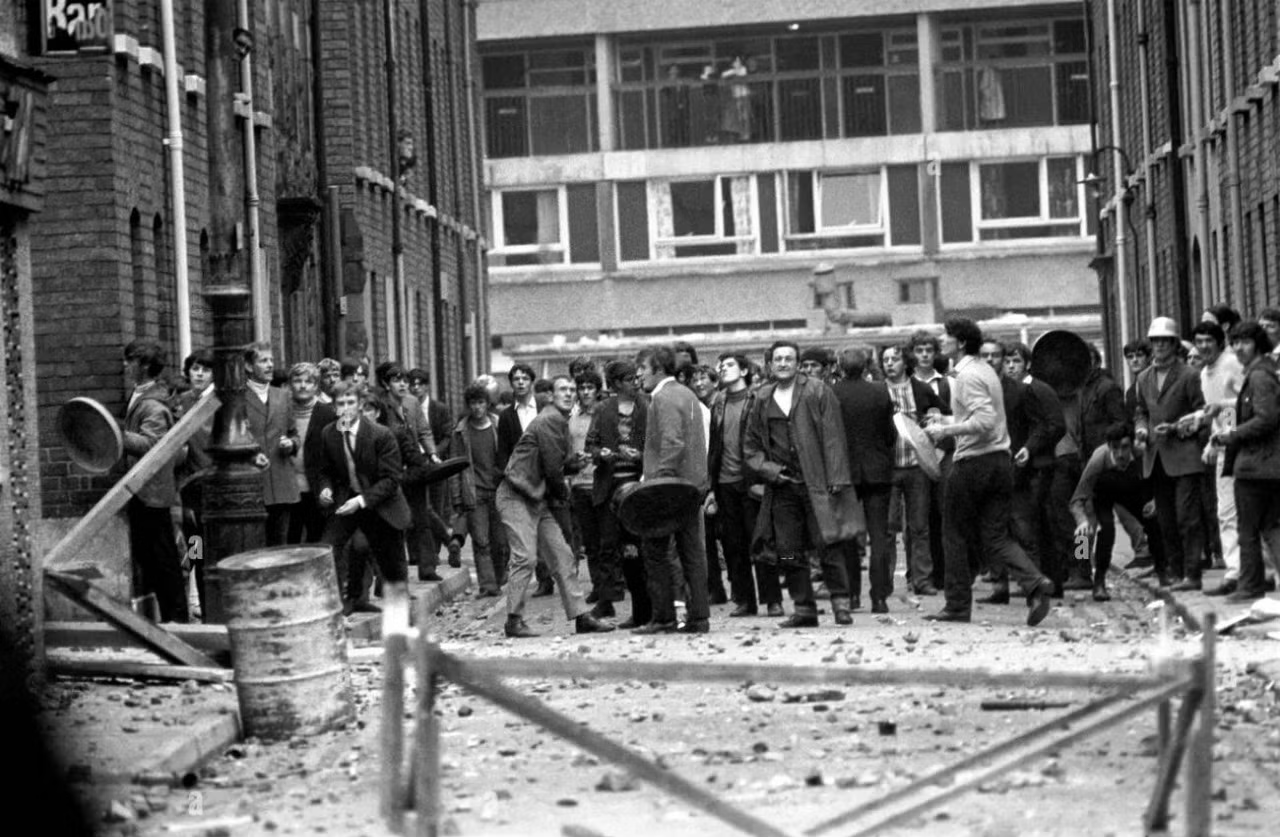
- On 12 August, as the Apprentice Boys' parade passed near the Bogside, local Catholics began to protest, seeing the parade as a direct provocation.
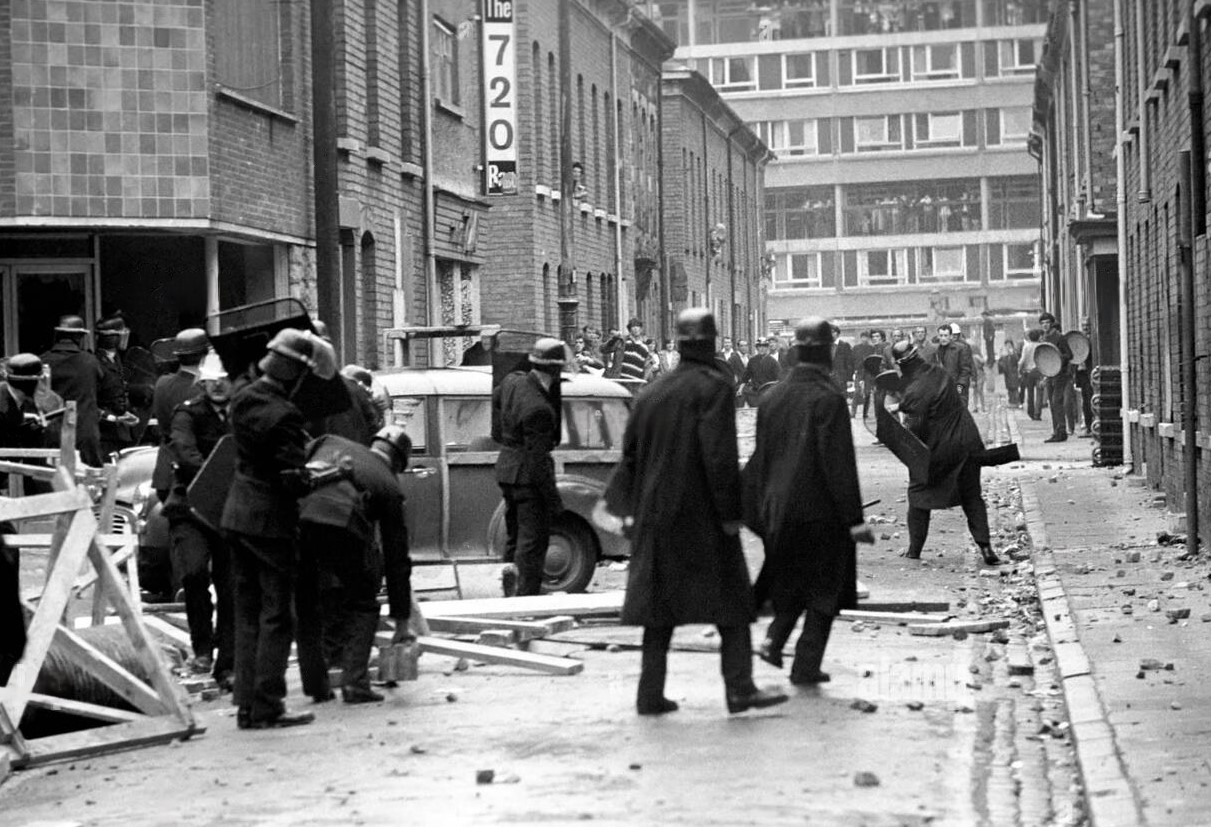
- Clashes erupted between Catholic residents and the RUC, who were attempting to maintain order but were viewed as siding with the Protestant marchers.
- The RUC's use of excessive force to disperse Catholic protesters was seen as excessive, leading to widespread anger and further violence.
- Rumours spread that loyalist mobs were planning to invade the Bogside, prompting the residents to intensify their defensive efforts.
- The escalating violence in the Bogside quickly drew in more people from both communities, turning the area into a battleground.
- The situation deteriorated rapidly, with petrol bombs, stones, and other missiles being used against the RUC, leading to what became known as the Battle of the Bogside.
- The deployment of the British Army on 14 August to restore order marked a significant escalation, showing that local security forces could no longer control the situation.
- The violence following the parade highlighted the deep-seated sectarian divisions in Northern Ireland, setting the stage for the widespread conflict that would become known as the Troubles.