Economic and Political Developments in Northern Ireland (Leaving Cert History): Revision Notes
📚Revision Notes
Economic and Political Developments in Northern Ireland
- After World War II, Northern Ireland faced significant economic challenges but also opportunities for growth and development.
- The war had left much of Europe devastated, but Northern Ireland, relatively unscathed by the destruction, was in a position to rebuild and modernise its economy.
- In terms of employment, the post-war period saw an initial surge in jobs due to reconstruction efforts and increased demand for goods.
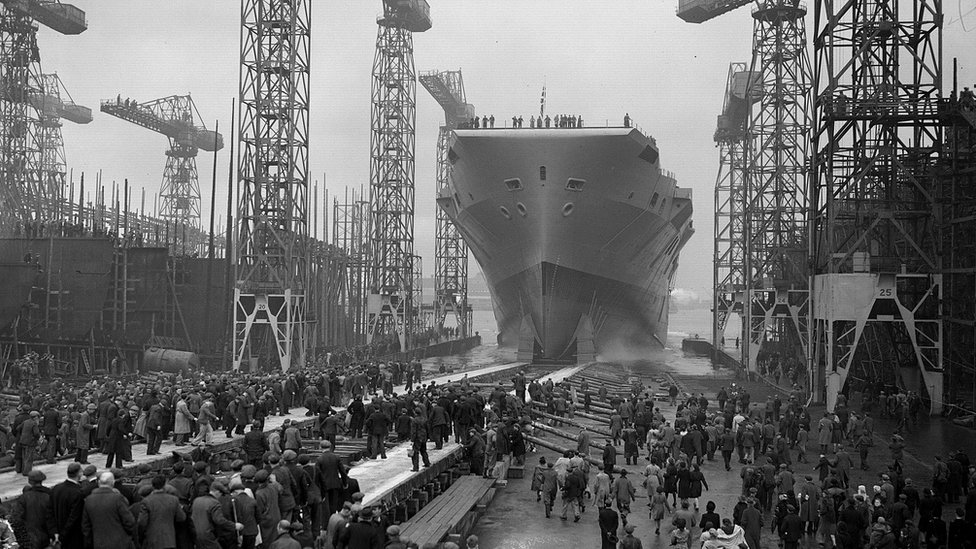
- The shipbuilding industry in Belfast, traditionally a cornerstone of Northern Ireland's economy, experienced a temporary revival as there was a need for new ships to replace those lost during the war.
- However, this boom was short-lived as global competition and the decline of the shipbuilding industry worldwide led to job losses by the 1950s.
- Similarly, the linen and textile industries, which had been significant employers, began to decline due to competition from synthetic materials and cheaper production costs abroad.
- To address these challenges, the Northern Ireland government sought to diversify the economy. Efforts were made to attract new industries, particularly manufacturing, and foreign investment.
- Industrial estates were developed, and tax incentives were offered to companies willing to set up operations in Northern Ireland.
- These measures helped create new jobs and reduce the reliance on traditional industries, although unemployment remained a persistent problem.
- In agriculture, post-war developments were marked by modernisation and increased productivity.
- The government encouraged farmers to adopt new techniques and machinery, leading to more efficient farming practices. This shift was supported by government subsidies and grants aimed at boosting agricultural output.
- As a result, Northern Ireland's agriculture sector became more competitive, contributing to the overall economy.
- However, the shift towards mechanisation also meant fewer jobs in rural areas, leading to migration from the countryside to urban centres in search of work.
Key Terms from this section
- Shipbuilding: A major industry in Belfast, historically central to Northern Ireland's economy but faced decline after WWII.
- Textile industry: Another traditional industry in Northern Ireland, particularly in linen production, which struggled in the post-war period.
- Modernisation: The process of adopting new technologies and methods to improve efficiency and productivity, particularly in agriculture.
The Anti-Partition Movement: What It Was and Its Importance
- The Anti-Partition Movement emerged as a significant political force in Northern Ireland after World War II, driven by nationalist opposition to the partition of Ireland.
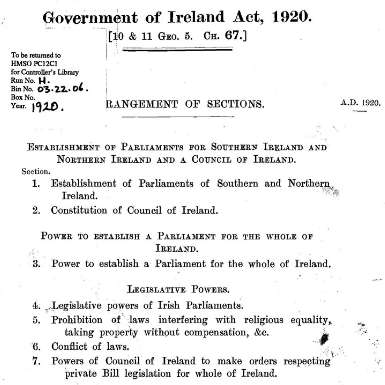
- Partition, formalised by the Government of Ireland Act 1920, had created Northern Ireland as a separate entity from the rest of the island, which many Irish nationalists never accepted. They viewed partition as unjust and believed that all of Ireland should be united as one independent country.
- The Anti-Partition Movement was organised by nationalist and republican groups who sought to campaign against the division of Ireland.
- The movement was particularly active during the late 1940s and early 1950s, as the political landscape began to shift with the end of the war and the broader decolonisation movement across the British Empire.
- Nationalists hoped that international pressure and changing attitudes within Britain would lead to a reconsideration of partition.
- One of the key strategies of the Anti-Partition Movement was to raise awareness of the issue both in Ireland and internationally.
- Nationalist leaders like Éamon de Valera, then Taoiseach (Prime Minister) of Ireland, were vocal in their opposition to partition and worked to garner support from the Irish diaspora, particularly in the United States.
- The movement also sought to influence British public opinion by highlighting the discriminatory practices faced by the Catholic nationalist minority in Northern Ireland.
- The Anti-Partition Movement was important because it kept the issue of Irish unity on the political agenda.
- Although it did not succeed in ending partition, it laid the groundwork for future campaigns and movements, including the civil rights movement of the 1960s, which sought to address the grievances of the Catholic minority in Northern Ireland.
- The movement also contributed to the ongoing tension and conflict in the region, as it highlighted the deep divisions between the nationalist and unionist communities.
Key Terms from this section
- Anti-Partition Movement: A political campaign led by Irish nationalists to end the partition of Ireland and achieve a united Ireland.
- Government of Ireland Act 1920: The British law that established the partition of Ireland, creating Northern Ireland and Southern Ireland (later the Irish Free State).
The Border Campaign and the IRA
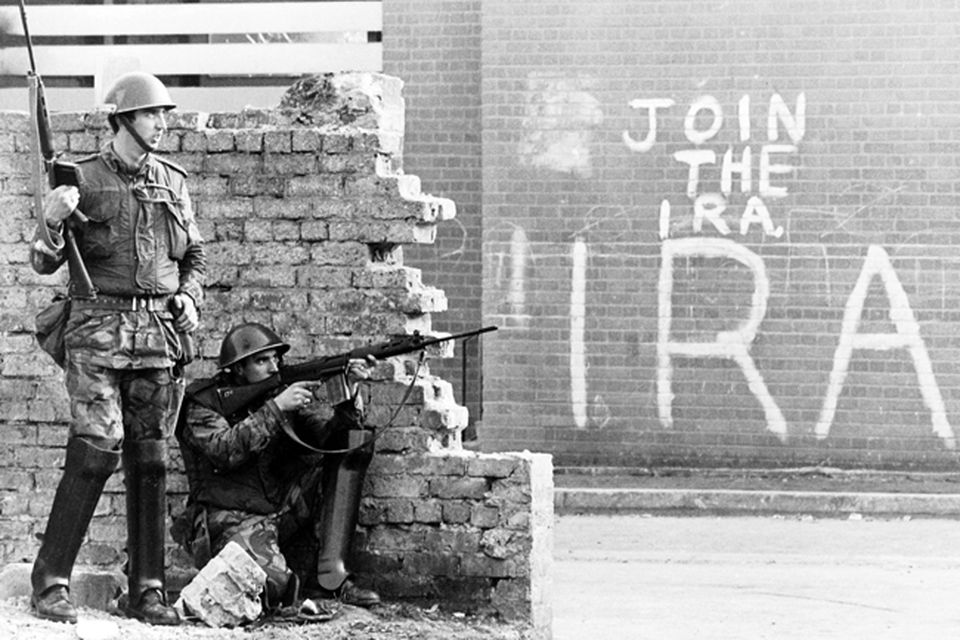
- The Border Campaign was a military campaign carried out by the Irish Republican Army (IRA) from 1956 to 1962, aimed at ending the partition of Ireland and bringing about the reunification of Northern Ireland with the Republic of Ireland.
- This campaign was one of the IRA's most significant efforts to challenge British rule in Northern Ireland after World War II.
- The IRA, a paramilitary organisation committed to Irish republicanism, believed that armed struggle was necessary to achieve Irish unity.
- The Border Campaign, also known as Operation Harvest, involved a series of guerrilla attacks, primarily along the border between Northern Ireland and the Republic of Ireland.
- These attacks targeted British security forces, infrastructure, and economic assets in Northern Ireland to destabilise the region and pressure the British government to withdraw.
- The campaign began in December 1956 with attacks on police barracks and other installations. The IRA hoped that these actions would inspire a broader uprising among the nationalist population in Northern Ireland and lead to international support for their cause.
- However, the campaign did not gain the widespread support the IRA had anticipated. Many in the nationalist community were reluctant to back the violence, and the campaign failed to attract significant international attention or support.
- British and Northern Irish security forces, including the Royal Ulster Constabulary (RUC) and the B-Specials, responded with a robust counter-insurgency effort, which included increased surveillance, arrests, and internment of suspected IRA members.
- By the early 1960s, the IRA had suffered heavy losses, and the campaign was effectively defeated. In 1962, the IRA officially called off the Border Campaign, acknowledging its failure to achieve its objectives.
- Despite its lack of success, the Border Campaign had lasting impacts. It exposed the limitations of the IRA's military strategy and highlighted the challenges of achieving Irish unity through armed struggle.
- The campaign also reinforced the deep divisions within Northern Ireland and contributed to the ongoing tensions that would eventually lead to the Troubles in the late 1960s.
Key Terms from this section
- Border Campaign: A military campaign by the IRA from 1956 to 1962 aimed at ending the partition of Ireland and reuniting Northern Ireland with the Republic of Ireland.
- Irish Republican Army (IRA): A paramilitary organisation dedicated to ending British rule in Ireland and achieving Irish unity.
- Operation Harvest: The code name for the IRA's Border Campaign, focused on guerrilla warfare along the Northern Ireland border.
Key Question: Was the Border Campaign a Success or a Failure?
- The Border Campaign (1956-1962), launched by the Irish Republican Army (IRA), is widely regarded as a failure. The campaign aimed to end the partition of Ireland by destabilising Northern Ireland and pressuring the British government to withdraw. However, the campaign did not achieve its primary objective of reuniting Northern Ireland with the Republic of Ireland.
- The IRA's strategy of guerrilla warfare along the border, targeting British security forces and infrastructure, failed to gain significant support from the nationalist community in Northern Ireland or attract meaningful international attention.
- The lack of widespread popular backing was a major setback for the campaign. Many within the nationalist community were reluctant to support violent methods, especially in a period of relative economic stability and peace following World War II.
- Moreover, the robust response from British and Northern Irish security forces, including the Royal Ulster Constabulary (RUC) and the B-Specials, led to the arrest and internment of many IRA members, further weakening the organisation.
- By 1962, the IRA recognised the campaign's futility and officially called it off. While the campaign demonstrated the IRA's continued commitment to Irish unity, it ultimately failed to achieve its goals, leading to a period of rethinking within the republican movement.