Michael Collins - A Deep Dive (Leaving Cert History): Revision Notes
📚Revision Notes
Michael Collins - A Deep Dive
-
Born in 1890 in County Cork, Michael Collins became involved in the Irish nationalist movement at a young age. He joined the Irish Republican Brotherhood (IRB) while in London and played a significant role in the 1916 Easter Rising.
-
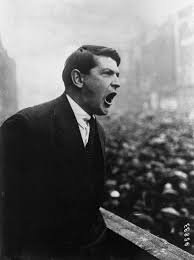
Collins emerged as a pivotal figure in the Irish War of Independence (1919-1921), where he served as the Director of Intelligence for the Irish Republican Army (IRA). His intelligence network, combined with guerrilla tactics, significantly weakened British control in Ireland.
-
He was instrumental in developing and executing the IRA's guerrilla warfare strategy, which involved hit-and-run attacks, ambushes, and the assassination of British intelligence officers, most notably during Bloody Sunday in November 1920.
-
As a leading member of Sinn Féin, Collins played a crucial role in the political strategy that accompanied the military campaign, advocating for independence and setting the stage for negotiations with the British government.
- Despite his reservations, Collins was appointed as a key member of the Irish delegation that negotiated the Anglo-Irish Treaty in 1921. His involvement was partly due to his military influence and the respect he commanded within the movement.
- During the Treaty negotiations, Collins faced immense pressure as he balanced the British government's demands with the Irish people's expectations. He saw the Treaty as a pragmatic step towards full independence, although he recognised it as a compromise.
- Collins was instrumental in securing the Boundary Commission as part of the Treaty, which was intended to address the issue of Northern Ireland's borders. He believed this could lead to a more favourable outcome for Irish nationalists.
- The oath of allegiance required by the Treaty was a point of contention, but Collins viewed it as a temporary measure that could be overcome in time, emphasising the practical benefits of establishing the Irish Free State.
- After the Treaty was signed, Collins returned to Ireland to face a deeply divided country. The split over the Treaty led to his eventual role as a leader of the pro-Treaty forces during the Irish Civil War.
- As Chairman of the Provisional Government and Commander-in-Chief of the National Army, Collins worked tirelessly to establish the institutions of the new Irish Free State despite growing opposition from anti-Treaty forces.
- Collins believed that the Treaty would provide a foundation for future progress, allowing Ireland to build its strength and eventually achieve full independence. He saw it as a stepping stone rather than an endpoint.
- His leadership during the Civil War was marked by both military and political efforts to consolidate the gains of the Treaty, but the conflict took a heavy toll on the country and on Collins personally.
- Michael Collins was assassinated on 22 August 1922 during an ambush at Béal na Bláth in County Cork. His death was a significant blow to the Irish Free State, as he was seen as a unifying figure capable of leading Ireland through its most challenging period.
- Collins' legacy is complex; he is remembered as a brilliant strategist, a key architect of modern Ireland, and a leader whose decisions, particularly around the Treaty, continue to spark debate.
- His vision for Ireland, combining pragmatism with a long-term goal of full independence, shaped the future of the Irish state and left a lasting impact on Irish history.