Methods of Heat Transfer (Leaving Cert Home Economics): Revision Notes
📚Revision Notes
Methods of Heat Transfer
Understanding how heat moves to cook food is fundamental to successful cooking. All cooking techniques work by transferring thermal energy to food, and this happens through three distinct mechanisms.
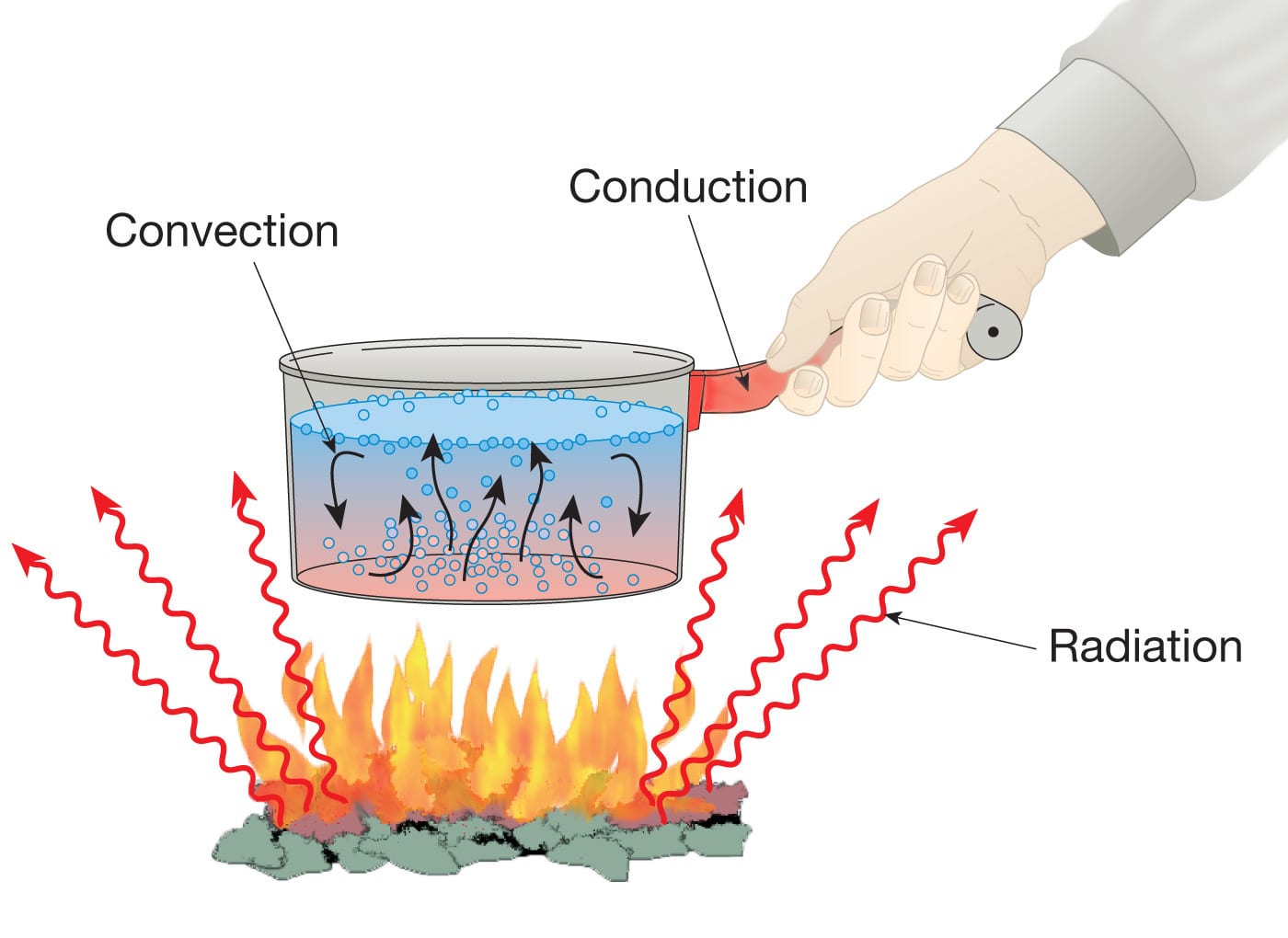
The three methods of heat transfer
Heat can be transferred to food in three main ways:
- Conduction - through direct contact
- Convection - through moving air or liquid
- Radiation - through direct heat rays
Conduction
Important
Conduction occurs when heat energy moves from one particle to another through direct contact, creating a chain reaction until the entire substance becomes heated.
Conduction happens when you place food directly onto a hot surface. The heat energy passes from the hot material to the cooler food particles, spreading throughout the food item.
Example
Practical Example: Heat Transfer Through Cookware
When you place a saucepan on a hot hob ring, the base of the pan heats up first. This heat then travels through the metal and into the cooking oil or liquid inside, which then cooks the food.
Cooking methods using conduction:
- Frying
- Boiling
- Stewing
Convection
Important
Convection transfers heat through the movement of heated air or liquid currents around the food.
This method works because hot air or liquid rises whilst cooler air or liquid falls, creating circulation patterns that distribute heat evenly around the food.
Example
Practical Example: Oven Air Circulation
Inside an oven, hot air rises from the heating elements and cooler air sinks, creating circulating currents that cook food uniformly from all sides.
Cooking methods using convection:
- Boiling
- Steaming
- Baking
- Roasting
Radiation
Important
Radiation occurs when heat energy travels directly from the heat source to the food without needing contact or moving air/liquid.
With radiation, thermal energy moves in straight lines from the heat source to the food surface. This means food must be turned to ensure even cooking on all sides.
Example
Practical Example: Grill Heat Transfer
A grill element glows red-hot and sends heat rays directly to the food surface below. The food closest to the grill cooks first, requiring turning for complete cooking.
Cooking methods using radiation:
- Grilling
Combined heat transfer
Note
It's important to understand that many cooking techniques use more than one type of heat transfer simultaneously. For instance, boiling uses both conduction (from the pan base) and convection (through the moving water currents).
Factors affecting cooking method choice
When deciding which cooking method to use, consider these practical factors:
Food characteristics:
- Thickness and density - Thin items like bacon suit quick methods like frying, whilst thicker cuts like beef joints need slower methods like roasting
- Quantity - Large amounts may require oven cooking rather than pan-frying due to space limitations
Practical considerations:
- Time available - Quick methods for busy schedules, slower methods when time permits
- Available equipment - Your choice may be limited by what kitchen equipment you have access to
- Personal preference - Different methods create different textures and flavours
Classification of cooking methods
Cooking methods can be grouped into three main categories:
Moist cooking methods
These techniques use liquid or steam as the cooking medium:
- Boiling
- Poaching
- Steaming
- Stewing
- Braising
- Pressure cooking
Dry cooking methods
These techniques cook food without adding liquid or fat:
- Baking
- Roasting
- Grilling/barbecuing
Frying methods
These techniques use hot fat or oil as the cooking medium:
- Shallow frying
- Deep frying
- Stir-frying
- Dry frying
Summary
Key Points to Remember:
- Conduction transfers heat through direct contact - like a pan on a hob
- Convection uses moving air or liquid currents to distribute heat evenly
- Radiation sends heat rays directly from source to food - like grilling
- Most cooking methods combine multiple heat transfer types
- Choose your cooking method based on food type, time available, equipment, and personal preference