Nets of Cubes (Leaving Cert Mathematics): Revision Notes
📚Revision Notes
Nets of Cubes
What are Nets?
A net is a two-dimensional representation of a three-dimensional solid. It shows all the faces of the solid laid out flat, connected along their edges. When folded along these edges, the net forms the solid.
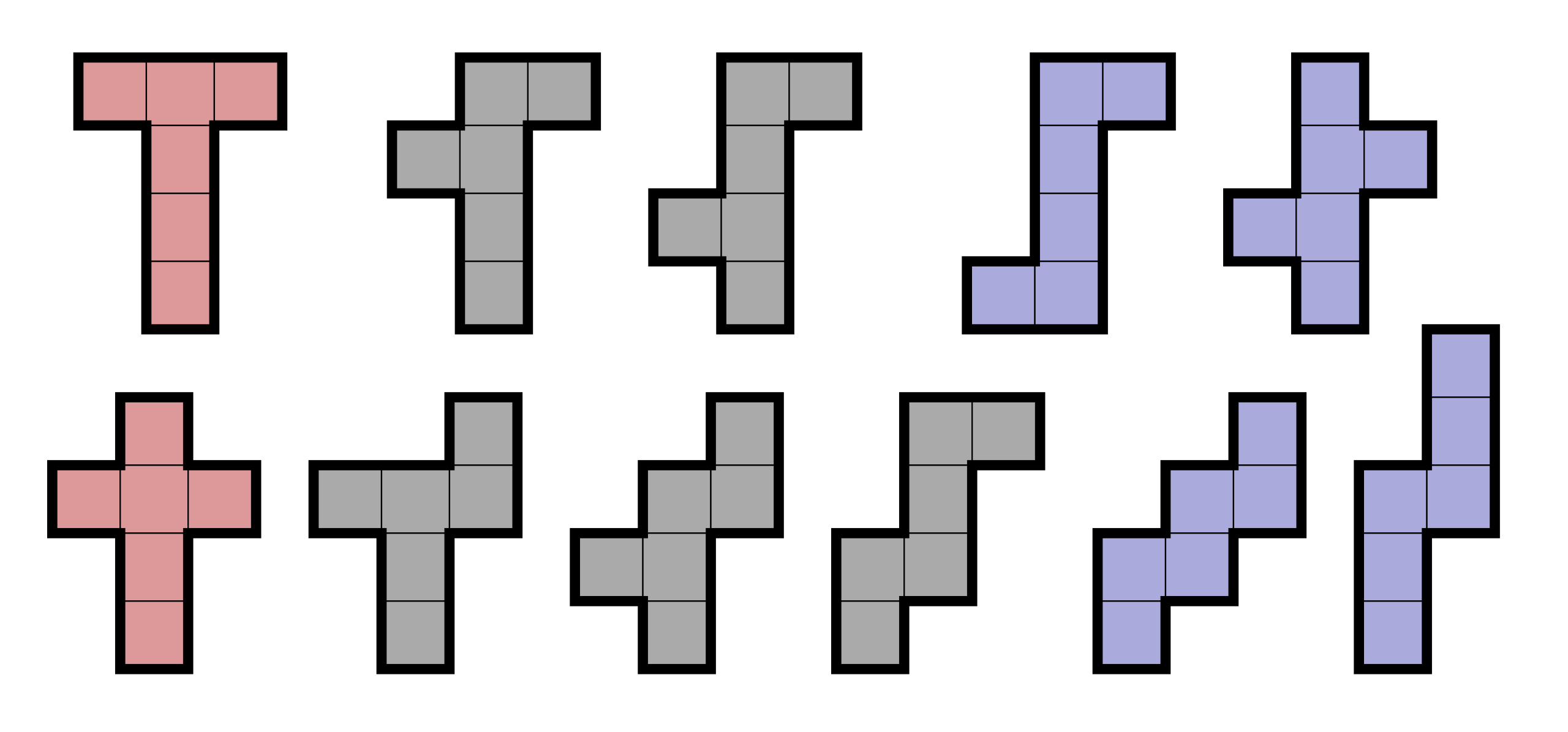
Nets of a Cube
A cube has six identical square faces. The net of a cube must consist of six squares arranged in a way that they can be folded to create the cube.
There are 11 distinct ways to arrange six squares to form a cube's net. Some examples include:
- A cross-shaped arrangement with four squares in a line and two squares attached on either side.
- A T-shaped arrangement with one square at the top and three squares in a line below it, and two squares attached to either side of the middle square.
Applications of Cube Nets
- Understanding Surface Area: By analysing the net, the surface area of a cube can be calculated as the sum of the areas of its six square faces.
- Practical Construction: Nets are used in packaging design and model making.
- Visualization Skills: Working with nets improves spatial reasoning.
Worked Examples
Note
Example 1: Calculate the Surface Area of a Cube Using a Net
Problem: A cube has a side length of
Find its surface area.
Solution:
Step 1: Each square face has an area of:
Step 2: Multiply by (the number of faces):
Answer: The surface area is
Note
Example 2: Identify a Valid Net of a Cube
Problem: Which of the following arrangements of six squares can fold into a cube?
- A straight line of six squares.
- A cross-shaped net with four squares in a line and one square attached to each of the first and last squares.
- A T-shaped net as described above.
Solution:
- A straight line cannot form a cube as the squares cannot fold to enclose the space.
- The cross-shaped and T-shaped arrangements are valid nets for a cube.
Answer: Options and are valid cube nets.
Summary
-
Nets Definition: A flat, two-dimensional pattern that can be folded into a three-dimensional solid.
-
Cube Nets: Must consist of six squares; there are distinct valid arrangements.
-
Surface Area Calculation: The sum of areas of all six square faces:
-
Applications include packaging, model design, and enhancing spatial visualisation skills. Explore different cube nets to strengthen spatial reasoning!