Reading Notation (Leaving Cert Music): Revision Notes
📚Revision Notes
Reading Notation
What is Reading Notation?
- Definition: Reading notation is the ability to interpret musical symbols and translate them into performance or understanding.
- It includes recognising pitch, rhythm, dynamics, articulation, and other expressive elements from a musical score.
Importance in the Exam
- Proficiency in reading notation supports:
- Composing: Writing melodies and harmonies.
- Performing: Playing/singing from sheet music, including sight reading.
- Listening: Understanding the structure and features of prescribed works and aural exercises.
Key Elements of Reading Notation
Pitch
-
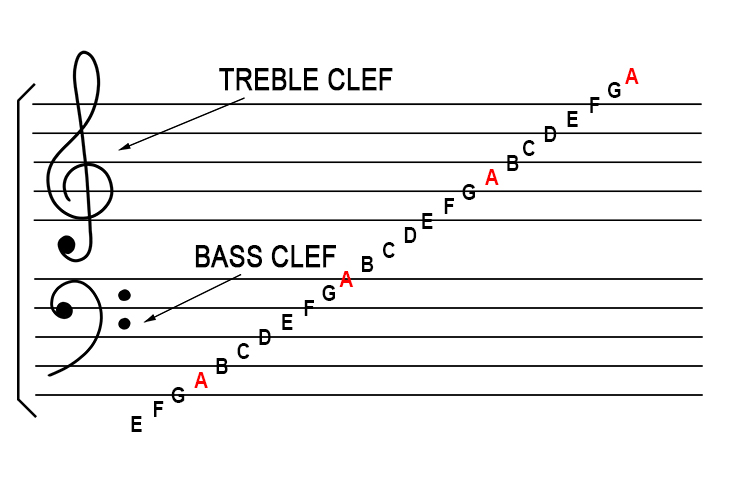
Staff and Clefs:
- Treble clef (G clef) and bass clef (F clef) are most commonly used.
- Other clefs (e.g., alto and tenor) may appear in some scores.
-
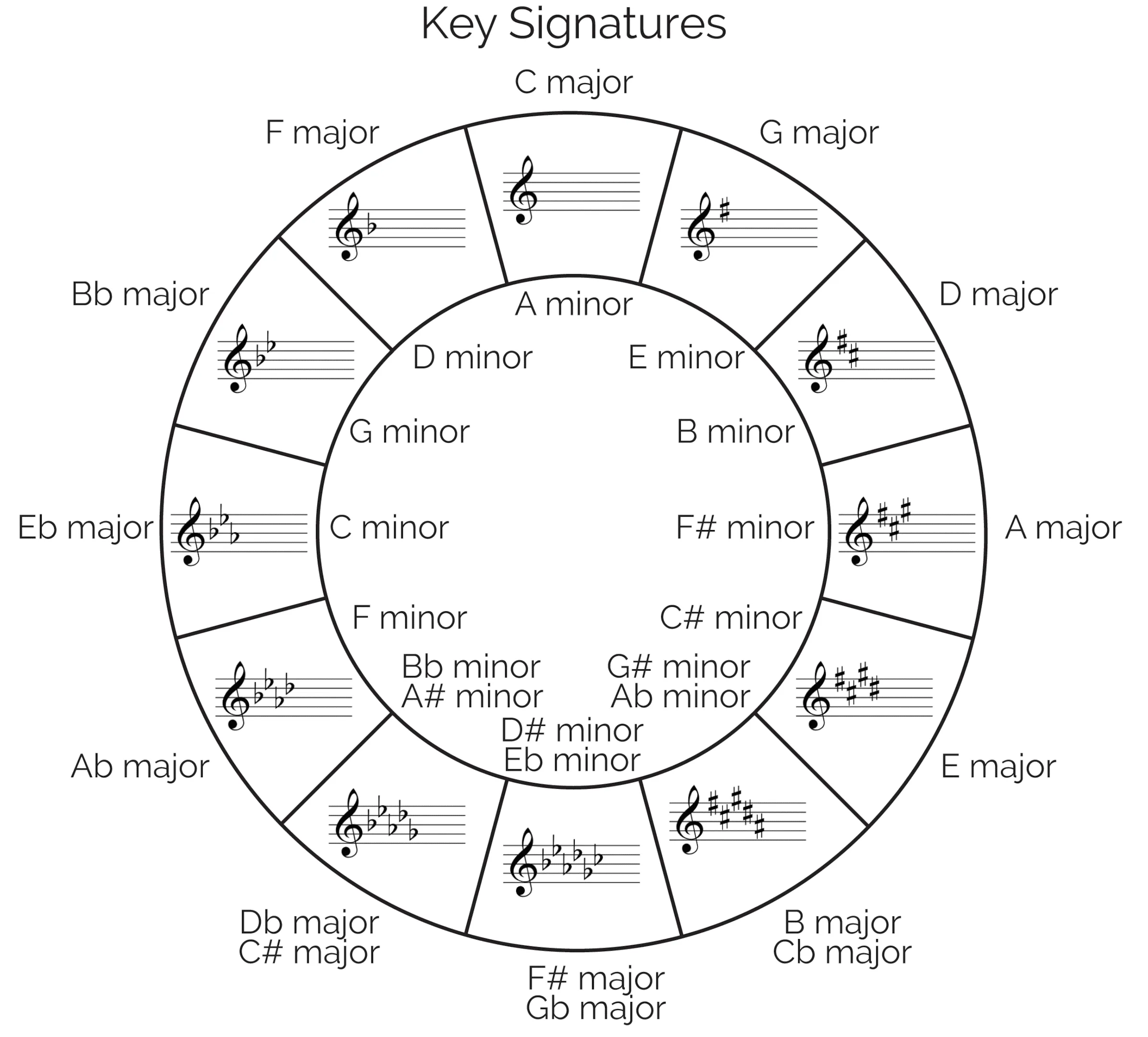
Key Signatures:
- Know major and minor keys up to four sharps or flats.
- Understand how accidentals modify notes.
Rhythm
- Note and Rest Values:
- Semibreve (whole note), minim (half note), crotchet (quarter note), quaver (eighth note), and dotted rhythms.
- Time Signatures:
- Simple time (e.g., 2/4, 3/4, 4/4) and compound time (e.g., 6/8).
- Bars and Measures:
- Read music bar by bar, observing beats within each measure.
Dynamics and Articulation
- Dynamics:
- Symbols like p (piano), f (forte), crescendo (getting louder), diminuendo (getting softer).
- Articulations:
- Interpret slurs, staccatos, accents, and other markings.
Expression and Ornamentation
- Ornamentation:
- Grace notes, trills, mordents, and turns, commonly found in classical and Irish traditional mare usic.
- Expression:
- Follow tempo markings (e.g., andante, allegro) and stylistic instructions (dolce, espressivo).
Preparation Tips
Practising Regularly
- Use exercises focusing on recognising notes, rhythms, and musical markings.
- Work through examples using different keys, clefs, and time signatures.
Analysing Scores
- Study prescribed works to observe how notation conveys musical ideas.
- Compare scores with recordings to understand the relationship between notation and sound.
Build aural and visual connections
- Train your ear to recognise intervals and rhythms while following along in the score.
Note
Common Mistakes
- Misreading Key Signatures: Missing accidentals can lead to incorrect pitches.
- Confusing Rhythmic Values: Not distinguishing between similar durations (e.g., dotted crotchet vs. minim).
- Overlooking Articulations: Ignoring slurs, accents, or staccato marks can affect the musical style.
- Skipping Dynamics: Neglecting dynamics makes performances sound flat.
Note
Key Takeaways
- Reading notation is a fundamental skill for success in all sections of the LC Music exam.
- Focus on pitch, rhythm, dynamics, and articulation while practising.
- Study prescribed works and practise sight reading to build fluency and understanding.
- Developing strong notation reading skills ensures accuracy and expressive performance!