The Doppler Effect (Leaving Cert Physics): Revision Notes
📚Revision Notes
The Doppler Effect
What is the Doppler effect?
The Doppler effect describes the apparent change in frequency (or wavelength) of waves when there is relative motion between the wave source and the observer. This phenomenon occurs with all types of waves, including sound waves, light waves, and radio waves.
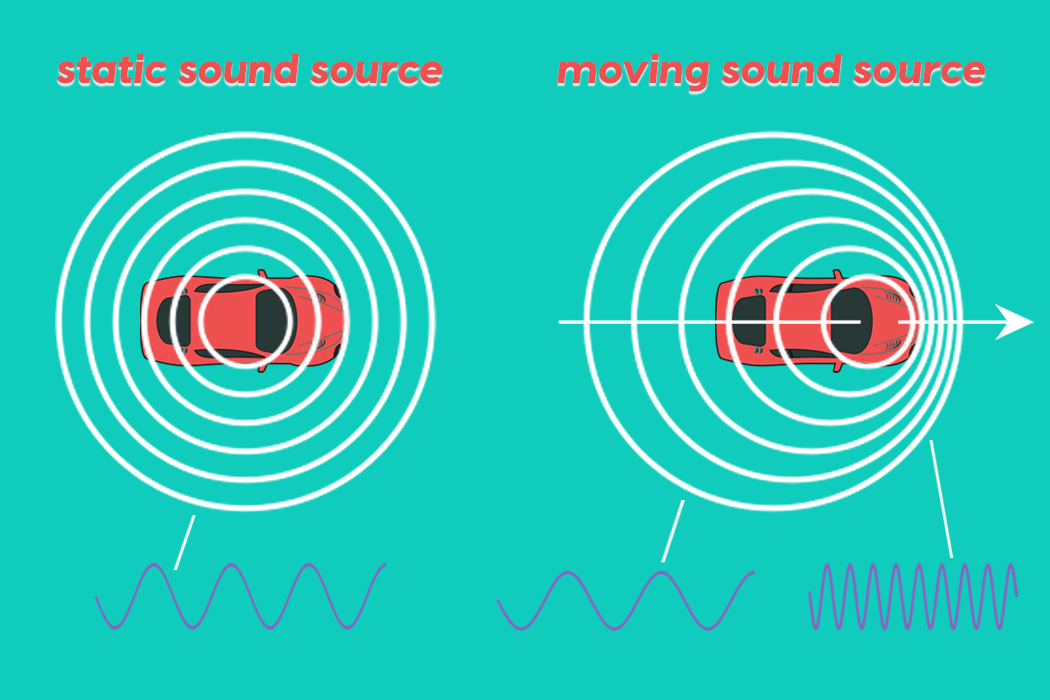
When a wave source moves towards you, the observed frequency increases (higher pitch for sound, blue shift for light). When the source moves away from you, the observed frequency decreases (lower pitch for sound, red shift for light).
Note
The key insight is that it's the relative motion between source and observer that matters - the effect occurs whether the source is moving, the observer is moving, or both are moving.
How the Doppler effect works with wave patterns
When a source emits waves while stationary, the wave crests spread out evenly in all directions as concentric circles. However, when the source is moving:
Ahead of the moving source:
- Wave crests are pushed closer together
- The wavelength becomes shorter
- The frequency increases for a stationary observer
Behind the moving source:
- Wave crests are spread further apart
- The wavelength becomes longer
- The frequency decreases for a stationary observer
This happens because the source is "chasing" its own waves in the forwards direction, but "running away" from waves in the backwards direction.
Note
Think of it like a boat creating wake patterns - the waves bunch up in front and spread out behind as the boat moves through the water.
The Doppler effect for sound waves
You experience the Doppler effect with sound waves every day. Think about an ambulance siren approaching you - the pitch sounds higher as it comes towards you, then suddenly drops to a lower pitch as it passes and moves away.
Key characteristics of sound Doppler effects:
- Higher frequency (higher pitch): When the source approaches the observer
- Lower frequency (lower pitch): When the source moves away from the observer
- The effect is more noticeable with faster-moving sources
- Electronic devices can demonstrate this effect when spun in circles
Important
The change in pitch is not gradual - there's often a distinct "drop" in frequency as the source passes the observer and changes from approaching to receding motion. This sudden change is what makes the effect so noticeable with passing vehicles.
The Doppler effect for electromagnetic waves
The Doppler effect also applies to light and other electromagnetic waves, though we don't hear the changes since light doesn't produce sound. Instead, we observe colour changes:
Red shift: When a light source moves away from us
- The wavelength increases (shifts towards the red end of the spectrum)
- The frequency decreases
- This is commonly observed in astronomy when stars or galaxies move away from Earth
Blue shift: When a light source moves towards us
- The wavelength decreases (shifts towards the blue end of the spectrum)
- The frequency increases
- Less common in astronomy but occurs with approaching objects
Mathematical formulas for Doppler calculations
The observed frequency depends on whether the source is moving towards or away from the observer:
Important
Essential Doppler Formulas:
When the source moves towards the observer:
When the source moves away from the observer:
Combined formula:
Where:
- = observed frequency (Hz)
- = source frequency (Hz)
- = speed of the wave (340 m/s for sound in air, m/s for light)
- = speed of the source (m/s)
- Use minus (-) when approaching, plus (+) when receding
Memory aid: c-u for coming closer, c+u for going away
Medical applications
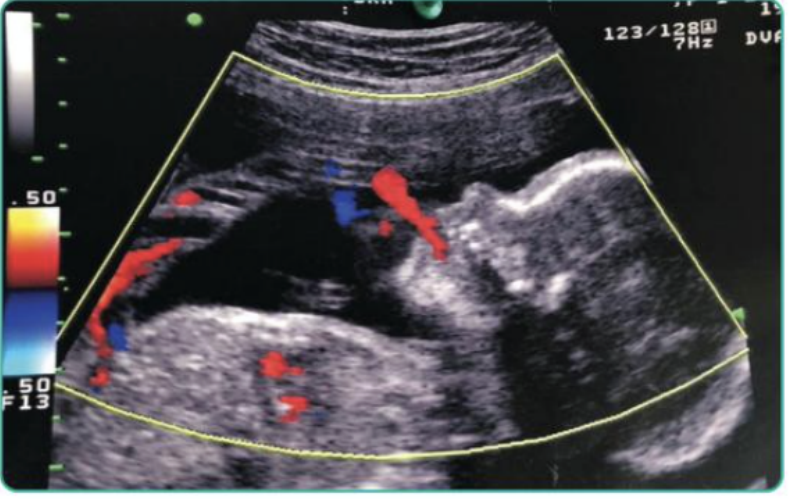
Doppler ultrasound is a powerful medical diagnostic tool that uses high-frequency sound waves to examine internal body structures and blood flow patterns.
Note
How Doppler ultrasound works:
- Ultrasound waves are transmitted into the body
- These waves bounce off moving blood cells and organs
- The returning waves have different frequencies due to the Doppler effect
- Different colours (typically red and blue) represent blood flow in different directions
Medical uses include:
- Cardiac assessment: Examining heart chambers and blood flow through heart valves
- Pregnancy monitoring: Checking foetal blood circulation and development
- Vascular studies: Detecting blockages or abnormalities in blood vessels
- Measuring blood flow speed: Determining if circulation is normal
The colour-coded images help doctors visualise blood flow patterns that would be impossible to see with conventional ultrasound alone.
Other applications

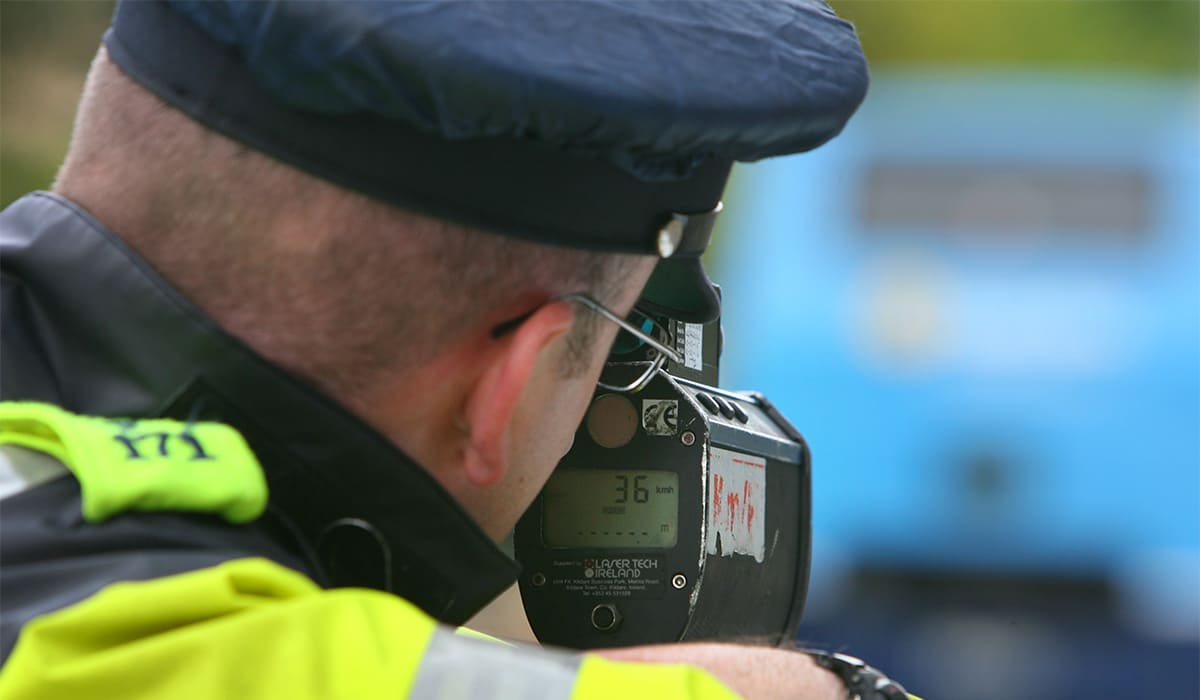
Doppler radar systems are essential tools for modern weather forecasting and traffic law enforcement.
Note
Doppler weather radar applications:
- Sends out microwave pulses that reflect off precipitation (rain, snow, hail)
- Measures how fast weather systems are moving towards or away from the radar station
- Can detect the rotation of thunderstorms and potential tornado formation
- Provides real-time information about storm intensity and movement direction
Traffic speed detection:
- Police use handheld Doppler radar guns to measure vehicle speeds
- The device calculates speed by measuring the frequency shift of reflected microwaves
- Modern systems have largely replaced older methods but still rely on the same Doppler principle
- Laser speed guns also use Doppler principles with infrared light
Astronomical applications
Astronomers use the Doppler effect to study the motion of stars, galaxies, and other celestial objects:
Determining stellar motion:
- Stars moving away from Earth show red shift in their light spectra
- Stars moving towards Earth show blue shift
- The amount of shift indicates the speed of motion
- This helps astronomers understand galaxy rotation and expansion of the universe
Example
Worked Example: Stellar Motion Analysis
If a star's yellow light (wavelength 587 nm) is measured at 592 nm, the increase indicates the star is moving away from Earth. Using Doppler formulas, astronomers can calculate the star's velocity.
Step 1: Identify the shift Original wavelength = 587 nm Observed wavelength = 592 nm This is a red shift (increase in wavelength)
Step 2: Apply Doppler formula for light The velocity can be calculated using the relationship between wavelength shift and speed
Practice with calculations
Understanding Doppler calculations involves substituting known values into the appropriate formula:
Important
Calculation Strategy:
For approaching sources (higher frequency):
- Use
- The denominator is smaller, so >
For receding sources (lower frequency):
- Use
- The denominator is larger, so <
Common values to remember:
- Speed of sound in air: 340 m/s
- Speed of light: m/s
- Always check that your answer makes physical sense (higher or lower frequency as expected)
Exam tips
Note
Exam Success Strategies:
- Identify the motion first: Is the source approaching or receding?
- Choose the correct formula: Minus sign for approaching, plus sign for receding
- Check units: Ensure all speeds are in the same units (usually m/s)
- Verify your answer: Higher frequency for approaching, lower for receding
- Show all working: Include the formula, substitution, and calculation steps
Summary
Key Points to Remember:
-
The Doppler effect occurs when there is relative motion between a wave source and observer, causing apparent frequency changes
-
For sound waves: approaching sources create higher pitch, receding sources create lower pitch - think of ambulance sirens
-
For light waves: approaching sources cause blue shift, receding sources cause red shift - important in astronomy
-
The mathematical formulas use where you subtract for approaching motion and add for receding motion
-
Applications include medical ultrasound for blood flow imaging, Doppler radar for weather forecasting, and astronomical measurements of stellar motion