Work, Energy, and Power (Leaving Cert Physics): Revision Notes
📚Revision Notes
Energy
What is energy?
Energy is one of the most fundamental concepts in physics. Put simply, energy is the ability to do work. This means that anything capable of causing a force to move through a distance possesses energy.
Note
Energy is a scalar quantity, which means it has magnitude but no direction. This is different from vector quantities like force or velocity that have both magnitude and direction.
The SI unit for energy is the joule (J), named after James Prescott Joule. Since energy represents the amount of work something can do, the joule is also the unit of work.
Here's a key point to remember: the amount of energy a body has equals the amount of work it can perform. This relationship forms the foundation for understanding energy in all its forms.
Different forms of energy
Energy exists in many different forms, each arising from different physical situations. Understanding these forms helps us see how energy moves and changes in the world around us.
Kinetic energy
Kinetic energy is the energy that moving objects possess. Every object that has mass and is moving has kinetic energy. The faster an object moves or the more massive it is, the more kinetic energy it has.
The formula for kinetic energy is:
Where:
- = kinetic energy (J)
- = mass (kg)
- = velocity (m/s)
Example
Worked Example: Calculating Kinetic Energy
Example 1: A car with mass 1000 kg travelling at 40 m/s has kinetic energy of:
Example 2: A tennis ball with mass 0.06 kg moving at 150 m/s has kinetic energy of:

Important
Notice how the velocity appears squared in the formula. This means that doubling the speed quadruples the kinetic energy - a crucial point for understanding collisions and safety.
Potential energy
Potential energy is the energy a body has due to its position in a force field. There are several types of potential energy, but we'll focus on the most common ones.
Gravitational potential energy
This is the energy an object has because of its position in Earth's gravitational field. The higher an object is above the ground, the more gravitational potential energy it has.
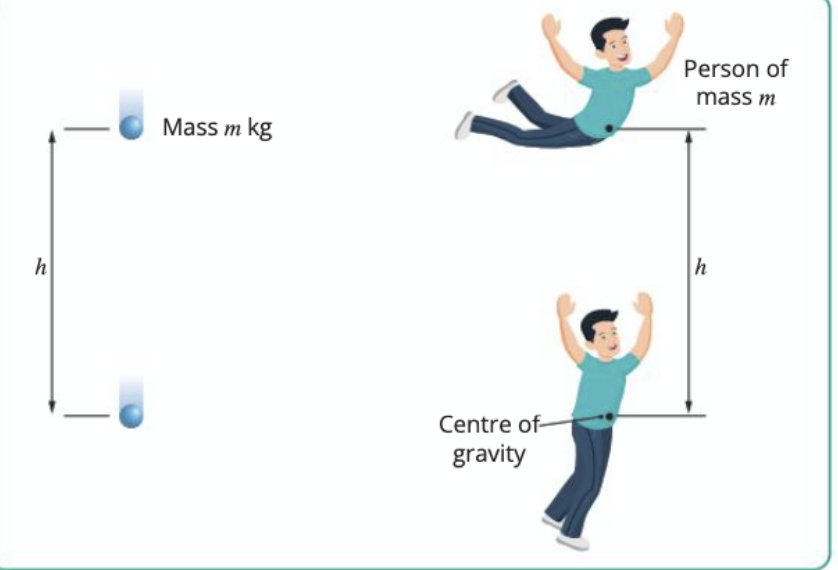
The formula for gravitational potential energy is:
Where:
- = gravitational potential energy (J)
- = mass (kg)
- = acceleration due to gravity (9.8 m/s²)
- = height above reference point (m)
Example
Worked Example: Gravitational Potential Energy
A particle of mass 35 kg at height 1200 metres has gravitational potential energy of:
Elastic potential energy
When you stretch a spring, compress a rubber ball, or bend a bow, you're storing energy in the elastic material. This elastic potential energy is released when the object returns to its original shape.
Electric potential energy
This form of potential energy exists when charged objects are positioned in electric fields. We'll explore this more fully in later chapters, but it's the energy that makes electric circuits work.
Other forms of energy
Energy takes many other forms in our daily lives:
- Chemical energy: Stored in the bonds between atoms and molecules. Food, fuel, and batteries all contain chemical energy
- Nuclear energy: Released from the nucleus of atoms during nuclear reactions
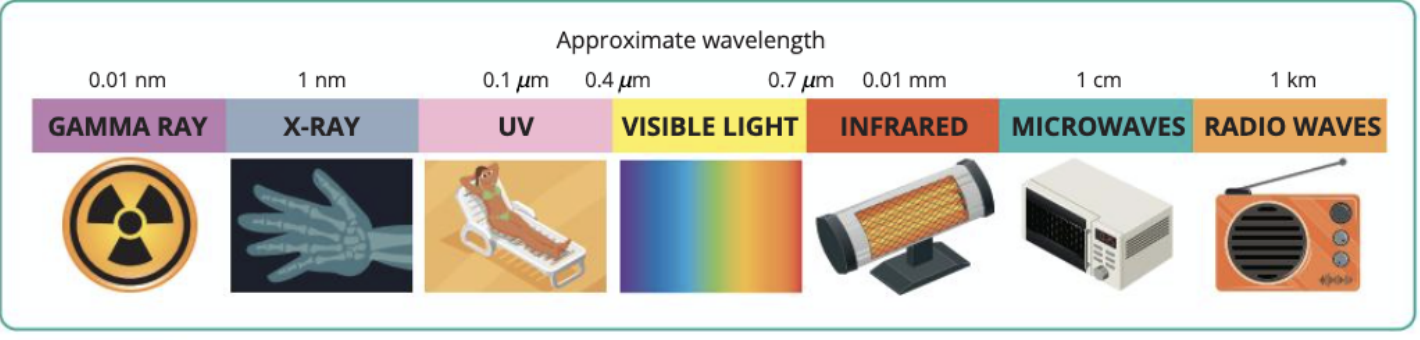
- Electromagnetic energy: Energy carried by electromagnetic waves, including light, radio waves, and X-rays
- Internal energy (heat energy): The energy of randomly moving particles within a substance
- Sound energy: Energy carried by vibrating air molecules or other materials

Principle of conservation of energy
One of the most important principles in physics is the principle of conservation of energy. This fundamental law governs all energy interactions in the universe.
Important
Energy cannot be created or destroyed, but can only be transferred from one body to another, or changed from one form to another.
This means the total amount of energy in a closed system always remains constant.
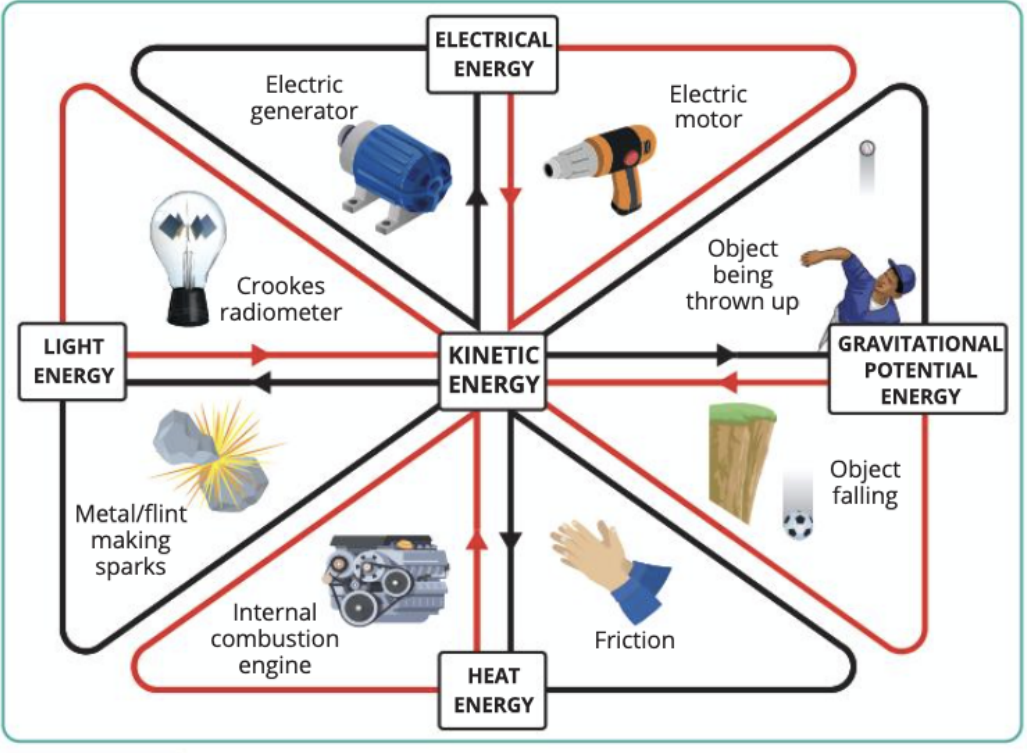
Energy may change forms - kinetic to potential, chemical to heat, electrical to light - but the total energy stays the same.
Energy conversions
Energy conversions happen constantly around us. Here are some common examples:
- Electric generator: Converts kinetic energy into electrical energy
- Electric motor: Converts electrical energy into kinetic energy
- Falling object: Converts gravitational potential energy into kinetic energy
- Stretched spring: Converts elastic potential energy into kinetic energy
- Burning fuel: Converts chemical energy into heat and light energy
Note
The key insight is that in each conversion, no energy is lost - it simply changes from one form to another. This is what makes energy such a powerful concept for understanding the physical world.
Work as the transfer of energy
When a body does work, it loses energy. When work is done on a body, it gains energy. This creates a direct relationship between work and energy transfer.
Note
Work-Energy Theorem
Work done = Change in kinetic energy
This relationship is incredibly useful for solving physics problems involving motion and forces.
Example
Worked Example: Work-Energy Relationship
A car accelerates from rest to 30 m/s. The work done by the engine equals the car's final kinetic energy:
Energy changes in moving objects
When friction is negligible, fascinating energy exchanges occur in moving systems:
- Freely falling objects: As height decreases, gravitational potential energy converts to kinetic energy
- Objects thrown upward: As they rise, kinetic energy converts to gravitational potential energy
- Pendulums and springs: Energy constantly shifts between kinetic and potential forms
Note
The total mechanical energy (kinetic + potential) remains constant throughout these motions. This is a direct application of the conservation of energy principle.
Energy in collisions
In real-world collisions, some kinetic energy is always lost. This energy doesn't disappear - it converts into other forms like heat energy and sound energy.

The amount of kinetic energy lost depends on the materials involved. In a collision between two steel balls, most kinetic energy is conserved. In a collision between a lump of plasticine and a tennis ball, considerable kinetic energy converts to heat and sound.
Example
Worked Example: Energy Loss in Collisions
A 5 kg mass travelling at 20 m/s collides with a stationary 2 kg mass. After collision, they move together at 14.29 m/s. The kinetic energy lost is:
- Initial KE = ½(5)(20²) = 1000 J
- Final KE = ½(7)(14.29²) = 714.7 J
- Energy lost = 1000 - 714.7 = 285.3 J
This lost energy becomes heat and sound during the collision.
Energy sources
Every day, people use enormous amounts of energy for transport, heating, and countless other purposes. The sources of this energy fall into two main categories that have very different implications for our future.
Renewable and non-renewable sources
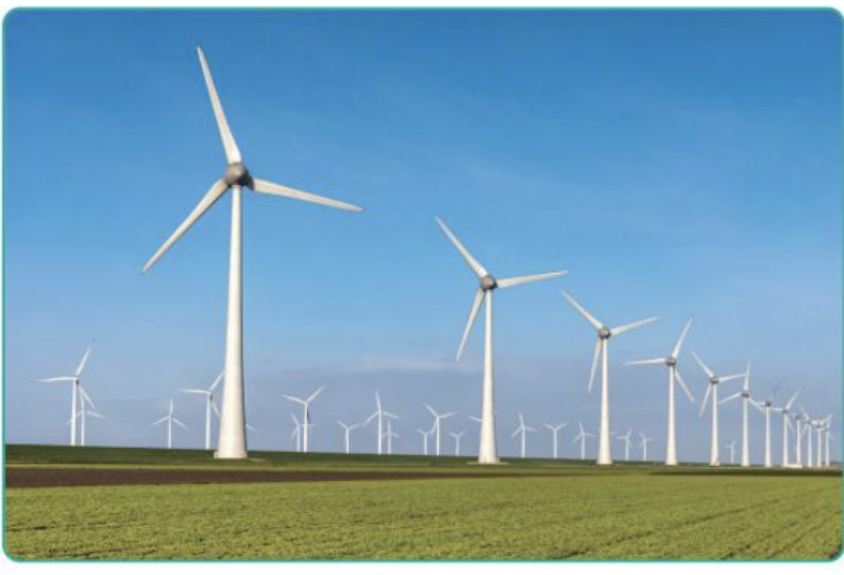
Renewable sources don't get used up and can be replenished naturally. Examples include:
- Wind energy
- Solar energy
- Hydroelectric energy
- Wave and tidal energy
- Geothermal energy
- Biomass energy
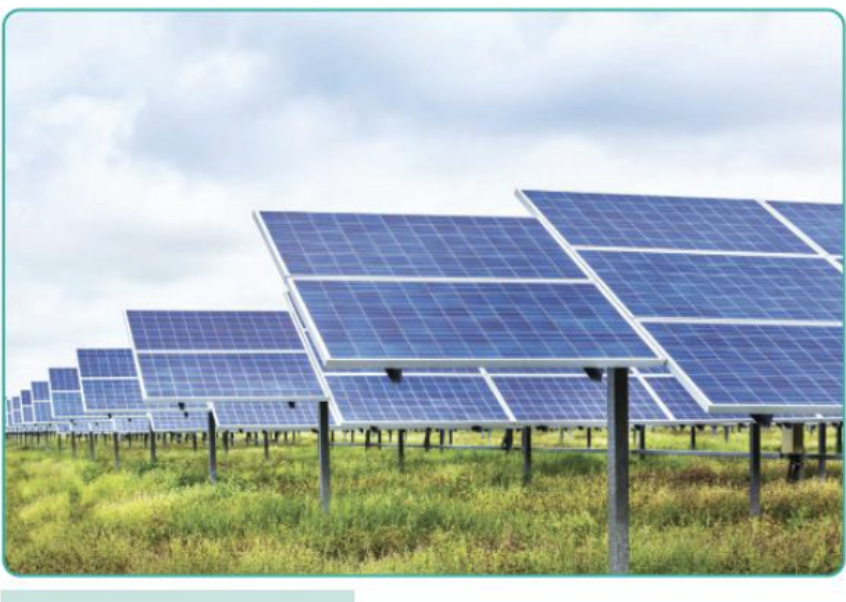
Non-renewable sources are finite and will eventually be exhausted. Examples include:
- Oil
- Coal
- Natural gas
- Nuclear fuel (uranium)
Sustainability and energy efficiency
There's growing concern about overuse and depletion of natural resources. Climate change linked to burning fossil fuels makes this issue even more urgent. This is why sustainability - using resources without running out - is crucial for our energy future.
Note
We can improve sustainability by:
- Increasing use of renewable energy sources
- Improving energy efficiency in homes and businesses
- Reducing overall energy consumption
- Developing better energy storage technologies
Simple efficiency improvements include insulating buildings, using LED light bulbs, and installing double or triple glazing in windows.
Summary
Key Points to Remember:
-
Energy is the ability to do work - it's measured in joules and is a scalar quantity
-
Kinetic energy depends on mass and velocity:
-
Gravitational potential energy depends on mass, gravity, and height:
-
Energy cannot be created or destroyed - it can only change from one form to another (conservation of energy)
-
Work equals the change in energy - when work is done, energy is transferred between objects or converted between forms
-
Renewable energy sources like wind and solar don't run out, while non-renewable sources like fossil fuels are finite and contribute to climate change