Intrusive Igneous Activity (Grade 10 NSC Matric Geography): Revision Notes
📚Revision Notes
Intrusive Igneous Activity
What are igneous intrusions?
Note
Igneous intrusions are rock features that form when magma cools and solidifies within Earth's crust, rather than reaching the surface.
Because Earth's mantle contains very hot molten rock (magma), this material is less dense than solid rock and often works its way into joints and cracks in Earth's crust. The process of intrusion is essential for understanding how many of our planet's most dramatic geological features formed.
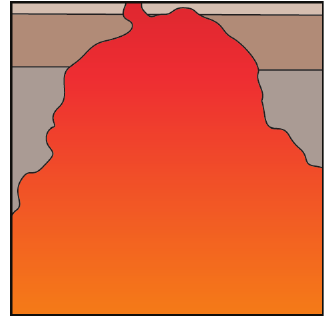
When magma cools underground, it forms distinctive geological features that we classify according to their shape, size, depth of formation, and relationship with surrounding rocks. These intrusive features only become visible on Earth's surface after millions of years of weathering and erosion have removed the rocks above them.
Types of intrusive igneous features
Batholiths
Batholiths are the largest and deepest of all igneous intrusions. These massive underground formations can cover thousands of square kilometres and are often associated with continental movements.
Key characteristics of batholiths:
- Form deep within Earth's crust
- Magma cools very slowly, allowing large crystals to develop
- Granite is the most common rock type associated with batholiths
- Only become visible after extensive weathering and erosion
- Can form the foundation of mountain ranges
Important
The slow cooling process deep underground means that batholiths contain rocks with large, well-formed crystals. This is because the minerals have plenty of time to grow as the magma gradually solidifies.
Laccoliths
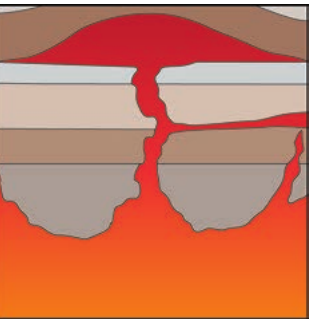
Laccoliths are dome-shaped intrusions that form when magma is forced between layers of sedimentary rock, pushing up the layers above it.

Example
Formation Process: How Laccoliths Develop
Step 1: Magma pushes horizontally between rock layers (strata)
Step 2: Pressure causes the upper rock layers to bulge upward\
Step 3: Creates a distinctive dome or mushroom shape
Step 4: Some laccoliths can push up entire mountains
Simple Demonstration: You can demonstrate how a laccolith affects surrounding rock by squeezing toothpaste into a thick newspaper - the toothpaste will create a dome shape similar to how magma creates a laccolith.
Monoliths
A monolith is a large intrusion that often stands above the surrounding landscape as a towering wall of rock. These impressive formations become visible after weathering and erosion remove the softer surrounding rocks.
Famous examples include:
- Half Dome in Yosemite National Park, California (a granite monolith)
- Monoliths may be part of larger igneous features like batholiths
- They represent the most resistant parts of intrusive formations
Dykes and sills
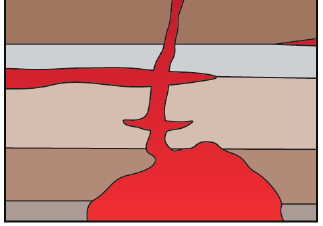
These are sheet-like intrusions that form when magma forces its way through existing rock formations.
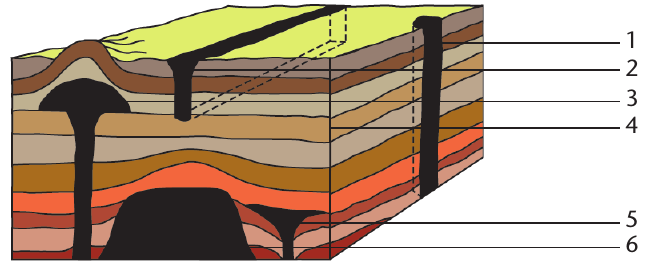
Dykes form when magma forces its way vertically through layers of rock:
- Cut across existing rock layers
- Usually only a few metres wide
- Dolerite is commonly found in dykes, especially in South Africa
- Can extend for considerable distances underground
Sills form when magma forces its way horizontally between rock strata:
- Run parallel to existing rock layers
- Can stretch for many kilometres
- Form along natural weaknesses between different rock types
Important
Key Difference: Dykes cut vertically through rock layers, while sills follow horizontal boundaries between layers. Remember: dykes are like walls (vertical), sills are like window sills (horizontal).
Pipes
Pipes are the central vents of old volcanoes where magma has solidified to form carrot-shaped intrusions extending into the surrounding rock.
Characteristics of pipes:
- Often called volcanic pipes
- Can stretch from the surface down two or three kilometres underground
- Form cylindrical or carrot-shaped structures
- The bottom of a pipe is essentially a dyke
Note
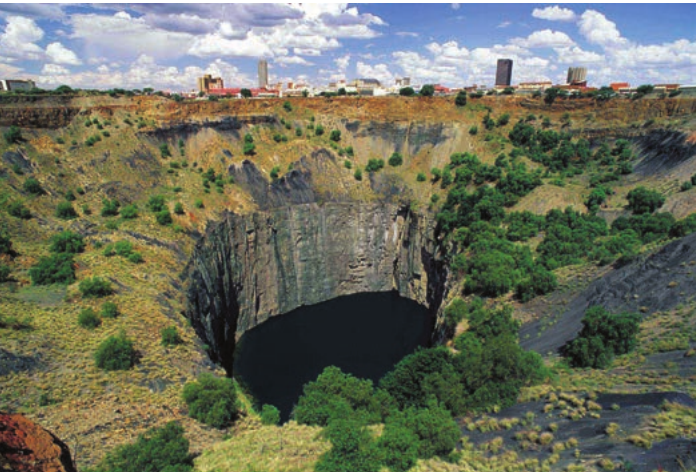
South African Example: The most famous pipes in the world occurred near Kimberley in the Northern Cape. These pipes were formed from kimberlite rock, which contained diamonds. The Big Hole at Kimberley represents the remains of a volcanic pipe that produced diamonds.
Key geological processes
Crystal formation: Rocks that form deep in Earth's crust have large crystals because the magma cools slowly underground. The slower the cooling process, the more time minerals have to grow and form well-developed crystals.
Note
Strata: These are horizontal layers of sedimentary rock that provide natural pathways for magma intrusion, particularly in the formation of sills and laccoliths.
Weathering and erosion: These processes are essential for exposing intrusive igneous features at Earth's surface. Without millions of years of weathering removing overlying rocks, we would never see these underground formations.
Summary
Key Points to Remember:
- Batholiths are the largest intrusions, forming deep underground and associated with granite
- Laccoliths are dome-shaped intrusions that push up overlying rock layers
- Dykes cut vertically through rock layers, while sills run horizontally between them
- Pipes are the remains of old volcanic vents and can contain valuable minerals like diamonds
- All intrusive features only become visible after weathering and erosion remove the rocks above them
- Slow cooling underground creates rocks with large, well-formed crystals