Global Warming (Grade 10 NSC Matric Geography): Revision Notes
📚Revision Notes
Global Warming
What is global warming?
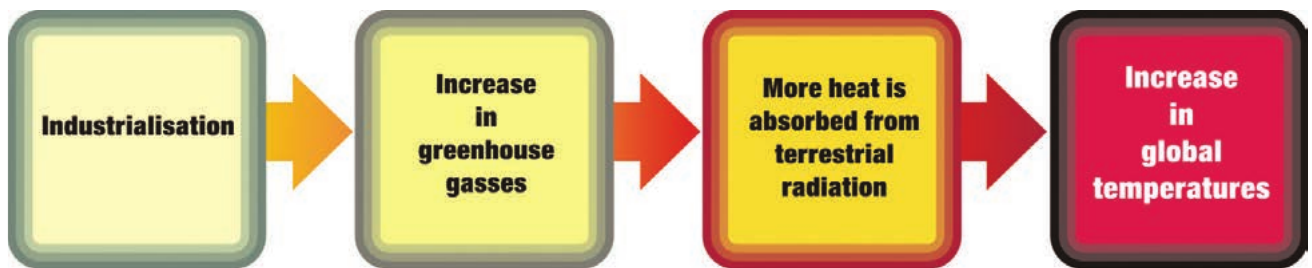
Global warming refers to the gradual increase in Earth's average temperature caused by human activities that enhance the natural greenhouse effect. This process occurs when increased levels of greenhouse gases in the atmosphere trap more heat from terrestrial radiation, leading to rising global temperatures.
The enhanced greenhouse effect happens through a clear sequence of events. When industrialisation increases, it leads to more greenhouse gases being released into the atmosphere. These additional gases then absorb more heat from the radiation that Earth sends back to space, ultimately causing global temperatures to rise.
Note
The enhanced greenhouse effect is different from the natural greenhouse effect. While the natural effect keeps Earth warm enough to support life, human activities have intensified this process, causing dangerous warming beyond natural levels.
Evidence of global warming
Scientists have gathered compelling evidence showing that our planet's climate is changing rapidly. This evidence comes from various sources including satellite data, temperature records, and direct observations of ice loss around the world.
Glacier retreat on Mount Kilimanjaro
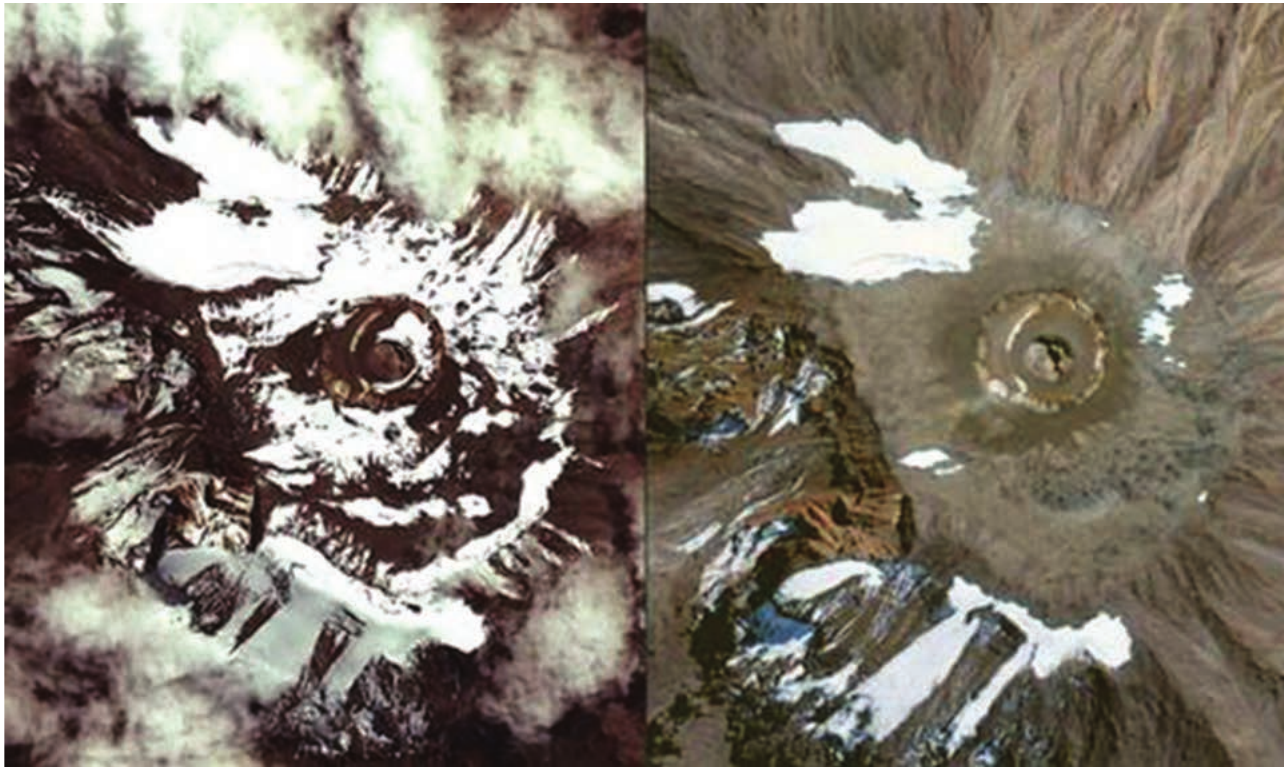
One of the most dramatic examples of global warming can be seen on Mount Kilimanjaro in Tanzania. Since 1912, an astounding 85% of the mountain's glacier has disappeared. The ice coverage has shrunk dramatically from 12 km² in 1912 to just 1.9 km² by 2007.
Remote sensing technology, using satellite images and aerial photographs, provides clear visual evidence of this change. Between 2001 and 2009 alone, significant additional ice loss occurred on the mountain peaks.
Example
Evidence Example: Mount Kilimanjaro Glacier Loss
- 1912: Ice coverage = 12 km²
- 2007: Ice coverage = 1.9 km²
- Total loss: 85% of glacier disappeared
- Time period: 95 years
- Evidence method: Remote sensing using satellite imagery
Global temperature records
According to research published by NASA and the Goddard Institute for Space Studies, the decade ending in 2009 was the warmest on record. Earth's surface temperatures have been steadily increasing since 1880, with the exception of a brief cooling period between the 1940s and 1970s. This warming trend represents the highest temperatures ever recorded in modern history.
Arctic sea ice decline
The Arctic region shows particularly alarming changes. NASA studies found that the Arctic lost 23% of its thick, year-round sea ice cover during the winters leading up to 2007. This represents the fastest-ever sea ice retreat and the smallest-ever total Arctic coverage on record. The dramatic reduction in ice coverage creates a feedback loop, as darker ocean water absorbs more heat than reflective ice.
Important
The Arctic ice loss creates a dangerous feedback loop: as white, reflective ice melts, it exposes darker ocean water that absorbs more heat, leading to even faster warming and more ice loss.
Causes of global warming
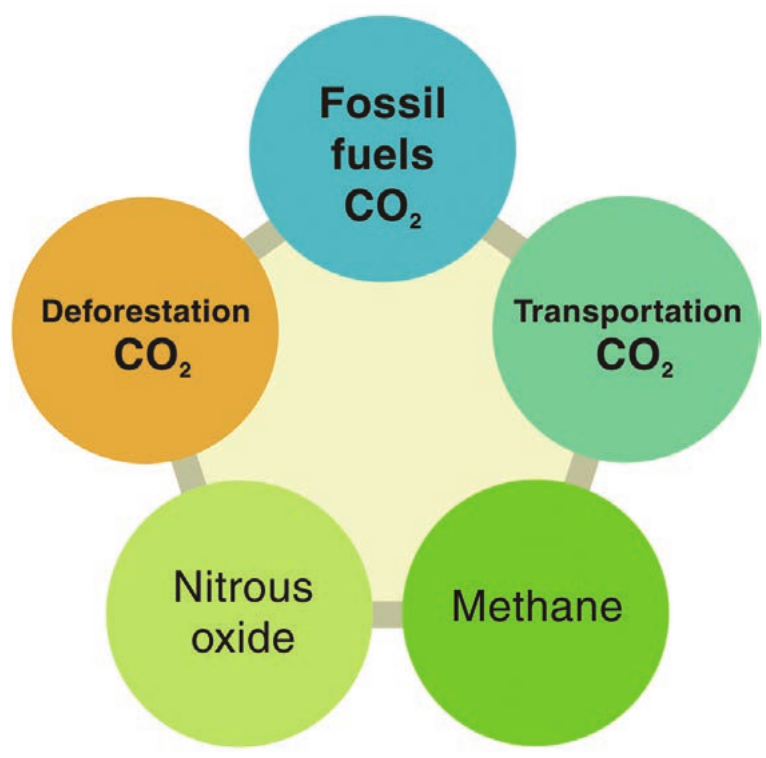
Most scientists agree that there are five main human activities causing global warming. These activities all increase the concentration of greenhouse gases in our atmosphere.
1. Carbon dioxide from fossil fuels
The burning of fossil fuels in factories, industries, and coal-fired power stations releases enormous amounts of carbon dioxide into the atmosphere. This represents the largest single source of greenhouse gas emissions globally.
2. Transportation emissions
Transport systems contribute significantly through carbon dioxide emissions from:
- Aircraft engines
- Buses and public transport
- Private cars and motorcycles
- Trucks and freight vehicles
As global trade and travel increase, transportation-related emissions continue to grow rapidly.
3. Methane production
Methane comes from several sources and is particularly concerning because it traps heat twenty times more effectively than carbon dioxide:
- Rice paddies: Bacteria in flooded rice fields break down organic matter in oxygen-starved conditions, creating methane
- Livestock: Cattle and sheep produce methane through their digestive processes
- Clathrates: These are frozen chunks of ice and methane found at the bottom of oceans. As sea water temperatures increase, clathrates melt and release stored methane into the atmosphere
Note
What are Clathrates?
Clathrates are crystalline solids which look like ice, occurring when water molecules form a cage-like structure around smaller "guest molecules" such as methane. As ocean temperatures rise, these underwater methane deposits melt and release large amounts of methane into the atmosphere.
4. Nitrous oxide
This greenhouse gas has 300 times more heat-trapping capacity than carbon dioxide. The main source is chemical fertilisers used in agriculture. As the global population grows and food production increases, more nitrogen-rich fertilisers are being used worldwide.
5. Deforestation
Trees and plants naturally remove carbon dioxide from the air during photosynthesis, acting as "carbon sinks". However, as forests are cleared for human settlements and agriculture, less vegetation remains to absorb greenhouse gases. Large areas of tropical rainforest, particularly in the Amazon region, have been destroyed, reducing the Earth's capacity to process carbon dioxide naturally.
Note
Understanding Deforestation
Deforestation means the cutting down of trees and removal of natural vegetation. This process not only releases stored carbon dioxide from trees but also removes the natural systems that absorb CO₂ from the atmosphere.
Breakdown of emissions by sector
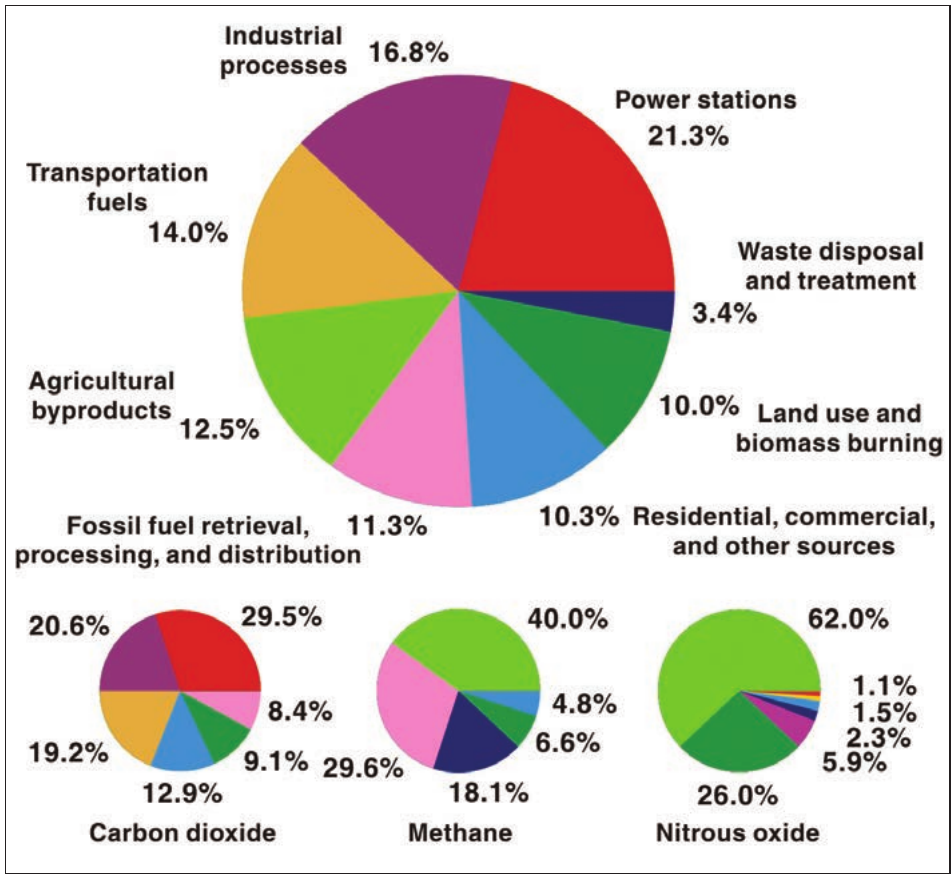
Power stations contribute the largest share of greenhouse gas emissions at 21.3%, followed by industrial processes at 16.8%. Transportation fuels account for 14.0% of emissions, while agricultural byproducts contribute 12.5%. These statistics show that the problem requires action across multiple sectors of human activity.
Consequences of global warming
The effects of global warming are not felt equally around the world. Developing countries, particularly in Africa and Asia, face the most severe impacts despite contributing least to the problem.
Impacts on developing countries
Most African countries, except for equatorial rainforest regions, already experience devastating droughts regularly. Climate change threatens to make these droughts more frequent and severe. African farmers, who are mostly subsistence farmers with no insurance or financial support, become extremely vulnerable when crops fail year after year.
Children in developing countries face particular risks from climate change. They already experience impacts through malnutrition, disease, poverty, and inequality. Climate change increases child mortality rates and forces children out of school and into work at younger ages.
Important
Critical Impact on Vulnerable Populations
Developing countries often lack the infrastructure and technology needed to adapt to changing conditions, such as flood defences and early warning systems. This makes them more vulnerable to climate impacts, with children being the most affected group.
Sea level rise
Climate scientists warn that sea levels could rise by 1.4 metres higher than pre-industrial levels by 2100. Even if immediate action reduced emissions today, average sea levels would still increase significantly. This threatens coastal communities worldwide, with residents of Asia's large cities facing the greatest risk of river and coastal flooding.
Regional effects
Different parts of the world will experience varying impacts:
- Africa: Between 75 million and 250 million people will face water shortages by 2020
- North America: Longer heatwaves and greater competition for water resources
- Global ecosystems: More animal and plant species will become extinct as habitats change faster than species can adapt
- Weather patterns: Droughts, floods, and heatwaves will become more common in the world's poorest regions
Economic and social consequences
Climate change creates a cycle of problems. Disasters increase in number and intensity, economic growth slows, incomes fall, disease outbreaks become more frequent, and access to clean water and sanitation becomes harder. These impacts make communities less stable and force families into poverty.
The temperature has already increased by less than 1°C since 1850, yet we're seeing significant effects. Scientists predict that another 1-2°C increase will be difficult to avoid even with immediate action, meaning young people and future generations in developing countries will bear the greatest burden.
Important
Urgent Action Required
Even though global temperatures have only risen by less than 1°C, the impacts are already severe. Further warming will disproportionately harm the world's most vulnerable populations, making immediate action critical.
Remember!
Summary
Key Points to Remember:
- Global warming is caused by the enhanced greenhouse effect: Human activities increase greenhouse gases, which trap more heat from Earth's radiation
- Evidence is clear and measurable: Mount Kilimanjaro has lost 85% of its ice since 1912, and the Arctic has lost 23% of its sea ice cover
- Five main causes drive the problem: Fossil fuel burning, transportation, methane production, nitrous oxide from agriculture, and deforestation
- Developing countries suffer most: Despite contributing least to emissions, countries in Africa and Asia face the worst consequences
- Urgent action is needed: Even small temperature increases have major impacts, and further warming will disproportionately harm the world's most vulnerable people