Number Formats and Conventions (Grade 10 NSC Matric Mathematical Literacy): Revision Notes
📚Revision Notes
Number Formats and Conventions
Numbers are everywhere around us and appear in many different formats depending on how they are used. Understanding these formats and the standard ways of writing numbers is essential for mathematical literacy and everyday life situations like banking, shopping, and reading official documents.
What are number formats and conventions?
Note
Key Definitions
Convention: A standard way of doing something that most people agree to follow.
Format: The way that something appears or is set out.
Digit: Any of the symbols 0, 1, 2, 3, 4, 5, 6, 7, 8, 9 used to build numbers.
Number formats and conventions are about the different ways we write and display numbers to make them clear and easy to understand. These conventions help ensure that everyone interprets numbers in the same way.
South African conventions for writing numbers
In South Africa, we follow specific conventions when writing numbers to make them clear and consistent:
Decimal notation
- We use a decimal comma to separate whole numbers from decimal parts
- Example: R 1 000 000,00 (one million rand)
Grouping large numbers
- We use spaces to separate groups of three digits
- This makes large numbers much easier to read
- Example: 3 000 000 is much clearer than 3000000
Important
Critical Convention to Remember
The South African standard is to use decimal commas and spaces for grouping, so avoid using commas to separate digit groups.
Alternative formats you might see
Sometimes you will encounter different formats, especially in:
- Bank statements and account documents (may use decimal points)
- Till slips from shops
- International publications (may use commas to separate groups)
Note
Calculator displays show decimal points with no spaces between digit groups, which is different from our written convention.
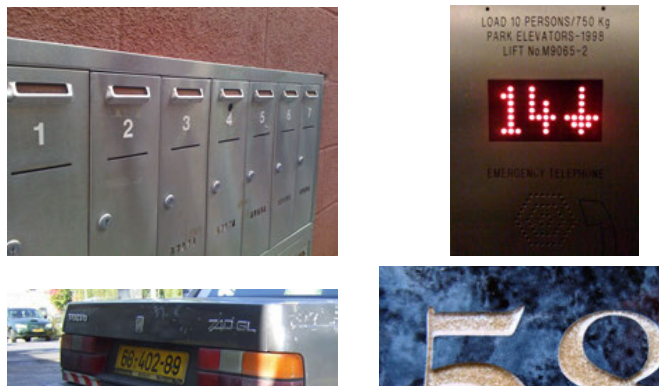
Numbers in different situations
Numbers serve different purposes depending on the context. Understanding these different uses helps you know when and how to work with them.
Types of numbers and their uses
Counting numbers represent exact quantities:
- Number of people in a room
- Number of items in a box
- These are always whole numbers
Measurement numbers represent values that can be measured:
- Lengths, masses, temperatures
- Amounts of money
- These can include decimal parts
Ordering numbers show position or rank:
- 1st place, 2nd place, 3rd place
- These don't represent actual values for calculation
Identification codes are used for labelling:
- Telephone numbers
- Car registration plates
- House numbers
- Bank account numbers
Important distinction for calculations
Important
Critical Concept for Mathematical Operations
You can only perform mathematical calculations with numbers that represent actual values (counting and measurement numbers).
You cannot calculate meaningfully with identification codes or ordering numbers. For example, multiplying a telephone number would simply give you a meaningless result!

Writing whole numbers in words
To convert numbers from digits to words, follow this systematic method:
Step-by-step process
- Group the digits: Starting from the right, work towards the left and insert spaces after every three digits
- Read each group: Starting from the left, read each group individually and add the appropriate group name
Example
Worked Example 1: Converting 42 958 to words
Step 1: Group the digits from right to left
- 42 958 becomes "42 958" (already grouped)
Step 2: Read each group from left to right
- Thousands group: 42 → "Forty-two thousand"
- Units group: 958 → "Nine hundred and fifty-eight"
Answer: Forty-two thousand, nine hundred and fifty-eight
Example
Worked Example 2: Converting 307 991 343 to words
Step 1: Group the digits
- 307991343 becomes "307 991 343"
Step 2: Read each group
- Millions group: 307 → "Three hundred and seven million"
- Thousands group: 991 → "Nine hundred and ninety-one thousand"
- Units group: 343 → "Three hundred and forty-three"
Answer: Three hundred and seven million, nine hundred and ninety-one thousand, three hundred and forty-three
Place value of large numbers
Place value tells us what each digit in a number represents based on its position. Understanding place value makes it much easier to read and compare large numbers.
Place value chart
| Millions | Hundred Thousands | Ten Thousands | Thousands | Hundreds | Tens | Units |
|---|
Example
Worked Example 3: Finding place value
Find the place value of the digit 9 in each number:
- 891 034
- 119 222
- 123 239
- 6 901 333
Solution: Create a place value table
| Number | M | H Th | T Th | Th | H | T | U |
|---|---|---|---|---|---|---|---|
| 1 | 8 | 9 | 1 | 0 | 3 | 4 | |
| 2 | 1 | 1 | 9 | 2 | 2 | 2 | |
| 3 | 1 | 2 | 3 | 2 | 3 | 9 | |
| 4 | 6 | 9 | 0 | 1 | 3 | 3 | 3 |
Answers:
- Ten Thousands position
- Thousands position
- Units position
- Hundred Thousands position
Arranging numbers in order
Comparing and ordering numbers systematically requires using place value understanding.
Method for ascending order (smallest to largest)
- Create a place value table with enough columns for all digits
- Write all numbers in the table, aligning units on the right
- Compare digits starting from the leftmost column
- If digits are equal, move to the next column right
- Write down the smallest number first, then continue in order
Example
Worked Example 4: Ordering numbers
Arrange these numbers from smallest to largest: 41 388; 444 697; 414 230; 14 000 021
Solution: Use a place value table
| TM | M | HTh | TTh | Th | H | T | U |
|---|---|---|---|---|---|---|---|
| 4 | 4 | 4 | 6 | 9 | 7 | ||
| 4 | 1 | 4 | 2 | 3 | 0 | ||
| 4 | 1 | 3 | 8 | 8 | |||
| 1 | 4 | 0 | 0 | 0 | 0 | 2 | 1 |
Analysis:
- 41 388 is smallest (only goes to ten thousands)
- Between 444 697 and 414 230, compare the TTh column: 444 697 > 414 230
- 14 000 021 is largest (has millions place)
Answer: 41 388; 414 230; 444 697; 14 000 021
Note
For descending order (largest to smallest), use the same method but write the largest number first.
Summary
Key Points to Remember:
-
South African convention uses decimal commas and spaces to group digits by threes (R 1 000 000,00)
-
Different number types serve different purposes - only counting and measurement numbers can be used in calculations
-
Converting to words requires grouping digits from right to left by threes, then reading groups from left to right
-
Place value determines the actual value each digit represents in a number
-
Ordering numbers systematically uses place value comparison from left to right