Rounding (Grade 10 NSC Matric Mathematical Literacy): Revision Notes
📚Revision Notes
Rounding
What is rounding?
Rounding is the process of making numbers simpler by changing them to the nearest specified value. We use rounding to make calculations easier and to give answers that make sense in real-life situations.
Note
Rounding is a fundamental mathematical skill that bridges the gap between exact calculations and practical, usable results. It's particularly important in everyday situations where precise values may be impractical or unnecessary.
Basic rounding rules
When rounding to the nearest ten, we follow simple rules:
- Numbers with units digits from 1 to 4 are rounded down to the lower ten
- Numbers with units digits from 5 to 9 are rounded up to the higher ten

Note
The number line above shows how numbers from 10 to 20 are divided into rounding zones. Numbers 10-14 round down to 10, while numbers 15-19 round up to 20. This visual representation helps you understand the "boundary" concept - numbers closer to one ten than another.
Rounding according to context
In real-life situations, we must think carefully about whether our rounding makes practical sense. Context refers to the specific situation we're working in, which determines whether we should round up or down.
Important
The mathematical rule isn't always the best choice! We need to consider what would be reasonable and sensible in each situation. Always ask yourself: "What makes practical sense here?"
Practical example: cash rounding in South Africa
Since South Africa no longer uses 1c and 2c coins, shops round cash totals to the nearest 5c value. For example, if your total is R 13,69 and you pay cash, you would pay R 13,65 (rounded down). However, if you pay by card, the exact amount is charged.
Worked examples
Example
Worked Example: Catering Situation

Question: Jacolene is catering for 54 people. Muffins are sold in packs of 8. How many packs must she buy?
Solution:
- Calculate: packs
- Context consideration: Jacolene cannot buy 0.75 of a pack
- She must decide: Buy 6 packs (48 muffins) or 7 packs (56 muffins)
- Round up to 7 packs because 6 packs would not provide enough muffins for everyone
Example
Worked Example: Transport Planning
Question: A school group of 232 learners and teachers needs buses. Each bus carries 50 passengers. a) How many buses should they hire? b) How many empty seats will there be?
Solution: a) Calculate: buses
- Context consideration: Cannot hire part of a bus
- Round up to 5 buses to ensure no one is left behind
b) Empty seats: empty seats
Example
Worked Example: Measuring and Purchasing
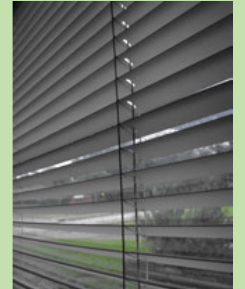
Question: Ludwe needs blinds for a 260 cm wide window. Each blind is 100 cm wide. How many blinds does he need?
Solution:
- Calculate: blinds
- Context consideration: Cannot buy 0.6 of a blind
- Round up to 3 blinds because having part of the window uncovered would be problematic
- Better to have blinds slightly wider than the window than to leave it partially exposed
Exam tips
Important
Critical Exam Strategies:
- Always consider the context before deciding whether to round up or down
- Ask yourself: "Does this answer make practical sense?"
- Common trap: Don't automatically apply mathematical rounding rules in word problems
- Think about the consequences of rounding up versus rounding down
- Money problems: Remember South African cash transactions round to the nearest 5c
Summary
Key Points to Remember:
- Rounding makes numbers simpler and more practical to work with
- Traditional rules: 1-4 round down, 5-9 round up (for mathematical rounding)
- Context is key - the situation determines whether to round up or down
- In practical problems, consider what answer makes the most sense
- When in doubt, think about the real-world consequences of your rounding choice