Price Elasticity of Demand (Grade 11 NSC Matric Economics): Revision Notes
📚Revision Notes
Price Elasticity of Demand
Price elasticity of demand measures how responsive consumers are when the price of a product changes. Understanding this concept helps us predict how much demand will change when businesses adjust their prices.
Understanding the demand curve
The demand curve shows us the fundamental relationship between price and quantity demanded in any market. This relationship follows the law of demand, which states that as prices increase, the quantity demanded typically decreases, and vice versa.
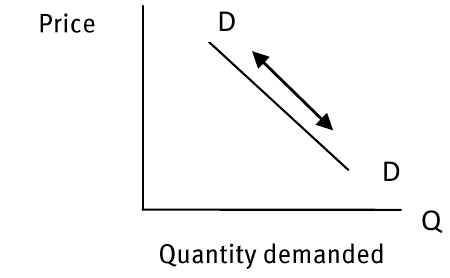
The downward-sloping nature of the demand curve occurs because:
- When a product's price changes, it affects the maximum satisfaction (utility) a consumer can achieve
- Higher prices reduce the marginal utility consumers receive, leading them to buy less
- Lower prices increase marginal utility, encouraging consumers to purchase more of the product
Note
The extent to which demand changes depends on how sensitive consumers are to price changes. Some products see dramatic changes in demand when prices shift, whilst others remain relatively stable regardless of price movements.
Measuring price elasticity of demand
Price elasticity is always measured using percentages rather than absolute values like kilograms or rands. This approach allows us to compare the responsiveness of demand across different products and markets effectively.
The formula for calculating price elasticity of demand is:
Example
Worked Example: Calculating Price Elasticity
Consider a burger shop that increases its prices from R20 to R22 (a 10% increase). As a result, daily sales drop from 1000 burgers to 800 burgers (a 20% decrease). Using our formula:
The negative result indicates that price and quantity demanded move in opposite directions, which aligns with the law of demand. The magnitude of -2 tells us that demand is quite responsive to price changes.
Types of price elasticity
There are two main categories of price elasticity of demand:
- Price elastic demand: When the percentage change in quantity demanded is greater than the percentage change in price (elasticity value greater than 1 in absolute terms)
- Price inelastic demand: When the percentage change in quantity demanded is smaller than the percentage change in price (elasticity value less than 1 in absolute terms)
Factors that determine price elasticity of demand
Several key factors influence how sensitive demand is to price changes:
Availability of substitutes
When consumers can easily switch to alternative products, demand becomes highly elastic. If a particular brand of tea increases in price, consumers can readily choose another brand. However, products with few or no substitutes, such as petrol or electricity, tend to have inelastic demand because consumers have limited alternatives.
Important
The availability of substitutes is often the most important factor determining elasticity - more substitutes generally mean more elastic demand.
Proportion of income spent on the product
Products that represent a small portion of a consumer's budget typically have inelastic demand. For example, if the price of salt doubles, most households will continue buying similar amounts because it still represents a tiny fraction of their grocery spending. Conversely, expensive items like cars or furniture that consume a significant portion of income tend to have elastic demand.
Durability of the product
Durable goods that last for extended periods tend to have more elastic demand. When the price of washing machines increases, consumers can delay their purchase and continue using their current appliance. However, non-durable goods like food and toiletries often have less elastic demand because they require regular replacement.
Time period for adjustment
The longer consumers have to adjust to price changes, the more elastic demand becomes. Initially, when petrol prices rise, people continue driving similar distances. However, given more time, they may choose public transport, buy more fuel-efficient vehicles, or relocate closer to work.
Note
This time factor explains why short-run and long-run elasticity can differ significantly for the same product.
Brand loyalty
Strong brand loyalty reduces price elasticity. Consumers who are devoted to specific brands often continue purchasing them despite price increases. This loyalty can stem from perceived quality differences, emotional connections, or simply habit formation.
Habit-forming characteristics
Products that create dependencies or strong habits tend to have inelastic demand. Coffee drinkers and smokers typically maintain their consumption levels even when prices rise because these products fulfill psychological or physical needs that are difficult to substitute.
Summary
Key Points to Remember:
- Price elasticity of demand measures how much quantity demanded changes in response to price changes, expressed as a percentage relationship
- Elastic demand means consumers are very responsive to price changes, whilst inelastic demand indicates limited responsiveness
- The availability of substitutes is often the most important factor determining elasticity - more substitutes generally mean more elastic demand
- Income proportion, durability, time period, brand loyalty, and habit-forming characteristics all influence how consumers respond to price changes
- Understanding elasticity helps businesses make better pricing decisions and predict the impact of price changes on their sales revenue