Kinds of Mass Movement (Grade 11 NSC Matric Geography): Revision Notes
📚Revision Notes
Kinds of Mass Movement
What is mass movement?
Mass movement describes the way gravity causes weathered material to shift and travel down slopes. This process involves various types of loose materials including broken rocks, stones, and soil particles. When you see a mudslide destroying homes on a hillside, you're witnessing one of the more dramatic examples of how gravitational forces can overcome the stability of slope materials.
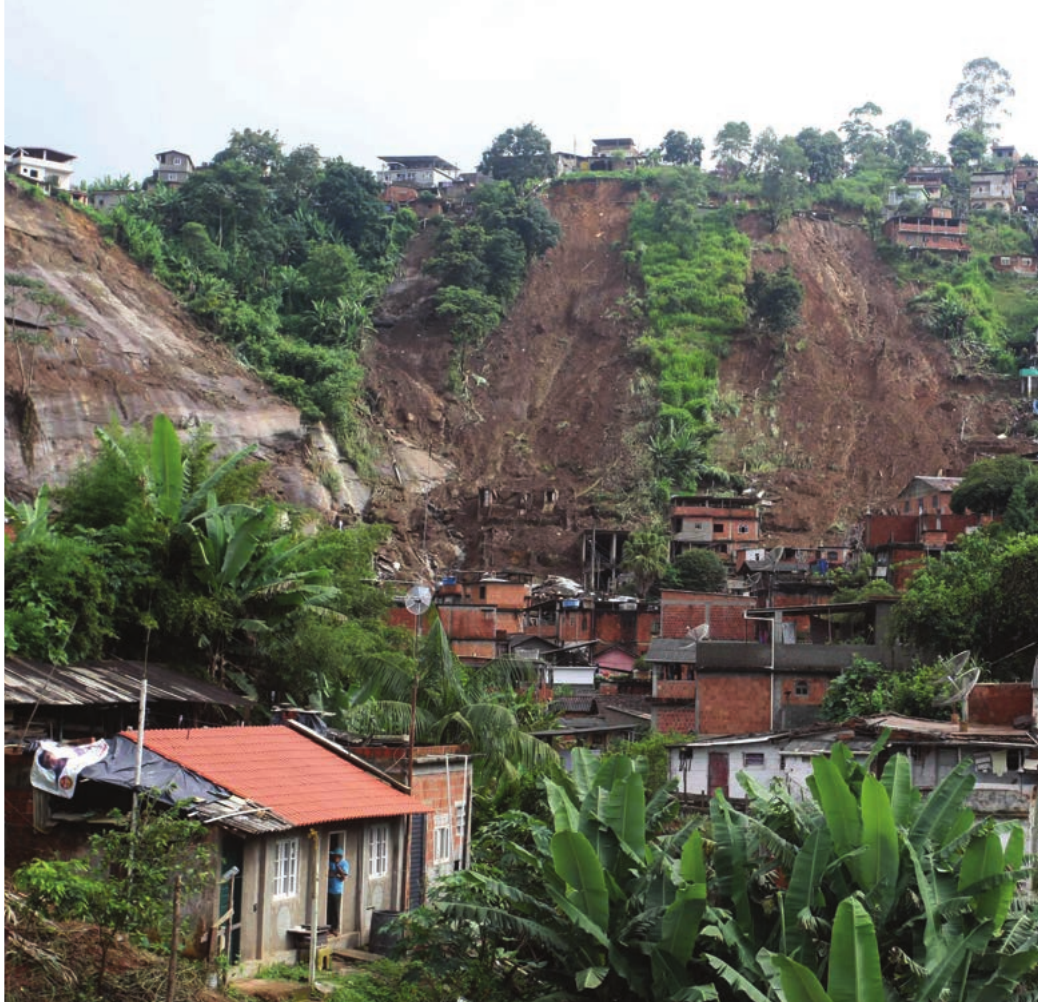
The force of gravity acts continuously on loose material, but movement only begins when this gravitational pull becomes stronger than the forces keeping the material in place.
Note
The Role of Water in Mass Movement
Water plays a crucial role in many mass movements, not by carrying material away like a river, but by lubricating loose particles and reducing their resistance to movement. This makes it easier for gravity to set the material in motion.
Important
Speed Variations are Critical
Different types of mass movement occur at vastly different speeds. Some movements are so slow that they're only noticeable after many years, while others happen instantaneously and can be extremely dangerous.
Types of mass movement
Rockfalls
Rockfalls happen when pieces of rock break away from cliff faces and tumble downward. These events can occur suddenly and are most frequent on very steep slopes, particularly those with angles greater than 40 degrees.
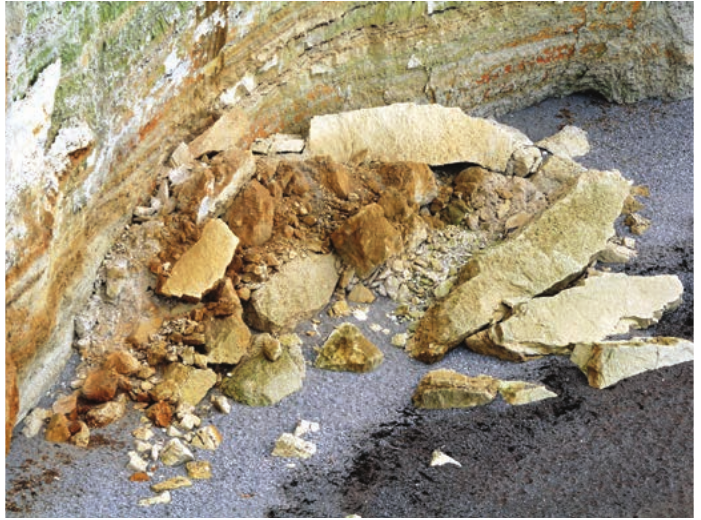
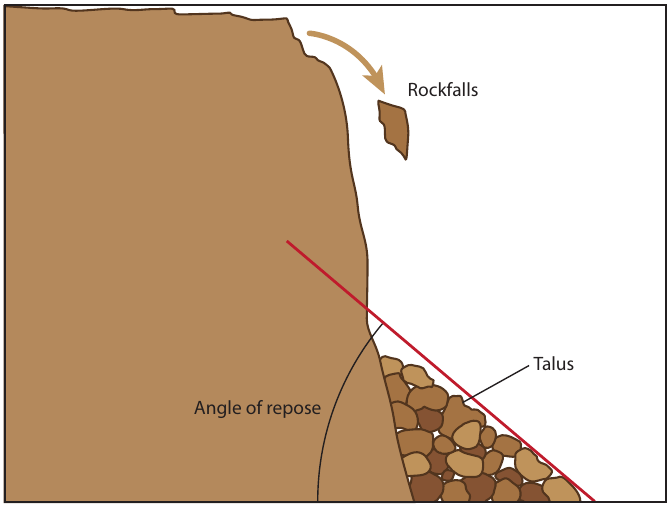
The fallen rocks collect at the bottom of cliffs, forming what geologists call talus slopes. The angle of repose is the angle at which this loose rock debris naturally settles. Various triggers can set off rockfalls, including minor earthquakes, mining explosions, or even the vibrations from heavy trucks passing nearby.
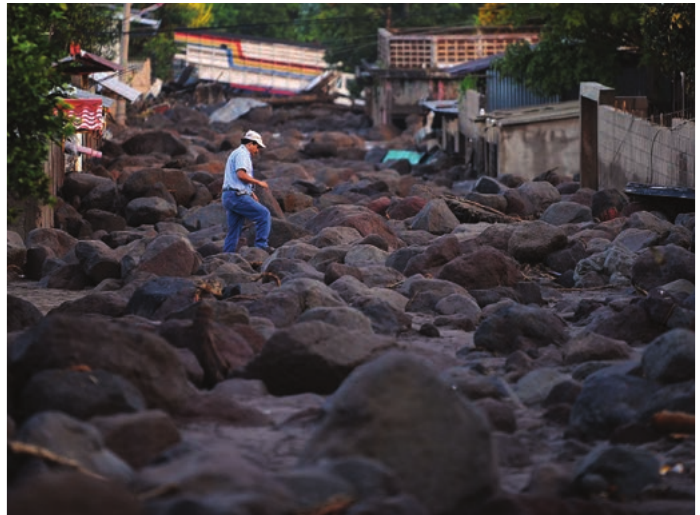
Important
Rockfall Dangers
Rockfalls present significant dangers, especially in populated areas where people live close to steep cliff faces or mountainous terrain. The sudden nature of these events makes them particularly hazardous.
Landslides
Landslides involve entire masses of material moving down slopes as single, cohesive units. Unlike rockfalls where individual pieces break away, landslides see large sections of hillsides moving together.
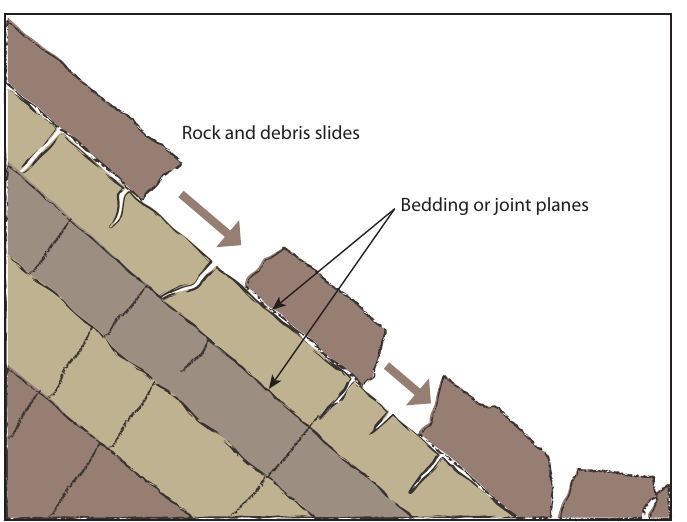
Rock slides represent a specific type of landslide where rock layers slip along natural weakness planes called bedding planes. These planes exist where different rock layers meet, creating potential failure surfaces. When the angle of these bedding planes matches the slope angle, conditions become favorable for rock slides to occur.
Important
Earthquake Triggers
Major earthquakes frequently trigger landslides by sending shock waves through the ground. These vibrations loosen material that was previously stable, causing it to slide down slopes and sometimes bury entire communities at the base of hills.
Slumps
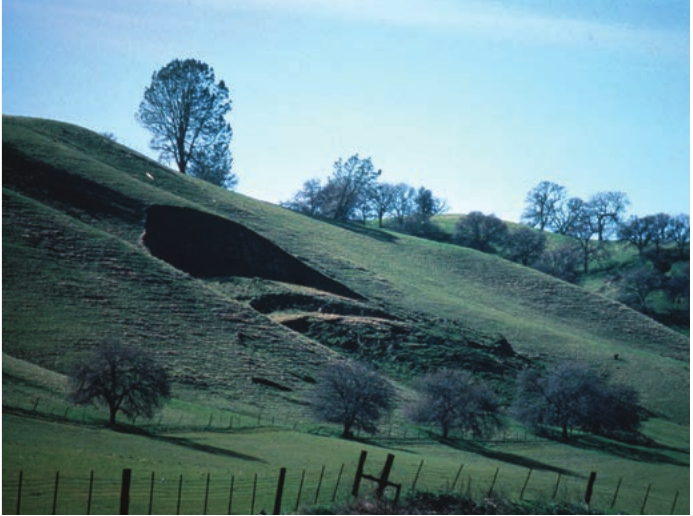
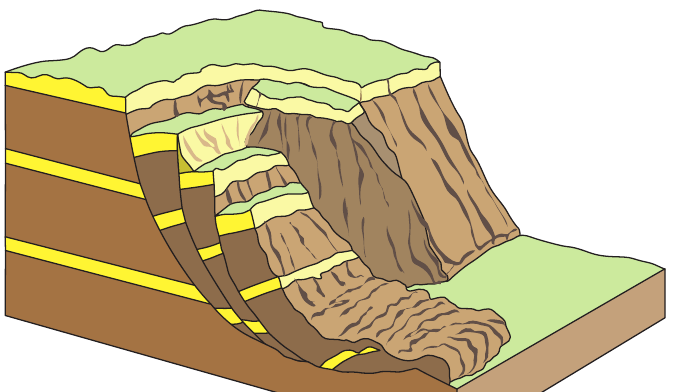
Slumps have a distinctive characteristic - the loose material follows a curved pathway as it moves downhill, similar to someone slipping on a wet floor where their feet slide forward while their body falls backward.
Note
Water's Role in Slumping
Water accumulation often triggers slumping by allowing loose particles to slide easily over each other. The upper portion of a slump creates a distinctive curved scar on the hillside, while the lower part may cause small landslides that cover vegetation further down the slope.
Mud flows
Mud flows develop when soil and broken rock material mixes with substantial amounts of water, creating a fluid-like substance. The more water present, the more liquid-like the mixture becomes.
These flows can travel at remarkable speeds, ranging from 1 kilometer per hour up to 200 kilometers per hour. The speed depends on factors like water content and slope steepness - more water and steeper slopes result in faster movement.
Note
Formation Process
Severe thunderstorms often trigger mud flows by saturating hillsides with heavy rainfall. The combination of loose material and abundant water creates conditions where solid ground transforms into a flowing, destructive force.
Solifluction
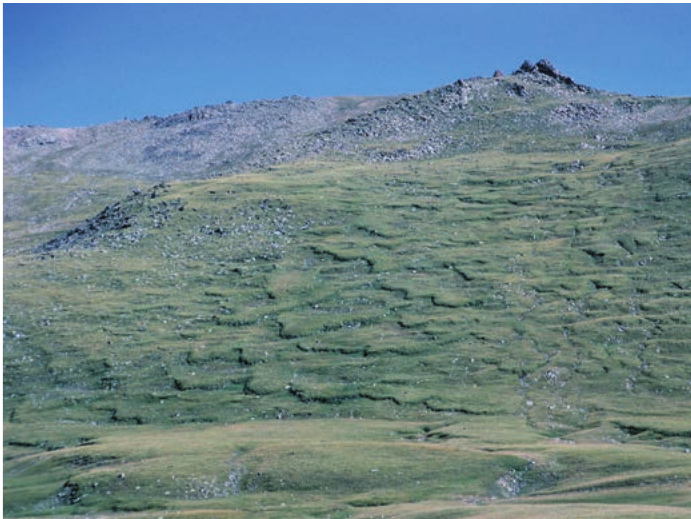
Solifluction occurs in cold climates where waterlogged soil moves slowly over impermeable frozen ground beneath. This process is most common in regions where the ground freezes during winter but the upper layers thaw during summer.
The thawed material flows over the frozen soil below, creating distinctive curved formations on hillsides. Movement rates are extremely slow, typically just a few centimeters per year, but can accelerate with increased water content or steeper slopes.
Soil creep
Soil creep represents the slowest form of mass movement, with rates typically less than one centimeter per year. Because movement is so gradual, it's not directly visible to observers.
Important
Evidence of Soil Creep
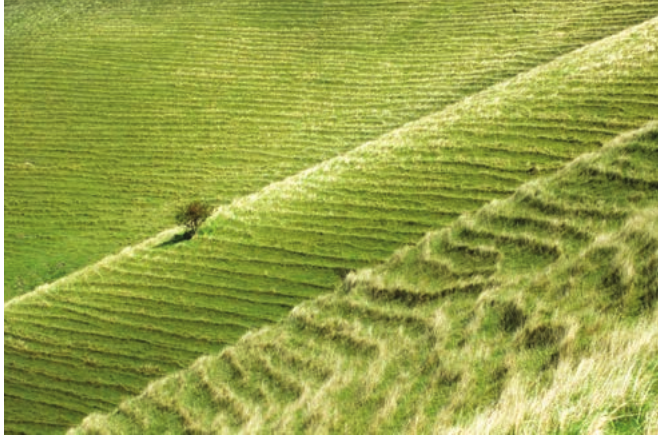
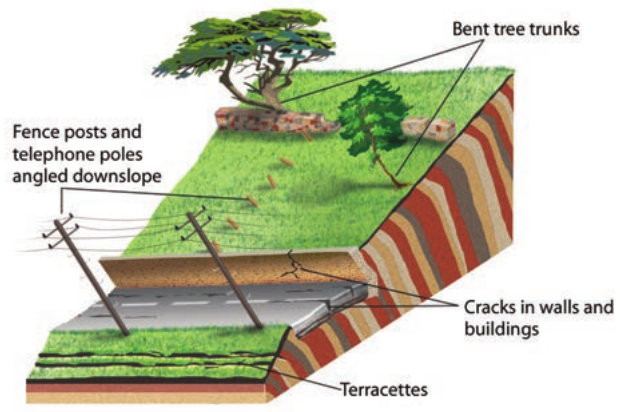
Since soil creep is too slow to observe directly, we must look for evidence of its occurrence. Visible signs include:
- Terracettes (small step-like features on hillsides)
- Bent tree trunks leaning downslope
- Fence posts and telephone poles that lean downslope
- Cracks appearing in walls and buildings constructed on affected slopes
Example
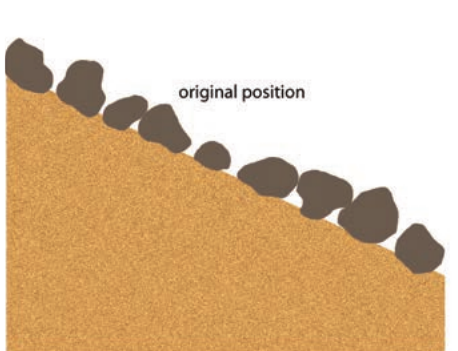
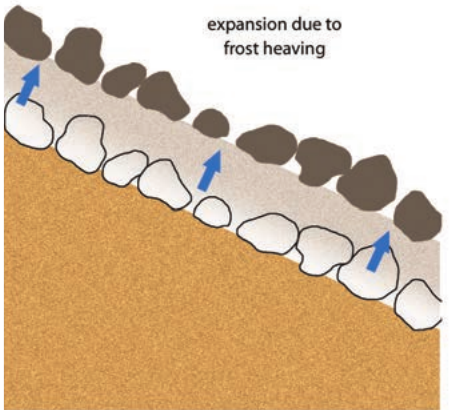
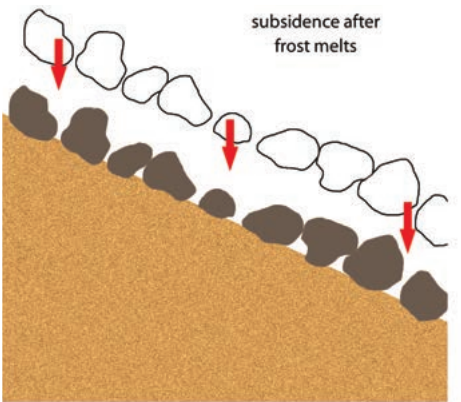
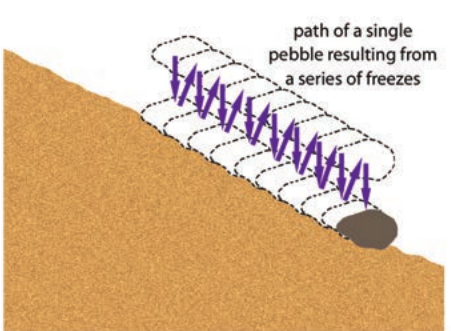
How Freeze-Thaw Creates Soil Creep
Repeated freezing and thawing cycles cause soil particles to move in a characteristic zigzag pattern down slopes:
Step 1: When water in the soil freezes, it expands and pushes particles upward perpendicular to the slope surface
Step 2: As the ice melts, gravity pulls these particles straight down vertically
Step 3: This creates a net downhill movement over time, even though each individual movement is tiny
Classification of mass movements
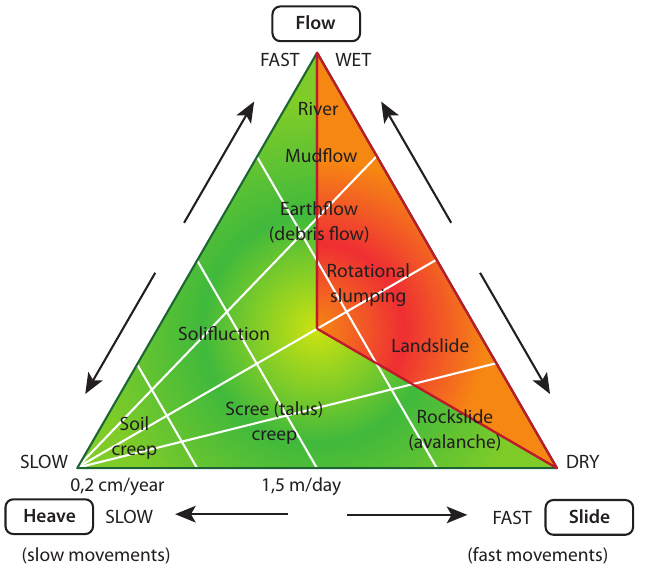
Mass movements can be organized using a classification system that considers speed, water content, and flow characteristics.
Note
Understanding the Classification System
- Fast movements include rockfalls and landslides
- Slow movements encompass processes like soil creep and solifluction
- Wet conditions favor flows like mud flows
- Dry conditions are associated with slides and falls
This classification helps scientists and engineers understand and predict different types of slope instability.
Summary
Key Points to Remember
- Mass movement occurs when gravity overcomes the forces keeping loose material stable on slopes
- The six main types range from instantaneous rockfalls to extremely slow soil creep taking decades to notice
- Water content significantly influences both the speed and type of mass movement that occurs
- Evidence of slow movements like soil creep appears in bent trees, leaning posts, and small step-like terrain features
- Understanding these processes helps predict and prepare for potentially dangerous slope failures in populated areas