Slope Development (Grade 11 NSC Matric Geography): Revision Notes
📚Revision Notes
Slope Development
Introduction
The Earth's surface undergoes constant change as it faces exposure to varying temperatures and weather forces like wind and rain. These natural agents break rock formations into smaller fragments through weathering processes. Weathering can occur mechanically through temperature fluctuations, chemically when minerals react with water and other substances, or biologically when plants and animals contribute to rock breakdown.
Once rocks are broken down, the resulting fragments get transported away by erosional forces including flowing water and ice movement. This ongoing cycle means that landscapes and the slope angles that shape them are continuously evolving. The speed and extent of these changes depend heavily on two key factors: how resistant the underlying rock is to breakdown, and the local climate conditions including temperature patterns and rainfall amounts.
Note
The resistance of rock refers to how 'hard' or 'soft' the rock is. Very resistant rock such as granite breaks down very slowly, but 'softer', less resistant rock such as shale wears away more quickly. This fundamental property plays a crucial role in determining landscape development patterns.
Various geomorphologists have developed theories to explain how slopes develop over time, though these theories often apply to specific climatic conditions and cannot be universally applied to all locations on Earth.
Slope development in arid areas
Understanding how landscapes evolve in dry regions helps us grasp the broader principles of slope development. The pedimentation theory, based on observations in South Africa's Karoo region, describes this process through three distinct stages.
Example
Worked Example: The Three Stages of Pedimentation
Stage 1: Initial plateau formation
The process begins in an arid climate where limited rainfall means less water is available for erosion. During this initial stage, the landscape features a relatively flat-topped elevated area known as a plateau. The rock layers beneath are arranged horizontally, creating the foundation for future landscape changes.
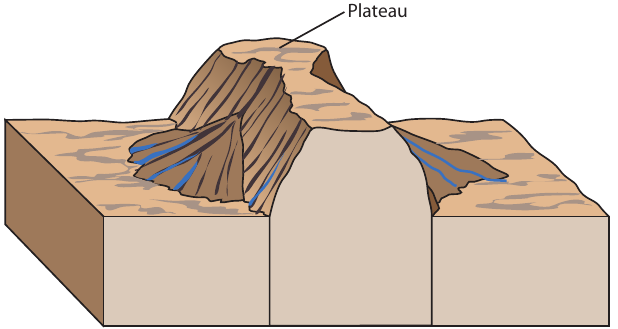
At this stage, the plateau represents the starting point for the long-term erosional processes that will gradually transform the landscape. The arid conditions mean that weathering and erosion occur slowly compared to more humid environments.
Stage 2: Mesa development
As erosional processes continue, slopes maintain their original steep angles while gradually cutting backward into the plateau. This process involves back wasting, where the slope face retreats parallel to its original position, and slope retreat, which causes the lowest slope element (the pediment) to grow larger over time.
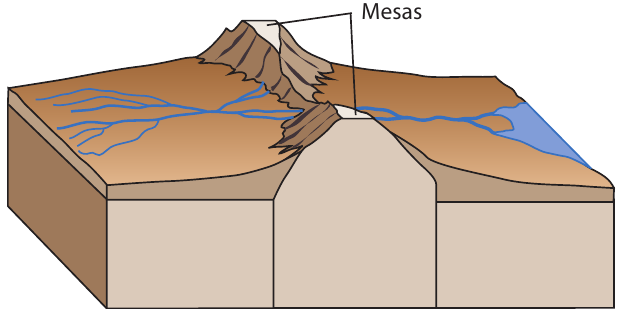
During this stage, distinctive flat-topped landforms called mesas begin to emerge. These represent portions of the original plateau that have become isolated as erosion has carved valleys and lowlands around them. The characteristic steep sides and flat tops of mesas reflect the horizontal rock layering and the parallel retreat process.
Stage 3: Final butte formation
In the final stage, continued erosional processes leave behind only small remnants of the original resistant rock formations. These remnants appear as mesas and buttes - isolated, steep-sided hills with flat tops. The landscape now appears more expansive and flattened because the pediment (the gently sloping erosional surface at the base of the slopes) has significantly increased in size.
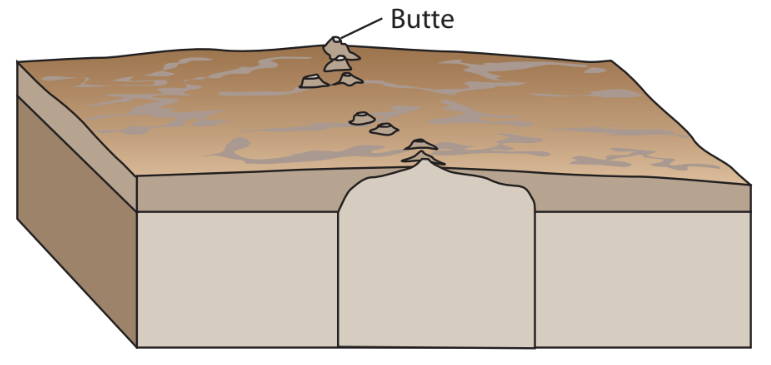
Buttes represent the final stage of this erosional sequence, being smaller than mesas but maintaining the same characteristic shape. They stand as testament to the original landscape that once existed, while the surrounding areas have been worn down to create a more level terrain.
Important
The key principle of pedimentation is that slopes retreat parallel to their original position while maintaining their steep angles. This is fundamentally different from other theories that suggest slopes become gentler over time.
Hack's theory of dynamic equilibrium
JT Hack proposed an alternative explanation for slope development called the dynamic equilibrium theory. This theory suggests that slope angles are primarily controlled by the type of rock being exposed rather than by time-based evolutionary stages.
According to Hack's theory, resistant rocks such as granite naturally create steep slopes because they break down very slowly and can support steep angles. In contrast, softer and less resistant rocks like shale wear away more quickly and therefore form gentler slopes that are more stable at lower angles.
Note
Key Principles of Dynamic Equilibrium:
The theory builds upon earlier ideas proposed by GK Gilbert in 1909, showing how scientific understanding develops over time. The fundamental concept is that the nature of the exposed rock directly controls the resulting slope angle. This means that resistant rock formations will consistently produce steep slopes, while soft rock areas will develop gentler gradients.
Perhaps most importantly, Hack's theory emphasizes that slopes undergo ongoing and continual adjustment. This adjustment depends on multiple factors including the local climate conditions, the vegetation cover that may protect or expose the rock surface, and the specific type of rock that makes up the slope itself.
Important
Hack's dynamic equilibrium theory differs significantly from pedimentation theory. While pedimentation focuses on time-based evolutionary stages, dynamic equilibrium emphasizes that rock type is the primary control on slope angles. This means slopes don't simply evolve through fixed stages, but rather constantly adjust to find the most stable configuration given the local conditions and rock types present.
The concept of slope retreat
Slope retreat represents a fundamental process in arid landscape development. This mechanism describes how slopes in dry regions tend to wear away parallel to their original position, maintaining their angle while gradually moving backward across the landscape.
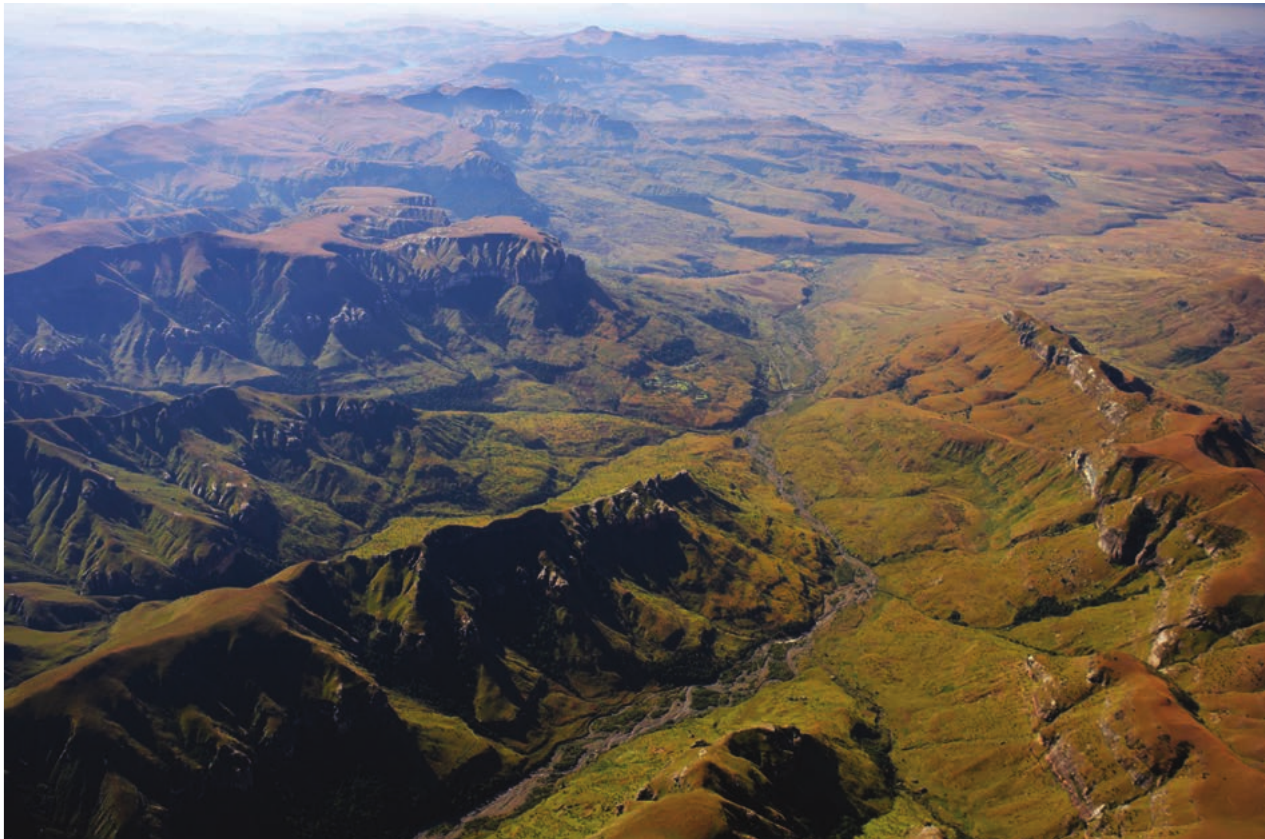
The process occurs because arid areas receive very little rainfall, which means water has minimal effect on the slopes compared to more humid environments. Instead of the slopes becoming gentler over time through water erosion, they maintain their steep angles while the entire slope face moves backward parallel to its original position.
Note
Alternative terminology for slope retreat includes back wasting and scarp recession. All these terms describe the same fundamental mechanism where slopes wear away parallel to their original position rather than becoming gentler over time.
This process creates the characteristic landforms seen in arid regions, including the mesas and buttes described in the pedimentation theory. Understanding slope retreat helps explain why arid landscapes often feature such dramatic and steep-sided landforms. Rather than being gradually worn down to gentle hills, the limited water availability allows these impressive rock formations to maintain their steep faces while slowly retreating across the landscape.
Summary
Key Points to Remember:
- Slope development involves ongoing weathering and erosion processes that continuously reshape landscapes over time
- In arid areas, slopes develop through three main stages: plateau formation, mesa development, and final butte creation
- Hack's dynamic equilibrium theory emphasizes that rock type (resistant vs. soft) primarily controls slope angles rather than evolutionary time
- Slope retreat in dry regions occurs parallel to the original slope position, maintaining steep angles while moving backward
- Different climate conditions and rock types create different patterns of slope development across various environments