Racism and Segregation in the 1920s and 1930s (Grade 11 NSC Matric History): Revision Notes
📚Revision Notes
Racism and Segregation in the 1920s and 1930s
What are racism and segregation?
Understanding these two key concepts is essential for grasping how societies were structured during this period.
Racism is an ideology built on the belief that humans can be divided into separate and distinct biological races. This ideology includes several dangerous assumptions:
- Race determines a person's personality, intelligence, moral character, and cultural behaviour
- Some races are naturally superior to others
- These differences justify treating people differently based on their race
Segregation refers to the enforced separation of people into racial groups in their daily lives. This means:
- Different races are forcibly kept apart in activities like going to theatres, restaurants, schools, and other public spaces
- Laws and social practices ensure racial groups cannot mix freely
- Separate facilities are provided for different racial groups, typically with inferior conditions for non-white groups
Important
Both racism and segregation work together as systems of oppression - racism provides the ideological justification, while segregation implements the practical separation and discrimination.
Global context of the 1920s and 1930s
By the end of the 19th century, racist ideas about white racial superiority had become deeply entrenched in many societies. European conquest and colonialism had created a foundation for racial polarisation across most countries worldwide.
Note
The 1920s and 1930s saw these ideas become more systematic and extreme in various parts of the world, coinciding with political instability and economic challenges that made scapegoating easier.
Racism and segregation in North America
The legacy of slavery and Jim Crow laws
Racism played a central role in the history of colonisation and slavery in North America. People of European origin emphasised the differences between themselves and the descendants of enslaved Africans, particularly in the Southern states. This led to the development of Jim Crow laws - legal systems designed to keep African Americans in inferior positions.

The eugenics movement
During the 1920s and 1930s, racist ideas were popularised through films and media. The racism that had been concentrated in the Southern states began to spread northward. Discrimination also grew against Native Americans, Latin Americans, and European immigrants, showing how racism could target multiple groups simultaneously.
The Ku Klux Klan
This racist organisation experienced a significant increase in membership during the 1920s. The KKK promoted racial segregation and used violence, including lynching, particularly targeting African Americans in the South.
Political developments
Despite widespread racism, there were some signs of progress. Asian immigrants were still largely banned from entering the USA, and racism remained entrenched, especially in Southern states. Political divisions emerged when Democrats invited African Americans to join their party. However, an important milestone was reached in April 1937 when an anti-lynching resolution was passed, despite ongoing political disputes.
Important
The spread of racism beyond the South during this period shows how economic anxiety and social change can cause discriminatory attitudes to expand geographically and target new groups.
Racism and segregation in Europe
The eugenics movement
Europe saw the rise of the Eugenics Movement, which promoted the idea of sterilising people they considered "defective." This pseudo-scientific approach to racism had serious consequences.
Important
By 1935, sterilisation laws had been implemented in several European countries, including Denmark, Switzerland, Germany, Norway, and Sweden. These laws allowed governments to forcibly sterilise people they deemed unfit to reproduce.
Racism and segregation in Germany
Scientific racism
During the 19th century, Germany developed what was called "Scientific racism" - attempts to create a racial classification system for all humanity. This supposedly scientific approach was actually based on prejudice and false assumptions about human biology.
Nazi racial classification
In the 1930s, the Nazis took these ideas to their extreme conclusion. They classified various groups as non-Aryan and subhuman (Untermensch), including:
- Jewish people
- Poles
- Roma and Sinti Gypsies
- Other Slavic peoples
In contrast, Germans were classified as Aryans (Übermenschlich or superhuman), supposedly giving them biological superiority over other groups.
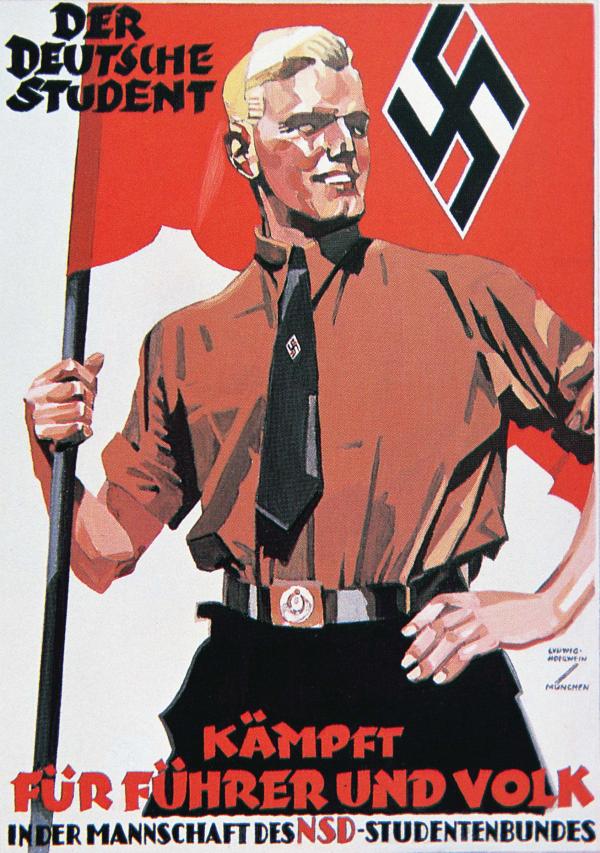
The Holocaust
Important
This racist ideology justified the Nazis' belief that pure Germans or Aryans had the biological right to displace, eliminate, and enslave what they considered "inferior" races. This led directly to Nazi practices that resulted in the systematic murder of 6 million Jewish people during the Holocaust.
Racism and segregation in Australia
The White Australia policy
In 1901, 98% of Australia's population was white, and the country actively sought to remain a racially "pure" white nation following British customs. Eugenic ideas became commonplace, including fears about racial mixing and a determination to maintain white racial purity.
Treatment of Aboriginal people
White Australians viewed Northern European civilisation as superior to that of Aboriginal peoples. Children of mixed descent (called "half-castes" or "crossbreeds") were seen as a threat to the stability and character of white Australian civilisation.
The Stolen Generation
To address their racial concerns, white Australians implemented a policy of assimilation called "breeding out blackness." During the 1920s and 1930s, this policy reached terrifying proportions.
Important
The Stolen Generation
Half-caste Aboriginal children were taken from their parents and placed in white training institutions called missions. This traumatic practice created what is now known as the Stolen Generation - a systematic removal of Indigenous children that destroyed families and cultural connections.
Immigration restrictions
Trade unions wanted to protect Australia from labour competition from Chinese and Pacific Islander workers. The Immigration Restriction Act limited migration of these groups to "white" Australia, ensuring that the country remained predominantly European in character.
Summary
Key Points to Remember:
- Racism and segregation were global phenomena in the 1920s and 1930s, affecting North America, Europe, Germany, and Australia in different but related ways
- Pseudo-scientific ideas like eugenics were used to justify racist policies, including forced sterilisation and racial classification systems
- Extreme consequences included the Holocaust in Germany and the Stolen Generation in Australia, showing how racist ideologies led to systematic violence and family destruction
- Legal frameworks like Jim Crow laws in America and the Immigration Restriction Act in Australia institutionalised racism and segregation
- Some progress occurred alongside the oppression, such as the 1937 anti-lynching resolution in the USA, showing that resistance to racism also existed during this period