Segregation After the Formation of the Union (Grade 11 NSC Matric History): Revision Notes
📚Revision Notes
Segregation After the Formation of the Union
Introduction
This unit explores a crucial historical question: How did segregation in South Africa in the 1920s and 1930s lay the foundations for apartheid? Understanding this period is essential because it shows how systematic racial discrimination developed long before the National Party formally introduced apartheid in 1948.
Important
This period is crucial to understanding South African history because it demonstrates how apartheid didn't appear overnight in 1948, but was built on decades of discriminatory legislation and policies that systematically excluded black South Africans from political, economic, and social life.
The early foundations of segregation (1910-1920s)
Formation of the Union and its impact
When the Union of South Africa was established in 1910, it brought together four separate colonies under one centralised government. This created a significant challenge because each colony had different policies towards black South Africans, known as "native policies." The new government needed to create a uniform approach to deal with what they saw as key issues:
- Black land tenure - who could own or use land
- Blacks in rural and urban areas - where people could live and work
- Political rights for blacks - participation in government and voting
Note
The creation of the Union was significant because it forced the new government to develop consistent racial policies across the entire country. Previously, different colonies had varying approaches to racial relations, but unification demanded a single, coordinated system.
The segregation system emerges
The solution chosen was a system of segregation that divided the country along racial lines:
- Certain areas were reserved for blacks (later called reserves)
- Other areas were designated for whites only
This spatial separation became the foundation for all future apartheid policies.
Key early legislation
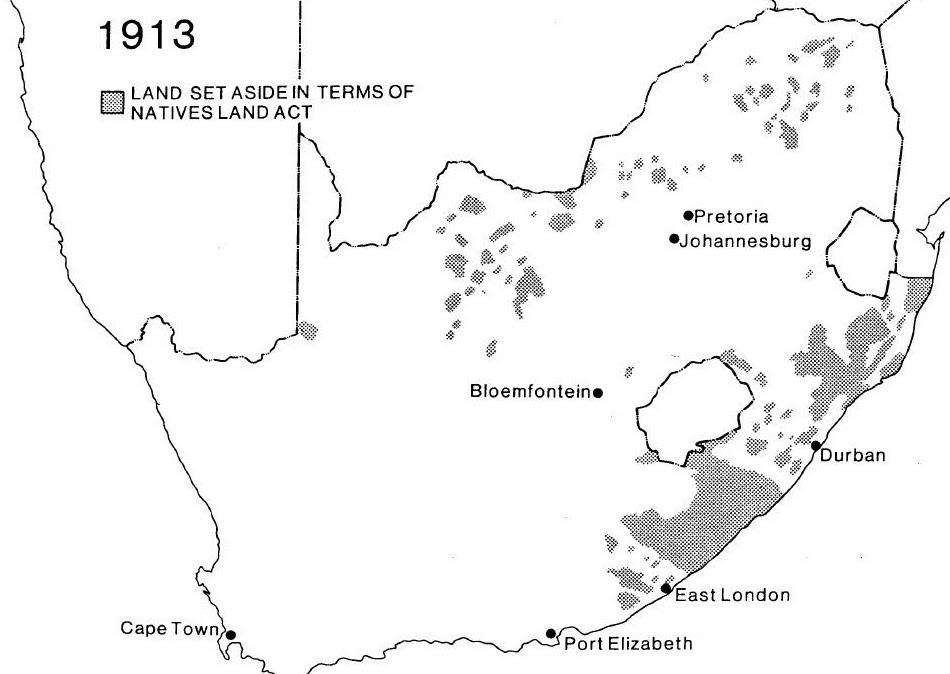
The Land Act of 1913 was introduced by President Louis Botha and Jan Smuts to address black land ownership in rural areas. This act is historically significant because it became the "cornerstone of apartheid" that would remain in place from 1948 until 1990. The act severely restricted where black South Africans could own or purchase land.
Example
Impact of the Land Act of 1913:
Before 1913: Black South Africans could theoretically purchase land in most areas of the country.
After 1913: Black South Africans were restricted to purchasing land in designated reserves, which comprised only about 7% of the total land area (later expanded to 13% in 1936).
Result: Millions of black South Africans were forced to become labour tenants on white-owned farms or migrate to urban areas as migrant workers.
The Native Urban Areas Act of 1923 focused on controlling black people in cities. This law:
- Treated urban areas as "white" spaces
- Viewed blacks in urban areas as temporary residents only
- Required black men to carry permits (passes) or face arrest and removal to rural areas
- Placed urban blacks under strict municipal control
Political exclusion
An important aspect of early segregation was political disenfranchisement. Only a small number of coloured people and certain qualifying black people were allowed on the voters' roll. The vast majority of black South Africans were denied the right to vote and participate in politics.
Intensification under JBM Hertzog (1924-1940s)
The "SA First" policy
When JBM Hertzog became Prime Minister in 1924, segregation policies became much more extreme. Hertzog believed in "SA First" - the idea that South Africa belonged to white people only, especially Afrikaners. His government aimed to protect whites both economically and politically through even stricter segregation.

Important
Hertzog's rise to power marked a critical escalation in segregation policies. His "SA First" ideology was explicitly designed to ensure white supremacy and created the ideological foundation that the National Party would later build upon when implementing apartheid in 1948.
Protecting white labour
Hertzog's government introduced new legislation specifically designed to protect the privileged position of white labour:
- Industrial Conciliation Act (1924) - legalised white trade unions while excluding black workers
- Wages Act (1925) - allowed the minister of labour to force employers to give preference to hiring white workers
- Mines and Works Amendment Act (1926) - reinforced the colour bar in the mining industry, reserving skilled jobs for whites
Economic opportunities for whites
Hertzog's government also created greater economic opportunities for whites by:
- Establishing higher protective tariffs to encourage local manufacturing
- Opening new trade relationships with other countries
- Creating state-owned enterprises like ISCOR (iron and steel) and SA Railways and Harbours
Note
These economic policies were designed to create job opportunities specifically for white South Africans, particularly poor Afrikaners who had been affected by urbanisation and economic changes. This "civilised labour policy" ensured that whites had access to skilled and well-paid positions while blacks were relegated to unskilled, low-wage work.
The impact of the Great Depression (1930s)
Increased urban migration
The Great Depression after 1929 caused widespread unemployment and poverty. This led to increased migration of people into urban areas seeking work, which the government saw as a threat to their segregation policies.
The Native Economic Commission (1932)
In response, Hertzog established the Native Economic Commission in 1932. This commission recommended that blacks should live separately in reserves where they could become more productive through modern farming methods. This recommendation directly influenced later apartheid legislation.
Note
The Great Depression provided the government with justification for implementing even stricter controls on black movement and settlement. Economic hardship was used as a reason to intensify segregation rather than address the underlying inequalities in the system.
Comprehensive segregation legislation (1936-1941)
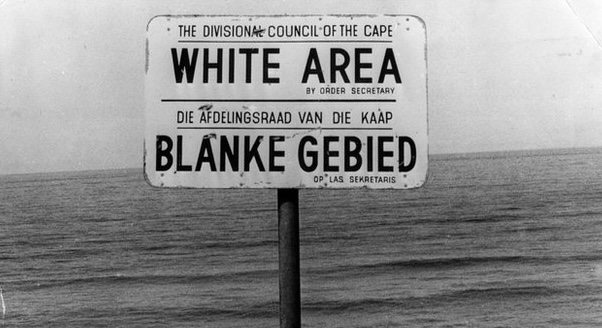
During this period, the government passed a series of laws that created a comprehensive system of racial segregation covering every aspect of life.
Political segregation
The Representation of Natives Act (1936) formally stated that blacks and whites should not be politically integrated. This law removed the few remaining political rights that some black South Africans had enjoyed.
Territorial segregation
The Native Trust and Land Act (1936) expanded on the 1913 Land Act by:
- Allocating only 13% of the country to black people
- Entrenching unequal segregation of South Africa according to race
- Requiring black people to remain in rural areas
- Controlling their movement to urban areas to protect whites from labour competition
Stricter control measures
The Native Laws Amendment Act (1937) made segregation even more rigid by applying pass laws more strictly. Black South Africans faced increased surveillance and control over their movements.
Workplace segregation
The Factories, Machinery and Building Works Act (1941) required factory owners to create racially segregated work, recreation and eating areas for their workers. This extended segregation into every aspect of working life.
Electoral exclusion
The Electoral Laws Amendment Act (1940) made voter registration compulsory for white voters only, completely excluding black South Africans from formal political participation.
Important
This comprehensive legislation created a complete framework of racial segregation that covered land ownership, political participation, movement, employment, and social interaction. These laws provided the legal and administrative foundation that the National Party would later build upon when implementing apartheid after 1948.
Example
How Segregation Laws Affected Daily Life:
A black South African man living in Johannesburg in 1940 would face:
- Housing: Could only live in designated townships, not in the city centre
- Work: Limited to unskilled jobs, could not join trade unions
- Movement: Required to carry a pass book at all times
- Recreation: Could only use segregated facilities (if any existed)
- Politics: Completely excluded from voting or political participation
- Land: Could never own property in the city or most rural areas
Summary
Key Points to Remember:
- The Union of South Africa (1910) created the need for unified racial policies, leading to systematic segregation
- The Land Act (1913) was the "cornerstone of apartheid" - restricting black land ownership for decades
- JBM Hertzog's "SA First" policy (1924 onwards) intensified segregation to protect white economic and political interests
- The Great Depression (1930s) was used to justify even stricter controls on black movement and settlement
- Comprehensive legislation (1936-1941) covered every aspect of life - political rights, land ownership, movement, work, and voting - creating the complete framework for apartheid