The National Party Victory in 1948 (Grade 11 NSC Matric History): Revision Notes
📚Revision Notes
The National Party Victory in 1948
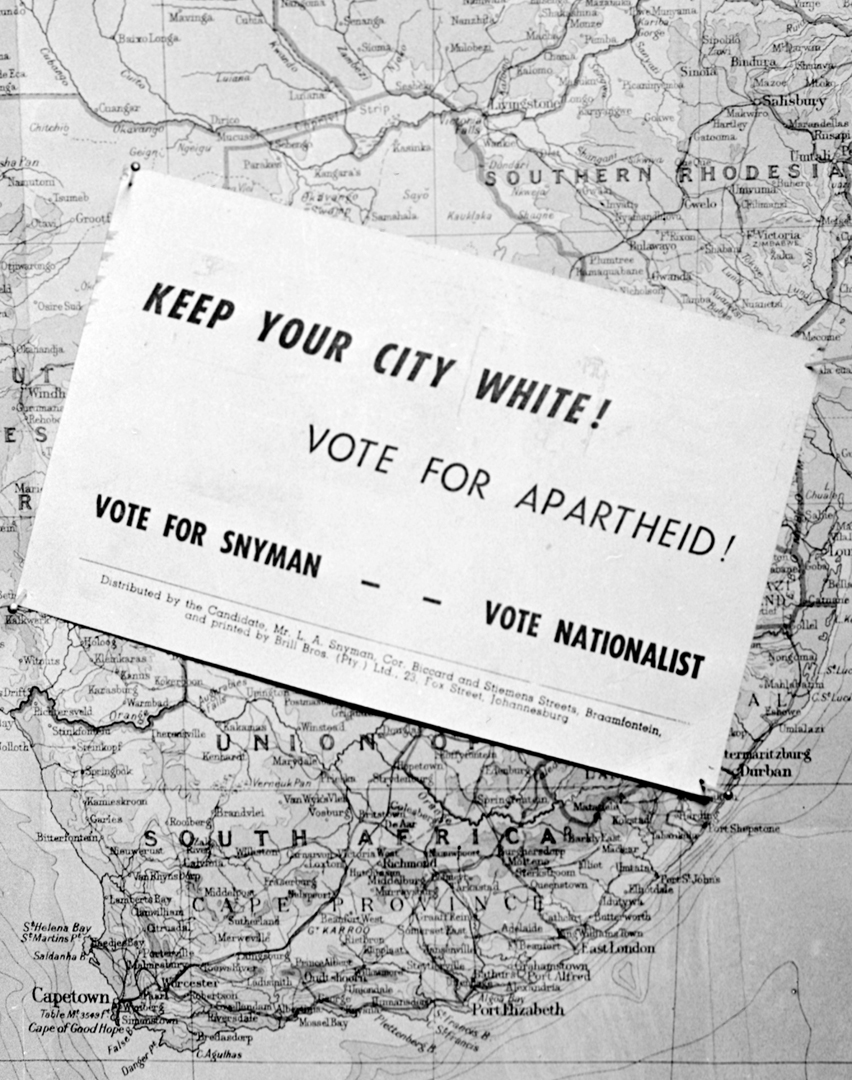
What was apartheid?
Apartheid was a system of racial segregation that became official government policy when the National Party won the 1948 election. The word literally means 'apartness' in Afrikaans, showing how it aimed to keep racial groups completely separate.
Although Jan Smuts had used the term apartheid before, it was Afrikaner thinkers in the 1930s who developed the idea more fully. They believed that different racial groups could never live together peacefully and that this would only lead to conflict.
Note
The term "apartheid" was not invented in 1948 - it had been used before by politicians like Jan Smuts. However, it was the National Party that turned it into a comprehensive system of laws and policies that would dominate South Africa for decades.
Key features of apartheid
The National Party under DF Malan defeated the United Party under Smuts in 1948, taking control of a country that was already racially divided. Apartheid then made this division much worse by:
- Institutionalising segregation - making racial separation official government policy that affected the black majority most severely
- Creating comprehensive laws that controlled every aspect of life, including:
- Restricting all political power to white people only
- Separating schools and education systems by race
- Protecting white workers in the job market
- Using influx control laws to stop black people moving to cities
- Creating African reserves where black people were forced to live
The ultimate goal was to ensure white supremacy - that white people would always remain in control of South Africa.
Important
Apartheid was not just about social separation - it was a comprehensive political and economic system designed to maintain white minority rule over the black majority population through legal and institutional means.
How did apartheid differ from segregation?
Understanding the difference between segregation and apartheid is crucial for grasping how the National Party changed South Africa after 1948.
Differences between segregation and apartheid
Segregation had existed since colonial times and was based on:
- The belief that Europeans were naturally superior to indigenous African people
- A racist idea that Europeans should dominate and live separately from Africans
- Colonial policies that weren't necessarily written into law
Apartheid, however, was different because it:
- Was unique to South Africa - no other country had such a comprehensive system
- Was legally and politically enforced by the National Party from 1948 onwards
- Used many rigid laws that were ruthlessly enforced
- Disenfranchised (took away voting rights from) black people to keep a white minority government in power
Note
The key distinction is that while segregation was often informal colonial practice, apartheid was a formal, legal system with hundreds of laws specifically designed to control every aspect of racial interaction in South African society.
Similarities between segregation and apartheid
Despite their differences, both systems shared important characteristics:
- Both practised racism against black people
- Both continued the economic exploitation of black people that had started in colonial times
- Both were based on white fears of violent uprisings by the black majority population
Why did the National Party adopt the policy of apartheid?
Several historical factors came together to make apartheid seem like the "solution" to South Africa's racial tensions from the National Party's perspective.
Historical background and growing tensions
The history of segregation in South Africa had already created strong racist attitudes among many white people. Then World War II changed everything by:
- Increasing calls from Africans for political power and independence
- Leading to more resistance against segregation and demands for change
- Creating a global trend away from racial discrimination after the war
Many Afrikaners also rejected the Fagan Report findings, which had recommended that different races could live side by side peacefully.
The central fear: losing white control
The main reason the National Party chose apartheid was simple: fear of a black uprising and loss of white control. White South Africans, especially Afrikaners, were terrified that if black people gained political rights, they would seek revenge for decades of oppression.
Important
The Core Motivation
The National Party's adoption of apartheid was fundamentally driven by white minority fears of losing political and economic control to the black majority. This fear was so powerful that it convinced many white voters to support an increasingly oppressive system.
What commissions led to the National Party adoption of apartheid?
Two important government commissions studied South Africa's racial problems and came to completely opposite conclusions.
The Fagan Commission (1946-1947)
Set up by the United Party in 1946, this commission recommended:
- Accepting that whites and other racial groups could exist side by side
- This was the only realistic and feasible option for South Africa's future
- Integration rather than separation was the way forward
The Sauer Commission (1947)
Set up by the Herenigde National Party in response to the Fagan Commission, it recommended:
- Entrenched and formalised segregation was the only way to protect each racial group's future
- All races should develop separately to achieve self-determination
- Apartheid should become official policy
Note
Two Opposing Visions
These two commissions represented completely different approaches to South Africa's racial future:
- Fagan Commission (UP): Integration and coexistence
- Sauer Commission (HNP): Complete separation and apartheid
The 1948 election essentially became a referendum on these two opposing visions for South Africa's future.
The stark difference between these two commissions showed South African voters a clear choice between integration (UP) and separation (HNP).
How did the HNP win the 1948 elections?
The 1948 election results shocked many people, as the National Party managed to defeat the ruling United Party despite not winning the majority of votes.
Election results
| Party | 1943 Seats | 1948 Seats |
|---|---|---|
| Herenigde National Party (HNP) | 43 | 70 |
| United Party (UP) | 89 | 65 |
| Afrikaner Party (AP) | 0 | 9 |
| Labour Party (LP) | 9 | 6 |
Key factors in the National Party victory
The National Party's success resulted from a combination of strategic moves and circumstances:
Political alliances:
- The wartime coalition between the UP, Dominion Party, and Labour Party began to fall apart in the late 1940s
- Many Afrikaners in Natal left the UP to join the HNP because they disagreed with the UP's Indian Policy
- Malan's HNP formed an alliance with Havenga's Afrikaner Party, creating a stronger opposition
Exploiting white fears:
- The NP brilliantly exploited white fears of black political power
- They realised that many white voters were terrified of a "black takeover"
- Their campaign focused heavily on promoting apartheid as the solution
- They warned voters against the "swart gevaar" (black danger)
Example
Campaign Strategy: Fear-Based Politics
The National Party's 1948 campaign was masterfully designed around white fears:
Step 1: Identify the core fear - loss of white control
Step 2: Present apartheid as the "scientific" solution
Step 3: Warning about "swart gevaar" (black danger)
Step 4: Promise economic benefits through cheap black labour
This strategy proved devastatingly effective in convincing white voters to support the NP.
Economic and social factors:
- Many voters blamed the UP for economic problems after the war
- The NP promised farmers and businesses cheap labour through their apartheid policies
- Their influx control policies seemed like a practical solution to many white voters
Electoral advantages:
- Very few coloureds, blacks, and Asians were allowed to vote (only those who qualified under strict conditions)
- Electoral boundaries gave the NP a majority of seats even though they didn't win the most votes
- The UP underestimated the NP and showed complacency during the campaign
The National Party's victory was more focused and determined than the UP's campaign, and their alliance with the Afrikaner Party gave them the crucial extra seats needed to form a government under DF Malan.
Important
A Minority Victory with Lasting Consequences
The National Party won control of South Africa despite not winning the majority of votes cast. This minority victory would lead to decades of institutionalised racism that affected millions of people - showing how electoral systems can sometimes produce results that don't reflect the will of the majority.
Remember!
Summary
Key Points to Remember:
- Apartheid literally means 'apartness' - it was a comprehensive system of racial separation that went far beyond previous segregation policies
- The key difference: Segregation was colonial practice, but apartheid was unique to South Africa and legally enforced by the National Party from 1948
- Two opposing visions: The Fagan Commission (UP) wanted integration, while the Sauer Commission (HNP) demanded complete separation
- 1948 election victory: The HNP won by forming alliances, exploiting white fears of black political power, and promising economic benefits to white voters
- The result: DF Malan became Prime Minister and apartheid became official government policy, leading to decades of institutionalised racism and oppression