Case Study 1: Australia and the Indigenous Australians (Grade 11 NSC Matric History): Revision Notes
📚Revision Notes
Case Study 1: Australia and the Indigenous Australians
Important
Key question: What were the consequences for Indigenous Australians when pseudo-scientific ideas of race became integral to government policies and legislation in the 19th and 20th centuries?
Background: Establishing the Australian colony
Early European contact and settlement
The story of European colonisation in Australia began in the early 17th century. Willem Janszoon, a Dutch navigator, was the first European to record sighting Australia. After 1606, English sailors and explorers began landing on the continent, which sparked Britain's interest in establishing a colony there.
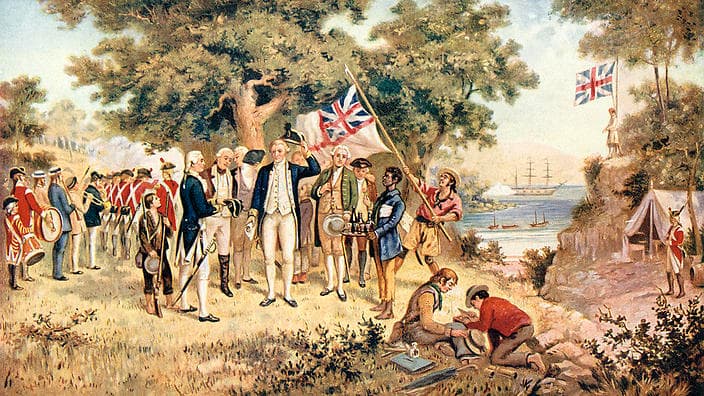
The turning point came after Britain lost the American War of Independence. With their American colonies gone, the British needed a new location for their expanding empire. On 26 January 1788, a British colony was established at Botany Bay, marking the start of New South Wales.
The convict transportation system
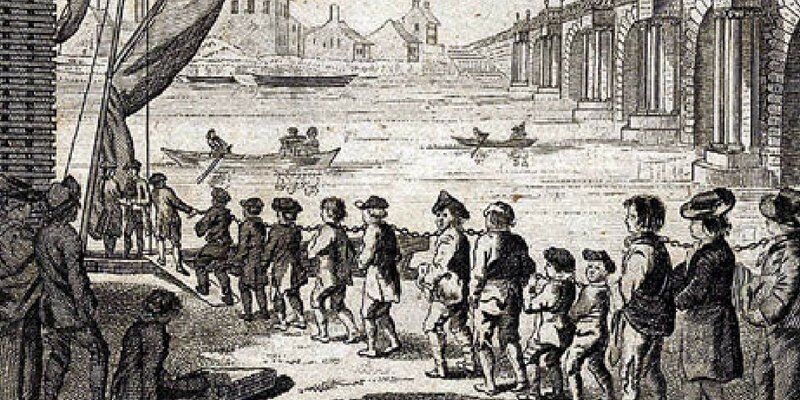
Between 1788 and 1867, approximately 162,000 male and female convicts from England and Ireland were transported to Australia. Many of these convicts were later pardoned and given land. However, the early years were extremely challenging:
-
Farming conditions were harsh and difficult
-
Many convicts lacked the necessary agricultural skills
-
By 1791, trade was established and conditions began to improve
Note
The first governor of New South Wales, Captain Arthur Phillip, had instructions to establish friendly relations with the Indigenous Australians and to reform the convicts. However, this peaceful approach would not last long.
Early conflicts and land dispossession
Settlers quickly began viewing Indigenous people as "less than human," leading to the first century of colonisation being marked by conflict and land dispossession. The effects were devastating:
- Skilled workers like stonemasons were in high demand
- Many female convicts became domestic servants, though some were forced into prostitution
- Male convicts were often assigned to free settlers to work on farms and build infrastructure
The deterioration of colonial relations
Disease and violence
The impact on Indigenous Australians was catastrophic. A smallpox epidemic decimated the Aboriginal population living around Botany Bay, Broken Bay, and Port Jackson. In 1790, conflict arose as settlers displaced Aborigines from their traditional lands, leading to guerrilla attacks against the white settlers.
Broken treaties and continued expansion
In 1835, two treaties were signed with a clan to 'purchase' 600,000 acres of land near Melbourne. However, these treaties were later overridden as though the land had been 'empty' when the British arrived. This pattern of broken promises and land theft continued throughout the late 1880s.
Indigenous Australians fought back by raiding farms and attacking sheep and cattle, but their resistance was ultimately unsuccessful. By 1888, only about 80,000 of the original 1 million Aborigines had survived the impacts of colonisation.
Progressive colonisation
The continent was systematically colonised by the British with new colonies established:
- Van Diemen's Land (1803)
- Western Australia (1827)
- South Australia (1836)
- Victoria (1859)
- Northern Territories (1912)
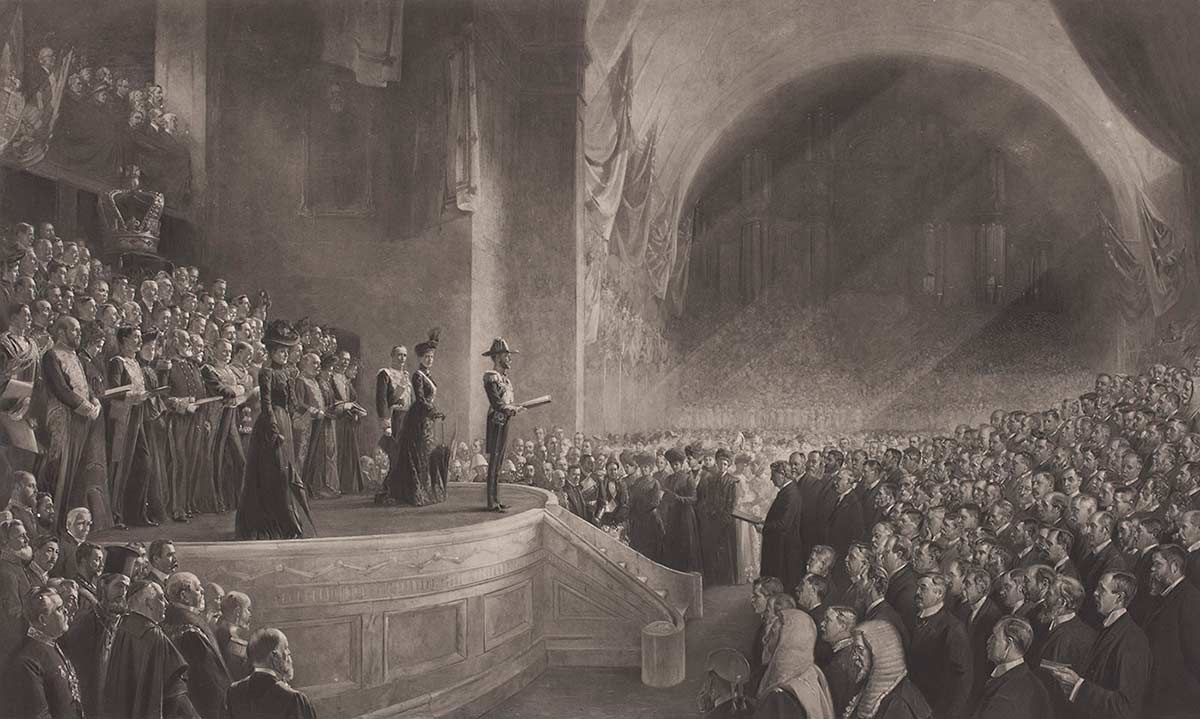
In 1901, the Commonwealth of Australia was formed with a federal government.
Important
Australia Day is celebrated on 26 January, but Aborigines consider this day one of mourning and protest. Indigenous attempts to have their story and heritage recognised were largely ignored until 1967, when attitudes began to slowly change.
Race theories in Australia in the early 20th century
Scientific racism and Indigenous peoples
Colonial authorities viewed Indigenous Australians as "inferior and scarcely human." Their way of life was seen as 'primitive and uncivilised,' and colonists believed their culture would eventually die out. This racist viewpoint was given false legitimacy through pseudo-scientific theories.
Social anthropologists from universities who 'studied' Aboriginal ways of life reinforced these harmful views. They claimed to add 'scientific' credibility to observations about this supposedly 'primitive' society, describing it as having "the lowest level of kinship and the most 'primitive' form of religion."
The eugenics movement
Eugenics associations were established in many Australian states, including New South Wales and Victoria. In 1960, the Racial Hygiene Association in Sydney became the Family Planning Association.
A prominent eugenicist in Melbourne was Professor Richard Berry, who believed Aborigines to be the most primitive form of humans. Berry conducted disturbing research:
- He studied and measured people's heads to 'prove' his theory that white, educated people were the smartest
- He claimed poor people, criminals, and Indigenous Australians were the least intelligent
- He even proposed a euthanasia chamber for so-called mental defectives
Racial purity policies
Ideas of "racial decay" and "racial suicide" were used to justify strengthening white populations, especially in northern areas where Asian populations were expanding. In 1901, the Immigration Restriction Act was passed, known as the White Australia Policy, which promoted white racial unity as a form of racial purity.
Note
Several measures were implemented to maintain white supremacy:
- Immigration was encouraged from the UK in 1922 to increase European numbers
- Thousands of children were sent to keep Australia white
- In 1912, white mothers were offered £5 childbirth bounty to encourage larger middle-class families
- Officials worried about 'racial poisons' like tuberculosis, venereal disease, prostitution, alcoholism, and criminality affecting the white middle class
Australia's immigration policies
The White Australia Policy
The White Australia Policy of 1901 aimed to create unity among the white population while enshrining discrimination and white superiority. This policy had devastating consequences for vulnerable children.
The Lost Generation
Between 1920 and 1967, thousands of British children aged between 3 and 14 were sent to Australia and Canada to boost the white population. These children:
- Came from poor backgrounds and were mostly in social care
- Were often told they were orphans, even when they had living families
- Were frequently cut off from their families permanently
- Many stayed in orphanages or became unpaid cheap labour on farms
- Suffered physical and sexual abuse in many instances
Important
The children who were forcibly migrated under this system became known as the Lost Generation. The Catholic Church established homes to accommodate these migrant children, but abuse was widespread.
In 1987, the Child Migrant Trust under Margaret Humphreys began publicising the abuse suffered by child migrants, bringing this dark chapter to public attention.
The Stolen Generation
Policies targeting mixed-race children
Children of mixed race were viewed differently depending on the era. At the beginning of the 20th century, these 'half-caste' children were seen as a threat to the future of the white race in Australia.
In 1913, W. Baldwin Spencer set up 13 proposals to manage the half-caste populations in and around towns, mining housing, and other contact sites between 'races.' These included:
- Segregated living areas in certain towns
- Limits on employment of Indigenous people by white Australians
- Removal of Aboriginal people to compounds
- Construction of half-caste homes in designated areas
- Bans on inter-racial contact
- Authority for protectors to remove 'half-caste' children from families and place them in homes
The assimilation policy
By the 1930s, the part-Aboriginal population had increased. Dr Cecil Cook and A.O. Neville believed the white race was headed for extinction and developed assimilation programmes for 'breeding blackness out.'
Between 1910 and 1970, approximately 100,000 'mixed-race' children were forcibly taken from their parents to 'breed out Aboriginal blood.' Cook encouraged lighter-skinned women to marry white men to 'breed out their colour.'
Example
The Reality of Assimilation Policy
In 1951, the new Minister for Territories, Paul Hasluck, claimed assimilation would be the new policy for dealing with Indigenous people. This was supposedly motivated by child welfare concerns, but the reality was devastating:
- Policemen or government officials often took children from their mothers
- Children were raised as orphans with little connection to their heritage
- Many experienced abuse and neglect
- Labels were used (quadroon, octoroon) to indicate how much 'white' blood they had
- This policy only ended in 1971
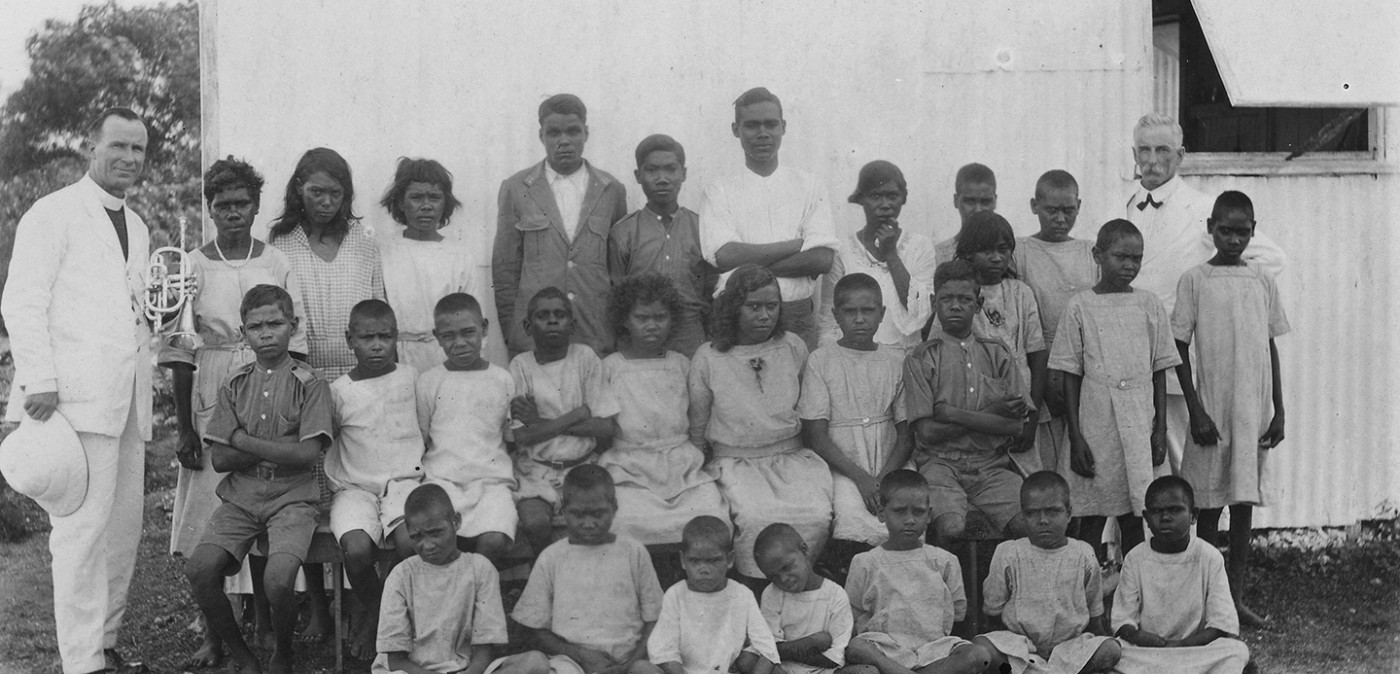
These children are known today as the Stolen Generation.
Apologies to the stolen and lost generations
The practice of removing Indigenous children from their families was not openly discussed until 1997, when an official enquiry revealed consistent abuse, exploitation in the labour market, and social dislocation that led to alcoholism, violence, and early death.
In 2009, Prime Minister Kevin Rudd apologised in parliament for the laws and policies that inflicted grief, suffering, and loss on Indigenous Australians. He specifically mentioned the Stolen Generation who had been removed from their families.
In 2010, Rudd also apologised to the Lost Generation of children who were held in orphanages and other institutions between 1930 and 1970.
Summary
Key Points to Remember:
- European colonisation of Australia from 1788 led to devastating consequences for Indigenous Australians through disease, violence, and land dispossession
- Pseudo-scientific racial theories were used to justify discriminatory policies, including the White Australia Policy of 1901
- The Stolen Generation refers to approximately 100,000 Indigenous children forcibly removed from their families between 1910-1970 as part of assimilation policies
- The Lost Generation were British children sent to Australia between 1920-1967, many of whom suffered abuse and exploitation
- Official recognition and apologies for these injustices only came in 2009-2010, showing how long it took for Australia to acknowledge these human rights violations