Theories and Practice of Race (Grade 11 NSC Matric History): Revision Notes
📚Revision Notes
Theories and Practice of Race
Introduction to racial theories
During the late 19th and 20th centuries, various theories about race emerged that attempted to classify and rank human beings based on physical characteristics. These ideas, though later proven scientifically false, had devastating consequences when put into practice around the world.
Important
Key question: What were the theories and practice of race in the late 19th and 20th centuries?
Early racial classification systems (18th-19th century)
The foundations of racial science
The development of racial theories began in the 1700s when scientists attempted to create systematic ways of classifying human beings:
Note
Carolus Linnaeus (1730s)
- Swedish naturalist who developed a system to show relationships between living things
- Created the first major classification system dividing humans into four groups: European, Asiatic, American, and African
- Initially believed there were more similarities than differences among human groups
Note
Johann Blumenbach (1795)
- German scientist who classified humans into five groups: Negro (African), Mongolian (Asian), Malay (Southeast Asian), American Indian (American), and Caucasian (European)
- Claimed that Caucasians were "the best and most beautiful" of all races
- Argued that other races had "degenerated" from the Caucasian race
Ranking humans by physical features
Note
Petrus Camper (1790s)
- Dutch scientist who studied skeletal remains of humans and animals
- Believed all humans came from a common ancestor but some had "drifted further away" from perfection
- Used ancient Greek and Roman statues as his standard for human beauty
- This established the idea of ranking races based on physical appearance
Note
Stanley Morton (mid-1800s)
- American anthropologist who claimed each race was created differently and separately
- Ranked races according to brain size, arguing that whites had superior brains
- Believed whites were the superior race and Africans were inferior
- His theories were later questioned and disproven by other scientists
Important
Creating racial hierarchies
- In 1854, Josiah Nott and George Gliddon created detailed tables ranking different races
- These classifications became widely accepted and used to justify discrimination
Darwin's influence and Social Darwinism

Darwin's theory of evolution
Note
Charles Darwin's natural selection
- Proposed that all plants and animals evolved from common ancestors through "natural selection"
- The "fittest" species adapted to their environment and passed genes to future generations
- This theory challenged religious beliefs of the time
- Originally focused on animal species, not human societies
Social Darwinism emerges
Herbert Spencer's interpretation
- Developed the theory that became known as Social Darwinism
- First used the phrase "survival of the fittest" in relation to human society
- Applied Darwin's ideas about animal evolution to human social groups
Important
Key beliefs of Social Darwinists:
- Physical and social differences indicated relative worth between people
- Life was a "struggle for existence" where only the strong should survive
- These ideas provided a pseudo-scientific justification for inequality
Impact of industrialisation
The rapid technological advancement of America, Britain and Germany was used to support racial theories:
- Industrial progress was seen as proof that white races were superior and more advanced
- European colonisation of Africa was justified as the "burden" of civilised nations
- The belief spread that weak people deserved to lose their territory
- Exhibitions and fairs in European cities displayed racial hierarchies, often showing people like Saartjie Baartman to "prove" racial inferiority
The eugenics movement

Origins of eugenics
Note
Francis Galton (Darwin's cousin)
- Invented the term "eugenics" from the Greek word meaning "well-born"
- Defined it as the science of improving the human race through selective breeding
- Believed society should control which people were allowed to have children
- Wanted to "weed out" unfit individuals to strengthen the racial stock
Types of eugenics
Note
Positive eugenics:
- Encouraged "superior" couples to have more children
- Organised contests to determine the "fittest family" or "better babies"
- Opened family planning clinics to promote these ideas
- Promoted the idea that certain groups should reproduce more
Important
Negative eugenics:
- Discouraged or prevented reproduction of individuals deemed "unfit"
- Led to sterilisation programmes in 30 US states
- Approximately 65,000 people were involuntarily sterilised
- Targeted people with disabilities, mental illness, and certain ethnic groups
Scientific support and funding
- Wealthy American businessmen financed eugenic research
- Charles Davenport established a Eugenics Record Office
- Published studies claiming that races inherited specific genetic traits
- Provided a "scientific" framework that justified discrimination
Modern understanding of race
Scientific evidence against racial theories
Modern scientific research has completely debunked 19th and 20th century racial theories:
Important
The Human Genome Project (2008)
- Mapped all human genes to understand human genetic diversity
- Proved that the concept of "race" has no scientific foundation
- Showed that all humans are 99.9% genetically identical
Archaeological and genetic evidence:
- Supports the theory that all humans originated in Africa
- Only a small group of related people left Africa to populate the world
- Fossil records confirm common human ancestry
- There are no meaningful genetic differences between so-called "races"
Practices of racial theories around the world
United States of America
Eugenic ideas heavily influenced American laws and policies in the early 1900s:
Legal restrictions:
- State laws banned marriages involving people with alcoholism, mental illness, or certain diseases
- Immigration laws favoured northern Europeans and restricted others
- IQ tests were designed to favour white, Western culture and discriminate against others
Targeting specific groups:
- Government budgets avoided spending money on people declared "feeble-minded"
- Policies aimed to prevent those considered "too weak to survive" from reproducing
- Actions against Native Americans justified as part of the "struggle for existence"
Australia
Important
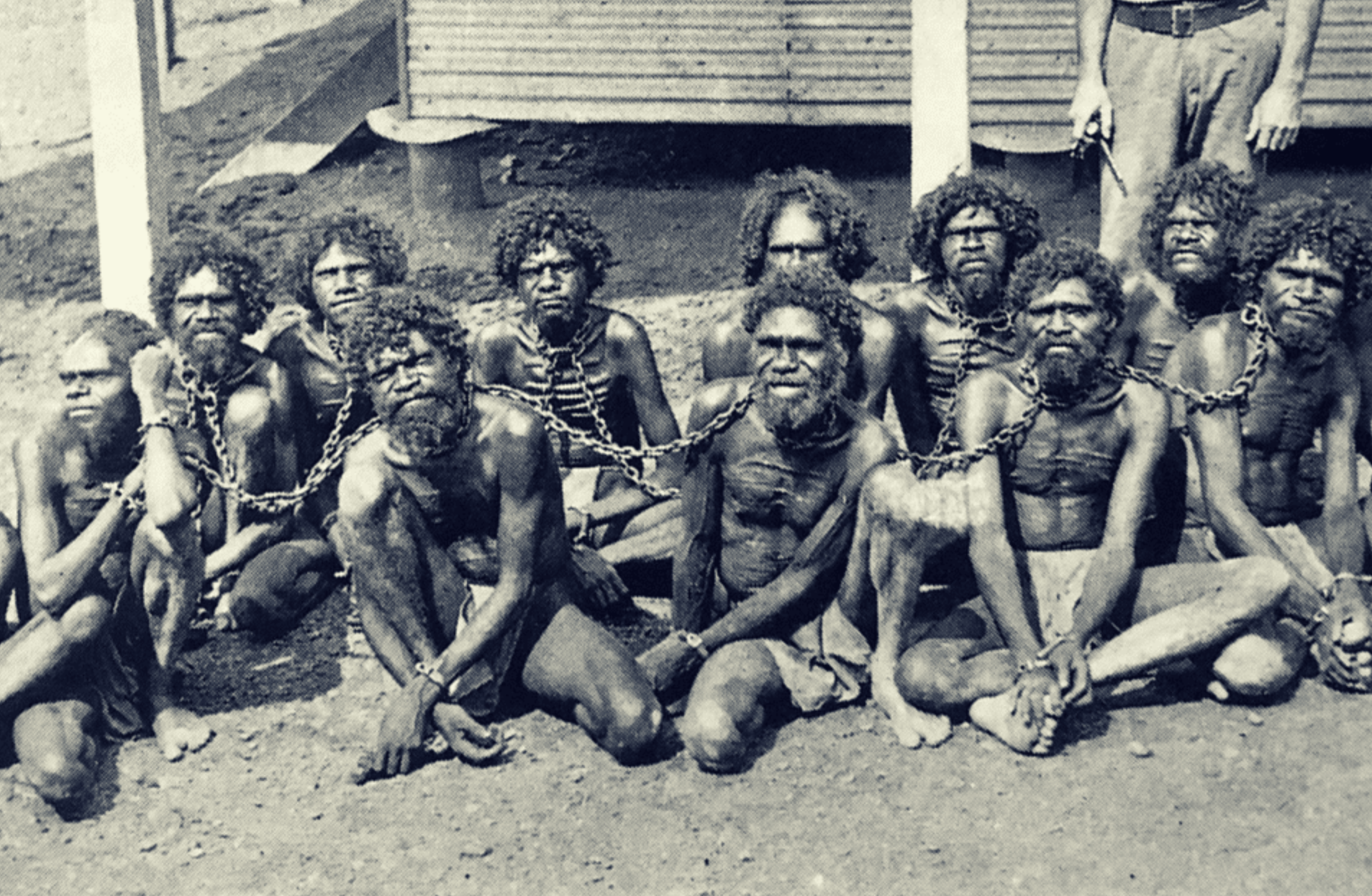
Colonial policies devastated Aboriginal populations:
- Diseases and colonial policies reduced the Aboriginal population from about 1 million to much smaller numbers
- Eugenics influenced policies of forced assimilation and "breeding out" Aboriginal heritage
- European immigration was actively encouraged to increase the white population
- These policies aimed to eliminate Aboriginal culture and identity
Germany and the Third Reich
Important
Extreme nationalism combined with eugenic theories created deadly consequences:
- Nazis viewed the German nation as a single, superior race
- Believed that racial characteristics were passed down genetically
- Implemented policies to keep races "separate and pure"
- Used eugenics to justify the extermination of people deemed racially inferior
- This shows how eugenic theories directly contributed to fascism and genocide
South Africa
After World War I, eugenic ideas influenced social policies:
- Many believed cultural differences between whites and blacks resulted from brain differences
- Eugenicists promoted white racial superiority and racial segregation
- During the Great Depression, economic competition between blacks and whites increased
- Eugenic ideas were used to justify keeping blacks oppressed while providing jobs for whites
Important
Government programmes:
- The National Maternal and Family Welfare system promoted white birth control in the 1930s
- In the 1960s, white women were encouraged to have more babies to celebrate the republic's founding
- Immigration policies specifically encouraged white immigration
- Family planning programmes in the 1970s distributed contraceptives mainly to black women
- Some black women faced job loss threats if they became pregnant
- Forced sterilisation occurred without knowledge or consent, including of mentally ill individuals
Namibia (German South West Africa)
Important
German colonial authorities implemented some of the most extreme racial policies:
- In 1904, launched a campaign to exterminate the Herero people - this was genocide
- General von Trotha called it a "race war"
Example
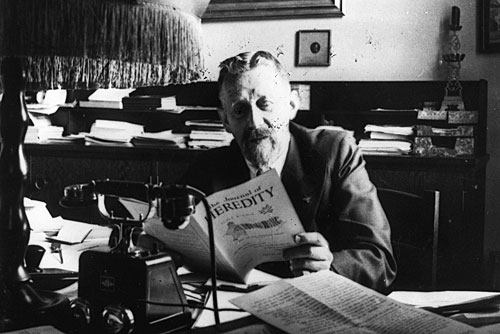
Eugen Fischer's research:
-
German eugenicist who conducted research on the Nama and Herero peoples in concentration camps
-
Studied children called "Rehoboth Bastards" (mixed-race children)
-
His experiments concluded these children were mentally inferior to their fathers
-
As a result, mixed marriages were banned in German South West Africa
-
His book The Principles of Human Heredity and Race Hygiene later influenced Nazi racial policies
Consequences and significance
Important
These racial theories had devastating real-world consequences:
- Justified slavery, colonialism, and genocide
- Led to forced sterilisation programmes affecting thousands
- Contributed to the Holocaust and other genocides
- Created systems of legal discrimination and segregation
- Influenced immigration policies that excluded certain groups
The persistence of these ideas shows how pseudo-scientific theories can be used to justify oppression and violence against vulnerable populations.
Summary
Key Points to Remember:
- Racial classification systems developed in the 18th-19th centuries created false hierarchies that ranked Europeans as superior
- Social Darwinism misapplied Darwin's theory of natural selection to justify social inequality and colonialism
- Eugenics promoted the idea of "improving" the human race through selective breeding, leading to forced sterilisation and genocide
- Modern genetics has proven that race has no scientific basis - all humans are 99.9% genetically identical
- These theories had deadly consequences when put into practice in countries like Germany, the USA, Australia, South Africa, and Namibia, justifying discrimination, oppression, and genocide