Aspect (Grade 12 NSC Matric Geography): Revision Notes
📚Revision Notes
Aspect
Understanding aspect
Aspect is the direction that a slope faces, and it plays a crucial role in determining local climate conditions in valleys. The direction a slope faces affects how much solar radiation it receives, which directly influences temperature patterns and creates distinct microclimates within the same valley system.
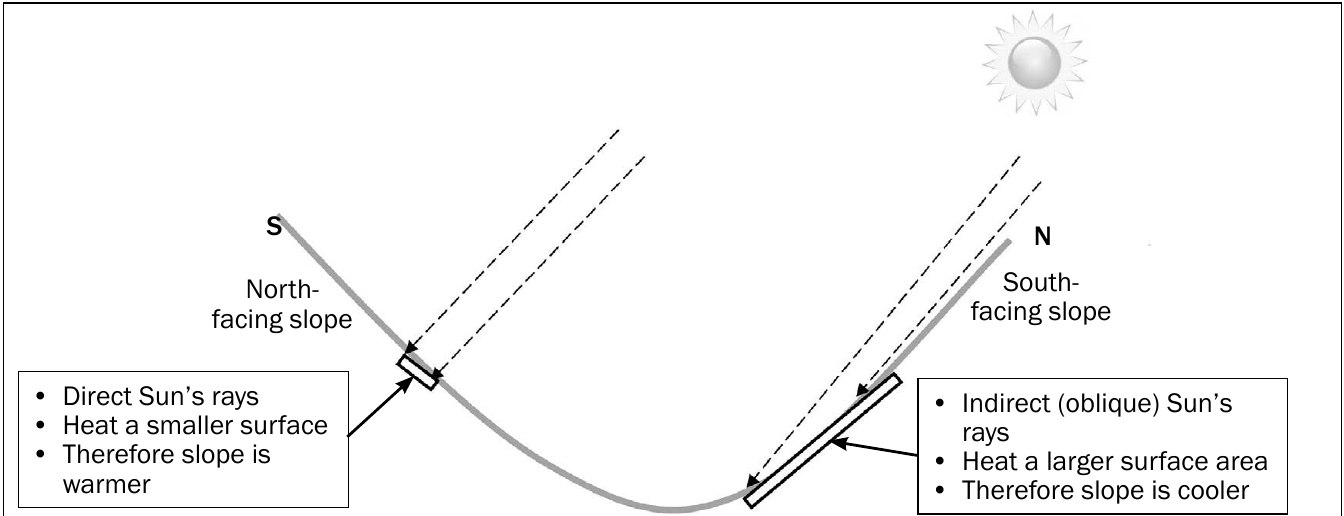
The key factor is whether the sun's rays hit a slope directly or at an angle. This makes a significant difference to how much energy the slope receives and how warm it becomes during the day.
Note
The fundamental principle behind aspect is simple: when sunlight hits a surface directly (perpendicular angle), the energy is concentrated into a smaller area, creating more heating. When sunlight hits at an angle, the same energy is spread over a larger area, resulting in less heating per unit of surface.
How aspect affects temperature on slopes
In the Southern Hemisphere, the sun is positioned to the north for most of the day. This means that different slope orientations receive varying amounts of solar energy.
Important
Key Principle: In the Southern Hemisphere, north-facing slopes are warmer because they receive direct solar radiation, while south-facing slopes are cooler because they receive indirect or oblique solar radiation.
North-facing slopes - the warmer side
North-facing slopes in the Southern Hemisphere receive direct solar radiation. The sun's rays hit these slopes at a perpendicular angle, which means:
- The solar energy is concentrated over a smaller surface area
- More heat is absorbed per square metre of slope
- These slopes experience higher temperatures during the day
- The heating effect is more intense and sustained
South-facing slopes - the cooler side
South-facing slopes receive indirect or oblique solar radiation. The sun's rays hit these slopes at a slanted angle, which results in:
- The same amount of solar energy being spread over a larger surface area
- Less heat absorbed per square metre of slope
- These slopes remain cooler throughout the day
- The heating effect is weaker and less sustained
Valley wind systems and thermal effects
The temperature differences created by aspect work together with valley wind systems to create distinct thermal zones within valleys.
Thermal belts formation
During the day, warm air on the valley slopes rises upward, creating what we call anabatic winds. This rising warm air forms thermal belts partway up the valley sides. These thermal belts are areas of relatively warm temperatures that occur because:
- Warm air is less dense and rises from the valley floor
- The rising air creates a zone of warmer temperatures on the slopes
- North-facing slopes within thermal belts are particularly warm
Note
Thermal belts are particularly important for human settlement and agriculture because they represent the optimal temperature zones within valleys - warm enough to avoid frost but not excessively exposed to wind and weather conditions found at higher elevations.
Frost pockets at night
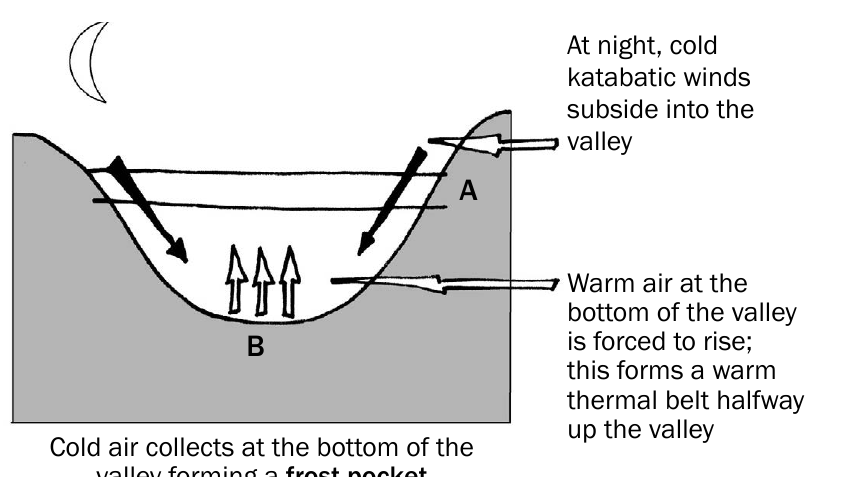
At night, the situation reverses. Cold air becomes denser and flows downhill as katabatic winds. This cold air:
- Settles at the bottom of valleys, creating frost pockets
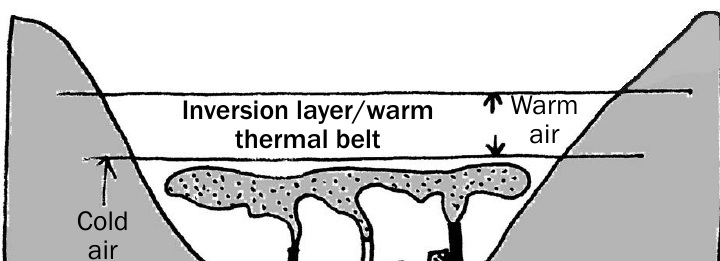
- Gets trapped by the valley walls, forming temperature inversions
- Creates the coldest conditions at the valley floor rather than higher up
Effects on human activities
Settlement patterns
The temperature differences created by aspect influence where people choose to build their homes:
Note
Settlement Strategy: Houses are often built halfway up valley slopes to take advantage of the thermal belt. This positioning avoids both the cold frost pockets at the bottom and excessive exposure at the top. North-facing slopes are preferred for residential development due to their warmer conditions.
Agricultural practices
Farmers use their understanding of aspect when deciding what to plant and where:
Note
Agricultural Applications:
- Crops requiring warm, frost-free conditions are planted in thermal belts on north-facing slopes
- Cold-hardy crops that can withstand frost are planted in the valley bottom frost pockets
- The aspect of agricultural land affects crop yields and growing seasons
Exam tips for aspect questions
Important
Essential Exam Guidelines:
When answering questions about aspect, remember to:
- Always specify which hemisphere you're discussing (Southern Hemisphere for South Africa)
- Explain the link between slope direction and sun angle
- Mention both the angle of sun rays AND the surface area effect
- Use terms like "direct" vs "indirect/oblique" solar radiation
- Connect aspect to practical effects like settlement and farming choices
Common mistake to avoid: Don't confuse north and south-facing slopes - remember that in the Southern Hemisphere, north-facing slopes are warmer because the sun is positioned to the north.
Summary
Key Points to Remember:
- Aspect refers to the direction a slope faces, which determines how much solar energy it receives
- North-facing slopes in the Southern Hemisphere are warmer because they receive direct solar radiation concentrated over a smaller area
- South-facing slopes are cooler because they receive indirect solar radiation spread over a larger area
- Thermal belts form on valley slopes where warm air rises, creating favourable conditions for settlement and certain crops
- Frost pockets develop at valley bottoms where cold air collects at night, affecting what can be grown there