Artificial Selection (Grade 12 NSC Matric Life Sciences): Revision Notes
📚Revision Notes
Artificial Selection
What is artificial selection?
Artificial selection is a process where humans deliberately choose which organisms get to reproduce based on desirable characteristics. This human-controlled breeding happens much faster than natural selection and has been used for thousands of years to develop the crops we eat and the animals we keep as pets or livestock.
Unlike natural selection where the environment determines which organisms survive and reproduce, artificial selection puts humans in control of this process. Scientists and farmers identify favourable traits in organisms and then breed those individuals together to produce offspring that also have these desired characteristics.
Important
Key Definition: Artificial selection is a human-driven selective force and occurs at a faster rate than natural selection. Favourable traits are artificially selected for by scientists and farmers and then bred out to produce offspring with those traits.
The process works similarly to natural selection, but with some important differences. Humans act as the selective force rather than environmental pressures, and the changes happen much more quickly than they would in nature. However, this faster process often results in less overall genetic variation compared to natural selection.
Artificial selection in domestic animals
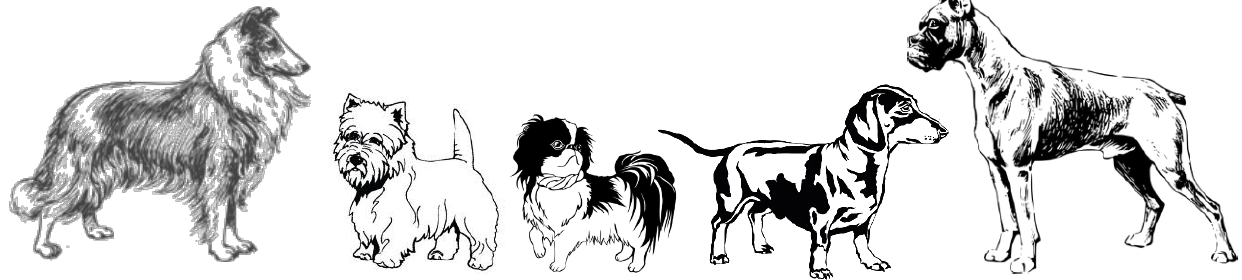
One of the most striking examples of artificial selection can be seen in dog breeding. Every single dog breed that exists today originated from the same ancestor - the Grey wolf (Canis familiaris). When humans first began domesticating wolves thousands of years ago, they selected individuals with traits like tameness, obedience, and characteristics that made them easier to work with.
Example
Worked Example: Dog Breed Development
Starting point: Grey wolf with high genetic variation
Step 1: Humans select wolves with desirable traits (tameness, obedience)
Step 2: Breed selected individuals together
Step 3: Select offspring with enhanced desired traits
Result: Five ancient dog breeds with specific characteristics
Continued selective breeding: Hundreds of modern dog breeds with specialised traits
From just five ancient dog breeds that arose through early selective breeding, humans have created the enormous variety of distinct dog breeds we see today. This was possible because the ancestral wolf species had tremendous genetic variability, providing lots of different traits that could be selected and enhanced through careful breeding programmes.
However, this selective breeding process has some important consequences. Pedigreed dogs, which are born from two parents of the same breed, often suffer from genetic problems. Because they have reduced genetic variation, these dogs can be more vulnerable to diseases and parasites, and may develop physical deformities.
Note
In contrast, mongrel dogs (commonly called "pavement specials" in South Africa) are much healthier and more robust. These dogs result from breeding between different breeds or mixed-breed parents, which means they have much greater genetic variation. This genetic diversity makes them less likely to suffer from inherited diseases and generally gives them better overall health and fertility.
Artificial selection in crops
Plant domestication through artificial selection has created some of the most important success stories in human agriculture. One outstanding example is the transformation of maize (corn) from its wild ancestor into the modern crop that feeds millions of people worldwide.
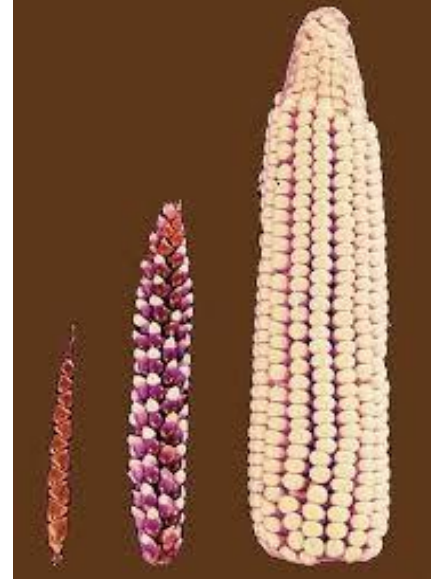
The original wild plant that became modern maize was a multi-stemmed wild grass with tiny seed heads. Over thousands of years, farmers noticed plants with slightly larger ears of corn and seeds that stayed attached to the plant rather than falling off easily. They collected seeds from these better plants and replanted them the following season.
Example
Worked Example: Maize Domestication Process
Starting point: Wild multi-stemmed grass with tiny seed heads
Step 1: Farmers identify plants with slightly larger ears
Step 2: Collect and replant seeds from best plants
Step 3: Repeat selection process over many generations
Step 4: Gradually eliminate undesirable traits
Final result: Modern maize with large ears and single stalks
This process continued generation after generation, with farmers always selecting seeds from plants that showed the most desirable characteristics. Gradually, all the undesirable traits were bred out of the plants, leaving only the large ears of corn and reduced number of stems that we see in modern maize.
The specific traits that farmers selected for in maize included:
- Reduced seed coat - making the kernels easier to process and eat
- Retention of seeds on the cob - preventing seeds from falling off before harvest
- Tall plants with a single stalk and fewer stems - making harvesting easier and more efficient
- Large ear structure - resulting in much greater food production per plant
This transformation shows how patient, selective breeding over many generations can completely change the appearance and usefulness of a wild plant species.
Comparing artificial and natural selection
While artificial selection follows similar principles to natural selection, there are several key differences between these two processes that are important to understand.
The selective force: In natural selection, the environment and natural pressures determine which organisms survive and reproduce. In artificial selection, humans make these decisions based on traits they find useful or desirable.
Selection criteria: Natural selection responds to how well organisms fit their environment and survive environmental challenges. Artificial selection responds to human needs and preferences, which may have nothing to do with an organism's natural survival abilities.
Species involvement: Natural selection typically occurs within a single species, with individuals competing against each other. Artificial selection may involve cross-breeding between multiple species to create entirely new varieties.
Rate of change: Artificial selection produces results much faster than natural selection because humans can control breeding conditions and make deliberate choices about which individuals reproduce.
Amount of variation: Natural selection tends to maintain or increase genetic variation over time, while artificial selection often reduces genetic variation as breeders focus on specific desirable traits.
Important
Critical Concept: Artificial selection mimics natural selection, with the exception that artificial selection is a much faster process and results in less variation than natural selection. This trade-off between speed and genetic diversity has important implications for the health and resilience of domesticated organisms.
The speed and efficiency of artificial selection have made it an incredibly powerful tool for developing crops that can feed growing populations and animals that serve specific human purposes. However, the reduced genetic variation that often results can make these domesticated organisms more vulnerable to diseases and environmental changes.
Summary
Key Points to Remember:
-
Artificial selection is human-controlled breeding - people choose which organisms reproduce based on desirable traits, making it much faster than natural selection
-
Genetic variation has important consequences - purebred animals often have health problems due to reduced genetic diversity, while mixed breeds tend to be healthier and more robust
-
Crop domestication transformed human civilisation - artificial selection turned wild plants like grass into essential food crops like maize through thousands of years of careful breeding
-
The process mimics natural selection but differs in key ways - humans rather than the environment act as the selective force, leading to faster changes but often less overall genetic variation
-
South African context matters - understanding concepts like "pavement specials" (mongrel dogs) helps explain genetic diversity principles in familiar terms