Lamarckism (Grade 12 NSC Matric Life Sciences): Revision Notes
📚Revision Notes
Lamarckism
Who was Jean-Baptiste Lamarck?
Jean-Baptiste Lamarck was a French naturalist who lived in the late 18th and early 19th centuries. He was one of the first scientists to propose that species were not fixed (unchanging) but could actually change over time through evolution.
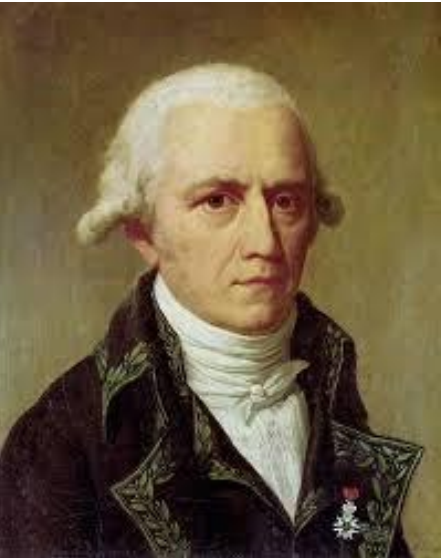
Lamarck made several important observations during his research that led him to develop his theory of evolution. He noticed that:
- Living species today were quite different from those found in fossil records
- When humans domesticated wild plants and animals and used selective breeding, these organisms showed noticeable changes
- When different plant varieties were cross-bred, new characteristics often appeared in their offspring
Note
These observations were groundbreaking for Lamarck's time, as most scientists believed that species were unchanging and had been created in their current form. Lamarck's willingness to challenge this established thinking laid important groundwork for evolutionary theory.
These observations convinced Lamarck that species could indeed change and evolve over time.
The law of use and disuse
Lamarck's first major principle was called the law of use and disuse. This law suggested that animals changed over time in response to their environment in order to survive better.
According to this law:
- If an animal used a particular body structure frequently, that structure would become larger and stronger in the next generation
- If an animal rarely used a structure, it would become smaller and might eventually disappear completely
Important
Think of it as a "use it or lose it" principle that Lamarck believed worked across generations. This was a revolutionary idea that suggested organisms could actively influence their own evolution through their behaviour and habits.
The law of inheritance of acquired characteristics
Lamarck's second principle was the law of inheritance of acquired characteristics. This law claimed that characteristics an individual animal developed during its lifetime could be passed on to its children.
In other words, if a parent animal changed its body through use or disuse during its life, these acquired changes would somehow be inherited by its offspring. This was the mechanism Lamarck proposed for how evolution occurred.
The classic giraffe example
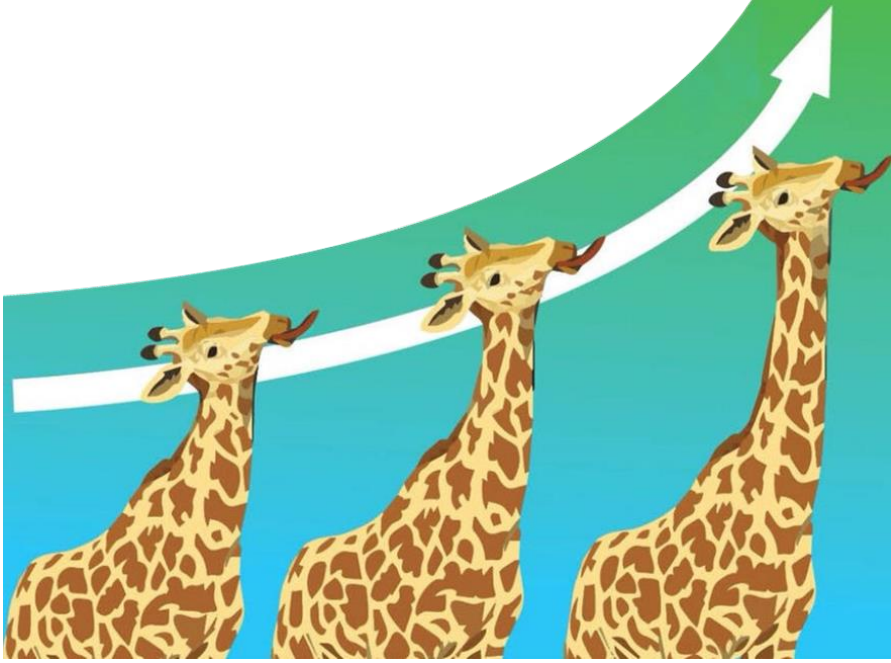
The most famous example Lamarck used to explain his theory was the elongation of giraffe necks. Here's how he thought it worked:
Example
Lamarck's Step-by-Step Giraffe Theory:
According to Lamarck's reasoning:
- Original giraffes had short necks
- These giraffes lived in an environment where they needed to reach food high up in trees
- Individual giraffes constantly stretched their necks upward to reach the food
- Over their lifetime, this stretching caused their necks to become longer
- These giraffes then passed their elongated necks on to their offspring
- Over many generations, giraffes developed the long necks we see today
This example perfectly illustrates both of Lamarck's laws working together: use and disuse (stretching the neck) plus inheritance of acquired characteristics (passing the longer neck to offspring).
Why Lamarck was wrong
While Lamarck's ideas were groundbreaking for his time, we now know that his theory contains a major flaw. The main problem with Lamarckism is that acquired characteristics cannot be inherited.
Important
The Fatal Flaw in Lamarck's Theory:
Lamarck's explanation doesn't work because:
- Lamarck provided no scientific mechanism to explain how acquired traits could be passed from parent to offspring
- He simply stated that changes occurred because organisms "wanted" or "needed" them
- We now understand that evolutionary changes can only occur through genetic changes that are then passed to offspring
- Physical changes that happen during an individual's lifetime (like a giraffe stretching its neck) do not alter the genetic code and therefore cannot be inherited
Historical importance of Lamarck's work
Although Lamarckism is not accepted as a valid explanation for evolution today, Lamarck's work was extremely important in the history of science. His ideas:
- Challenged the widely accepted belief that species were fixed and unchanging
- Introduced the concept that organisms could evolve over time
- Provided the foundation for later scientists like Charles Darwin to build upon
- Helped establish evolution as a scientific concept worthy of investigation
Note
Lamarck's work was essential in shifting scientific thinking from a static view of nature to a dynamic one. Even though his mechanism was incorrect, his recognition that species change over time was a crucial step in the development of evolutionary theory.
Common misconceptions and exam tips
Note
Common Misconception: Many students think Lamarck's theory is partially correct because giraffes do have long necks. Remember, the issue isn't whether giraffes have long necks, but rather how they got them.
Note
Exam Tip - Mechanism is Key: When explaining why Lamarck was wrong, always mention that acquired characteristics cannot be inherited because there's no genetic mechanism for this to occur. This shows you understand the modern scientific basis for evolution.
Note
Exam Tip - Compare with Darwin: Be able to distinguish between Lamarck's explanation and Darwin's explanation for the same phenomenon (like giraffe necks). Lamarck focused on individual effort and acquired traits, while Darwin focused on natural selection of existing variations.
Remember!
Summary
Key Points to Remember:
- Lamarck proposed that species change over time - he was one of the first scientists to challenge the idea that species were fixed
- The law of use and disuse - structures become larger with use and smaller with disuse across generations
- The law of inheritance of acquired characteristics - traits developed during an individual's lifetime can be passed to offspring
- The giraffe neck example - Lamarck thought necks elongated through stretching and this was inherited
- Why it's wrong - acquired characteristics cannot be inherited because there's no genetic mechanism for this to occur