Mendel as Father of Genetics (Grade 12 NSC Matric Life Sciences): Revision Notes
📚Revision Notes
Mendel as Father of Genetics
Who was Gregor Mendel?
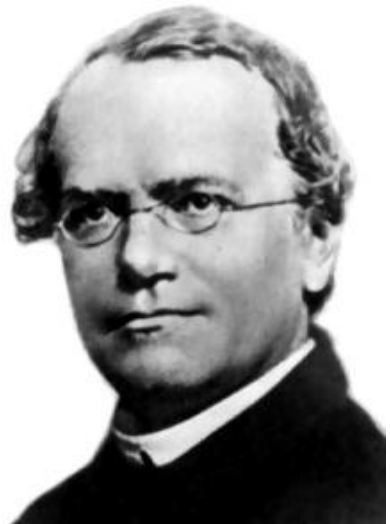
Gregor Mendel was an Austrian monk who lived in the 19th century and is recognised worldwide as the father of genetics. His groundbreaking work with garden pea plants revolutionised our understanding of how characteristics are passed from parents to their offspring. Through careful observation and systematic experimentation, Mendel discovered the fundamental principles that govern inheritance, laying the foundation for the entire field of genetics.
Note
What made Mendel's work so significant was his scientific approach to studying inheritance. Unlike previous researchers who looked at overall similarities between parents and offspring, Mendel focused on specific, easily observable traits and used mathematical analysis to understand the patterns he observed.
The traits Mendel studied
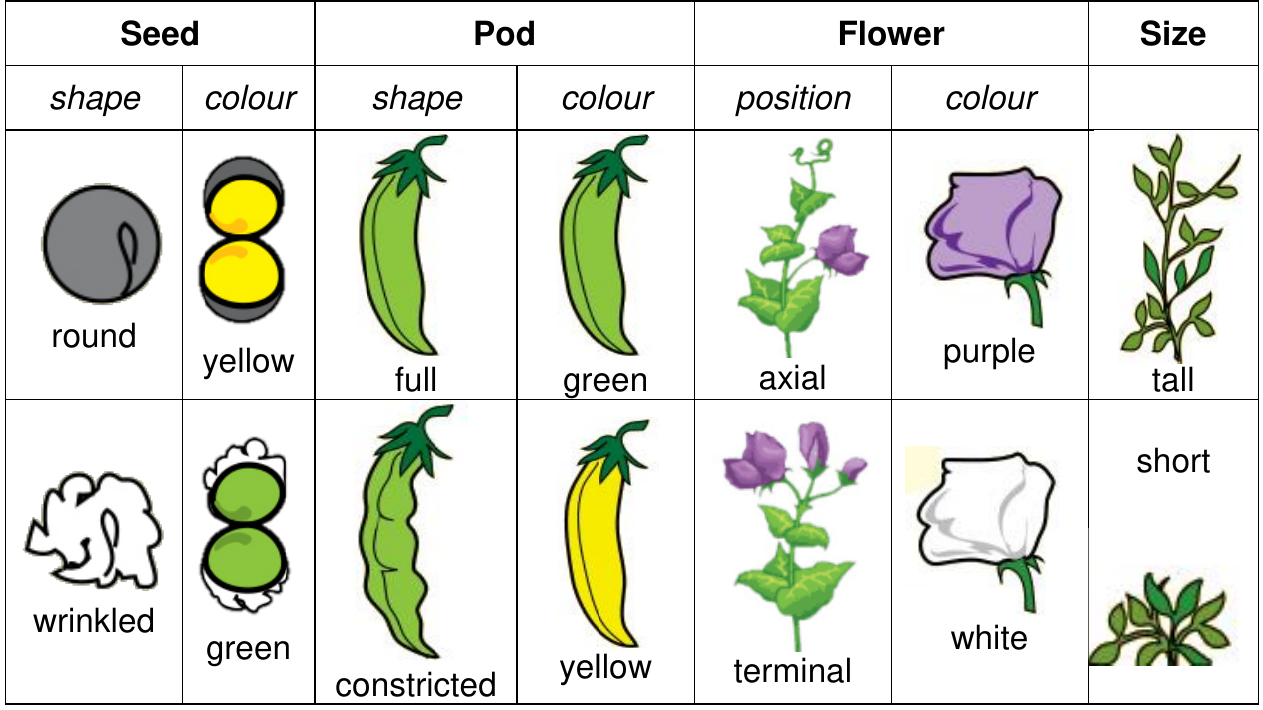
Mendel chose to work with garden pea plants because they had several advantages for genetic research. Pea plants reproduce quickly, have many easily observable characteristics, and can be cross-pollinated in a controlled manner. Through careful observation, Mendel identified seven distinct traits that were consistently inherited from one generation to the next.
Summary
The Seven Inherited Characteristics Mendel Studied:
- Seed shape: round versus wrinkled
- Seed colour: yellow versus green
- Pod shape: full versus constricted
- Pod colour: green versus yellow
- Flower colour: purple versus white
- Flower position: axial (on the side) versus terminal (on top)
- Plant size: tall versus short
Each of these traits appeared in two distinct forms, which made them perfect for studying inheritance patterns. This binary nature allowed Mendel to track how characteristics were passed down through generations and develop his revolutionary laws of inheritance.
Mendel's experimental approach
Mendel's experimental method was remarkably systematic and scientific. He began by observing that garden peas naturally occurred in different heights - some were tall while others were short. Since pea plants typically self-pollinate (meaning they fertilise themselves), tall plants usually produced tall offspring, and short plants produced short offspring.
However, Mendel decided to investigate what would happen if he deliberately cross-pollinated tall plants with short plants. His first genetic experiment involved crossing tall pea plants with short pea plants to see what characteristics their offspring would inherit.
Example
Mendel's Groundbreaking Cross Experiment:
Step 1: Cross tall plants with short plants (P generation)
Step 2: Observe F₁ generation results - all plants were tall
Step 3: Allow F₁ plants to self-pollinate
Step 4: Count F₂ generation results - 3 tall : 1 short ratio
The results of this initial cross were surprising. In the first generation of offspring (called the F₁ generation), all the plants were tall - none were short! This was unexpected because it seemed as though the "shortness" characteristic had completely disappeared.
Mendel then took these F₁ plants and allowed them to self-pollinate to produce a second generation (the F₂ generation). The results of this second cross were even more remarkable: both tall and short plants appeared in the F₂ generation, but in a very specific ratio of 3 tall plants to 1 short plant.
Understanding the genetic cross diagram
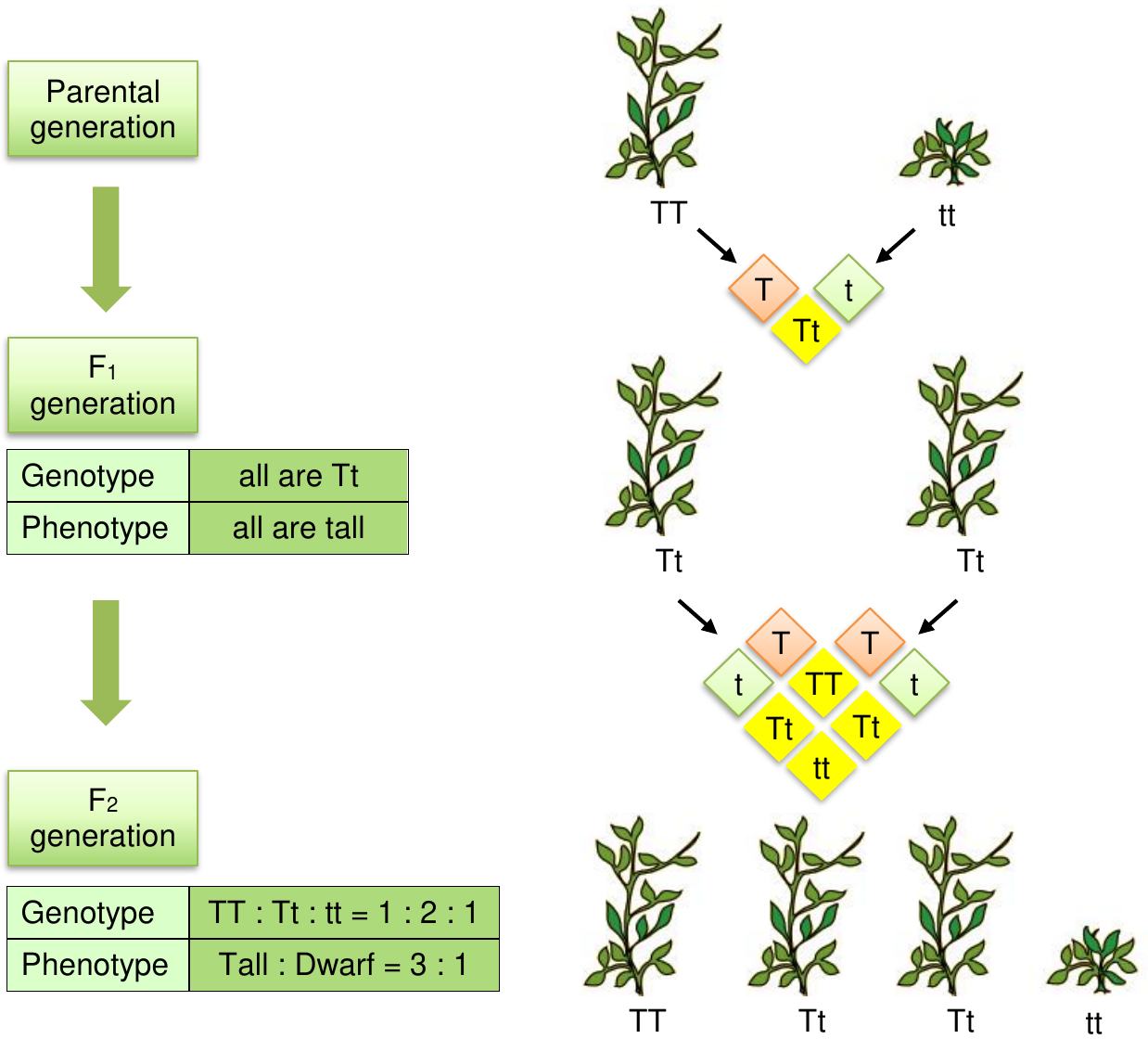
The following diagram illustrates Mendel's famous experiment with plant height, showing how traits are inherited across generations.
Example
Breaking Down the Genetic Cross Diagram:
Parental generation: Two parent plants - one tall (TT) and one short (tt)
F₁ generation: All offspring are Tt - appear tall due to dominance
F₂ generation:
- Genotype ratio: TT : Tt : tt =
- Phenotype ratio: Tall : Short =
Let's break down what this diagram shows us:
Parental generation: The experiment starts with two parent plants - one tall (TT) and one short (tt). In genetic notation, we use letters to represent different versions of genes, called alleles. Capital letters represent dominant alleles, while lowercase letters represent recessive alleles.
F₁ generation: When the tall and short parents are crossed, all offspring receive one T allele from the tall parent and one t allele from the short parent, making their genotype Tt. Despite having both alleles, all F₁ plants appear tall because the T allele is dominant over the t allele.
F₂ generation: When F₁ plants (Tt) are crossed with each other, the genetic material separates and recombines in different ways. This produces three different genotypes: TT, Tt, and tt in a ratio of . However, because T is dominant, both TT and Tt plants appear tall, while only tt plants appear short, giving us the famous 3:1 phenotypic ratio.
Mendel's three laws of inheritance
Based on his experimental results, Mendel formulated three fundamental laws that explain how traits are inherited. These laws remain the cornerstone of genetics today.
Mendel's first law: Law of segregation
Important
Law of Segregation: Each inherited trait is controlled by two factors (which we now call alleles) located on homologous chromosomes. When reproductive cells (gametes) are formed during meiosis, these two alleles separate so that each gamete contains only one allele for each trait.
For example, a plant with the genotype Tt will produce two types of gametes: some carrying the T allele and others carrying the t allele. This separation ensures that offspring receive one allele from each parent, maintaining the two-factor system for each trait.
Mendel's second law: Law of dominance
Important
Law of Dominance: Alleles can exist in dominant or recessive forms. When an organism has two different alleles for a trait (heterozygous condition), only the dominant allele will be expressed in the organism's appearance (phenotype). The recessive allele is still present but remains "hidden."
In Mendel's height experiment, the tall allele (T) was dominant over the short allele (t). Therefore, plants with TT or Tt genotypes both appeared tall, while only plants with tt genotype appeared short. This explains why all F₁ plants were tall despite carrying both tall and short alleles.
Mendel's third law: Law of independent assortment
Important
Law of Independent Assortment: Different traits are inherited independently of each other. During gamete formation, the random arrangement of chromosomes during meiosis means that the alleles for one characteristic can combine with any alleles for other characteristics.
For instance, a plant's height is inherited independently from its flower colour. A tall plant with purple flowers could produce offspring that are short with white flowers, or any other combination, because these traits assort independently during reproduction.
How to interpret genetic diagrams
Understanding genetic diagrams is crucial for NSC examinations. Here are the key points to remember:
Note
Key Terminology:
- Genotype: The actual alleles an organism carries (e.g., TT, Tt, tt)
- Phenotype: The observable characteristics (e.g., tall, short)
- Generation labels: P = Parental generation, F₁ = First filial generation, F₂ = Second filial generation
Dominant and recessive notation: Always use capital letters for dominant alleles and lowercase letters for recessive alleles. In genetic crosses, dominant alleles will mask the expression of recessive alleles in heterozygous individuals.
Punnett squares: These are used to predict the possible outcomes of genetic crosses by showing all possible combinations of parental alleles.
Note
Common Exam Tip: Always check that your phenotypic ratios match the expected Mendelian ratios. For a monohybrid cross of two heterozygotes, expect a 3:1 phenotypic ratio and a 1:2:1 genotypic ratio in the F₂ generation.
Note
South African Context: Understanding Mendel's laws helps explain inheritance in crops important to South African agriculture, such as maize varieties with different kernel colours or drought-resistant traits that farmers select for breeding programmes.
Remember!
Summary
Key Points to Remember:
-
Gregor Mendel is called the father of genetics because his work with pea plants established the fundamental principles of inheritance that we still use today.
-
Mendel studied seven specific traits in pea plants, each showing two distinct forms, which allowed him to track inheritance patterns mathematically.
-
The famous 3:1 ratio appears in the F₂ generation when crossing two heterozygous individuals, demonstrating the principle of dominance and segregation.
-
Mendel's three laws (segregation, dominance, and independent assortment) explain how traits are passed from parents to offspring and form the basis of modern genetics.
-
Genetic diagrams use letters to represent alleles, with capital letters for dominant traits and lowercase letters for recessive traits - this notation system is essential for solving genetics problems in exams.