Biological Classification and Phylogenetic Trees (Grade 12 NSC Matric Life Sciences): Revision Notes
📚Revision Notes
Biological Classification and Phylogenetic Trees
Understanding biological classification
Scientists organise all living things into groups based on their similarities and evolutionary relationships. This system, called biological classification or taxonomy, helps us understand where humans fit within the broader animal kingdom.
Modern humans have the scientific name Homo sapiens, which means "wise man." Like all living organisms, we can be classified using a hierarchical system that moves from very broad categories down to very specific ones.
Note
The hierarchical classification system moves from the broadest category (Kingdom) down to the most specific (Species). Each level becomes more restrictive, grouping organisms with increasingly similar characteristics.
The complete classification for humans follows this pattern:
- Kingdom: Animalia (all animals)
- Class: Mammalia (mammals that give birth to live young and feed them milk)
- Order: Primates (animals with opposable thumbs, finger nails instead of claws, and forward-facing eyes)
- Family: Hominidae (great apes including humans, chimpanzees, gorillas, and orangutans)
- Genus: Homo
- Species: sapiens
This classification system shows that humans share many characteristics with other animals, particularly with other primates and most closely with the great apes in our family.
What are phylogenetic trees?
A phylogenetic tree is like a family tree that shows evolutionary relationships between different species. These diagrams help scientists understand how species are related through common ancestors and when different groups branched off from each other.

Note
Key Components of Phylogenetic Trees:
When reading a phylogenetic tree, remember these key points:
- The root of the tree represents the common ancestor of all groups shown
- The tips or ends of branches represent modern species or groups
- Branching points (nodes) show where speciation events occurred
- Moving upward on the tree represents moving forwards in time
- The closer two species are on the tree, the more recently they shared a common ancestor
Understanding evolutionary relationships
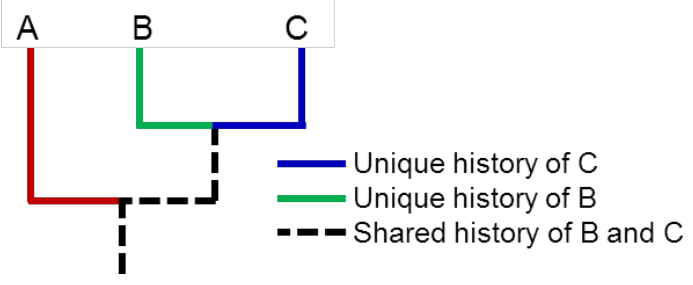
Phylogenetic trees reveal important information about how species are related. Each lineage has both unique evolutionary history and shared history with other lineages.
Example
Understanding Lineage Relationships:
In a simple tree with three lineages (A, B, and C):
- Each lineage has its own unique evolutionary path
- Some lineages share more recent common ancestors than others
- Lineages B and C are more closely related to each other than either is to lineage A
This means B and C diverged from their shared ancestor more recently than either diverged from A.
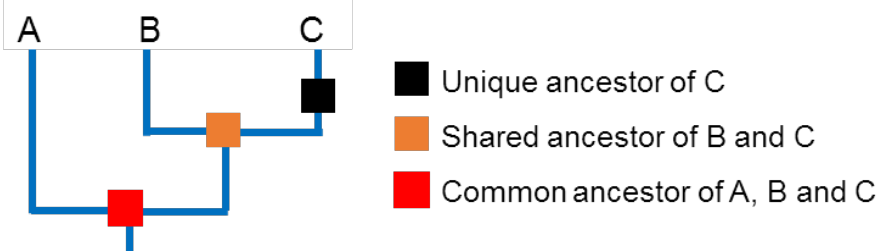
The tree also shows different types of ancestors:
- Common ancestors shared by all groups in the tree
- Shared ancestors between specific pairs or groups
- Unique ancestors that led to individual lineages
Primate evolution and family hominidae
The primate phylogenetic tree shows how humans relate to other primates over millions of years of evolution.
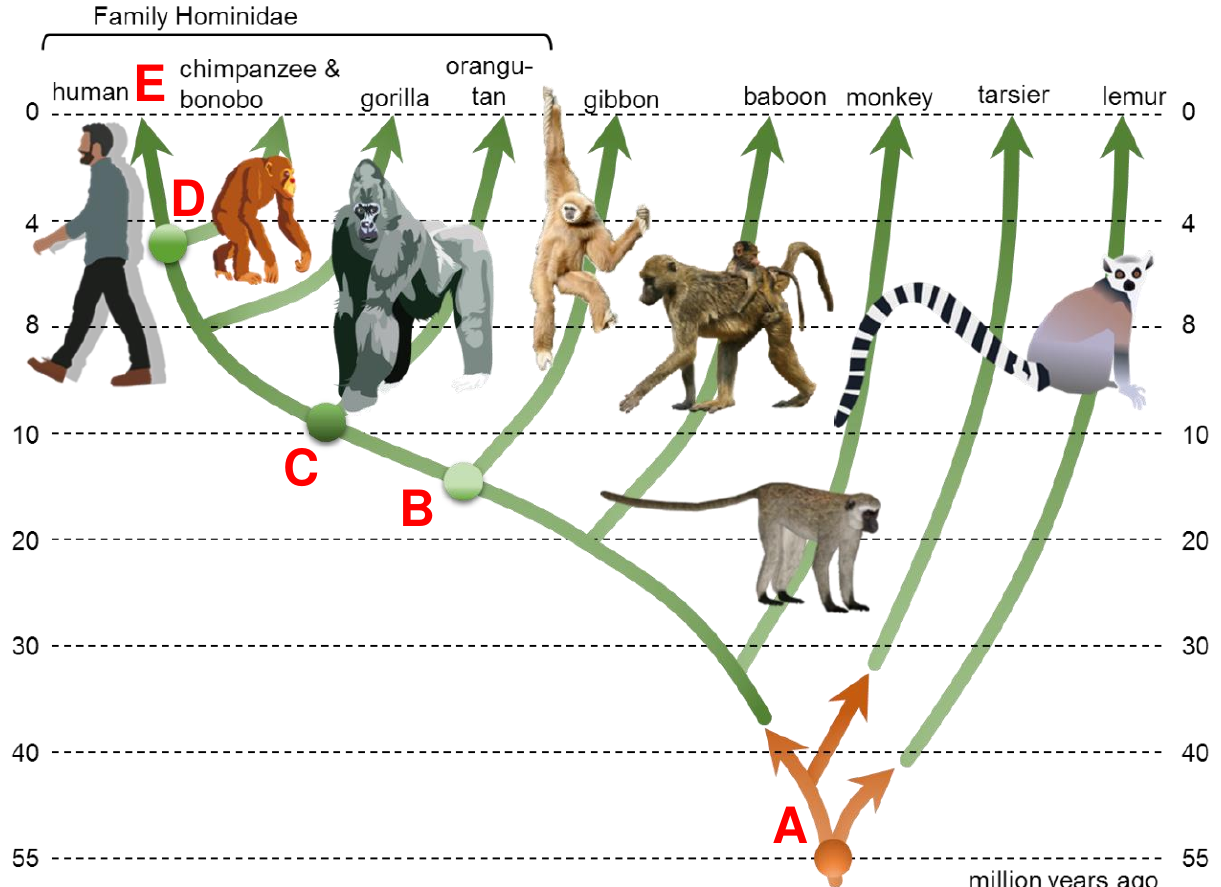
This detailed tree reveals several important relationships:
Note
Key evolutionary milestones:
- All primates share a common ancestor from approximately 55 million years ago
- The Family Hominidae (great apes) separated from other primates around 10 million years ago
- Humans and chimpanzees shared their most recent common ancestor approximately 5-6 million years ago
Important branching points:
- Point A: The earliest common ancestor of all primates shown (55 million years ago)
- Point B: Separation of gibbons from other apes
- Point C: Formation of the Hominidae family (great apes)
- Point D: Most recent common ancestor of humans and chimpanzees
- Point E: Emergence of modern humans
The phylogenetic evidence shows that among all primates, humans share the closest evolutionary relationship with chimpanzees and bonobos, followed by gorillas, then orangutans.
Reading phylogenetic diagrams
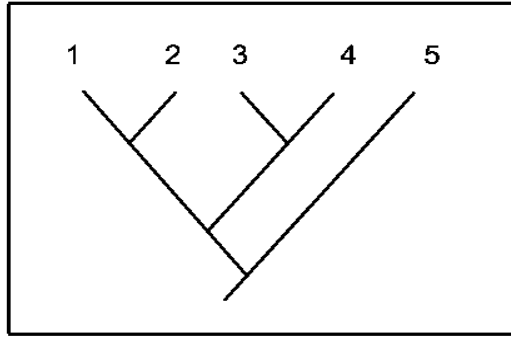
When analysing any phylogenetic tree, you can determine evolutionary relationships by looking at:
- Branching patterns: Species that branch off from the same node are more closely related
- Branch lengths: May represent time or genetic differences
- Common nodes: Show where lineages shared ancestors
- Recent vs ancient splits: More recent branching points indicate closer relationships
Important
Common exam tip: To find the closest relatives of any species on a phylogenetic tree, look for the species that shares the most recent branching point (node) with it.
Practical applications
Understanding phylogenetic trees helps us:
- Trace human evolutionary history
- Understand genetic similarities between species
- Predict which species might have similar characteristics
- Study how traits evolved over time
- Make informed decisions about conservation priorities
Important
Common misconception: Phylogenetic trees don't show that one species evolved "from" another living species. Instead, they show that species share common ancestors. For example, humans didn't evolve from chimpanzees - rather, both humans and chimpanzees evolved from a shared ancestor.
Remember!
Summary
Key Points to Remember:
-
Biological classification places humans in Kingdom Animalia, Family Hominidae, showing our relationship to other great apes
-
Phylogenetic trees are evolutionary family trees that show relationships through common ancestors and branching points
-
Humans and chimpanzees share the most recent common ancestor among all primates, dating back 5-6 million years
-
Reading phylogenetic trees requires understanding that closer branching points indicate more recent common ancestors and closer evolutionary relationships
-
Family Hominidae includes humans, chimpanzees, bonobos, gorillas, and orangutans - all sharing a common ancestor from about 10 million years ago