‘Out of Africa’ Hypothesis (Grade 12 NSC Matric Life Sciences): Revision Notes
📚Revision Notes
'Out of Africa' Hypothesis
What is the 'Out of Africa' hypothesis?
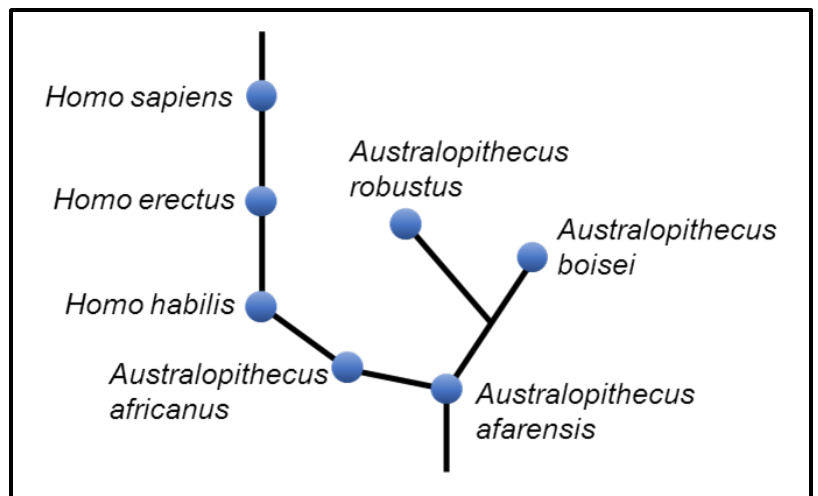
The 'Out of Africa' hypothesis is a scientific theory that explains how modern humans spread across the world. This hypothesis proposes that all modern humans originated in Africa and then migrated out of Africa to populate the rest of the world.
Note
This evolutionary journey didn't happen overnight. Scientists have pieced together a timeline using various types of evidence to understand when and how this migration occurred.
Timeline of human evolution and migration
The story of human migration follows a clear sequence of events:
150,000 to 200,000 years ago: Early human ancestors, such as Homo erectus, evolved into modern Homo sapiens in eastern and southern Africa. This was a crucial development in human evolution, as it marked the emergence of our own species.
About 70,000 years ago: These early modern humans began to spread out from Africa. They migrated into Europe, Asia, and eventually across the entire world. This migration was not a single event but happened over thousands of years.
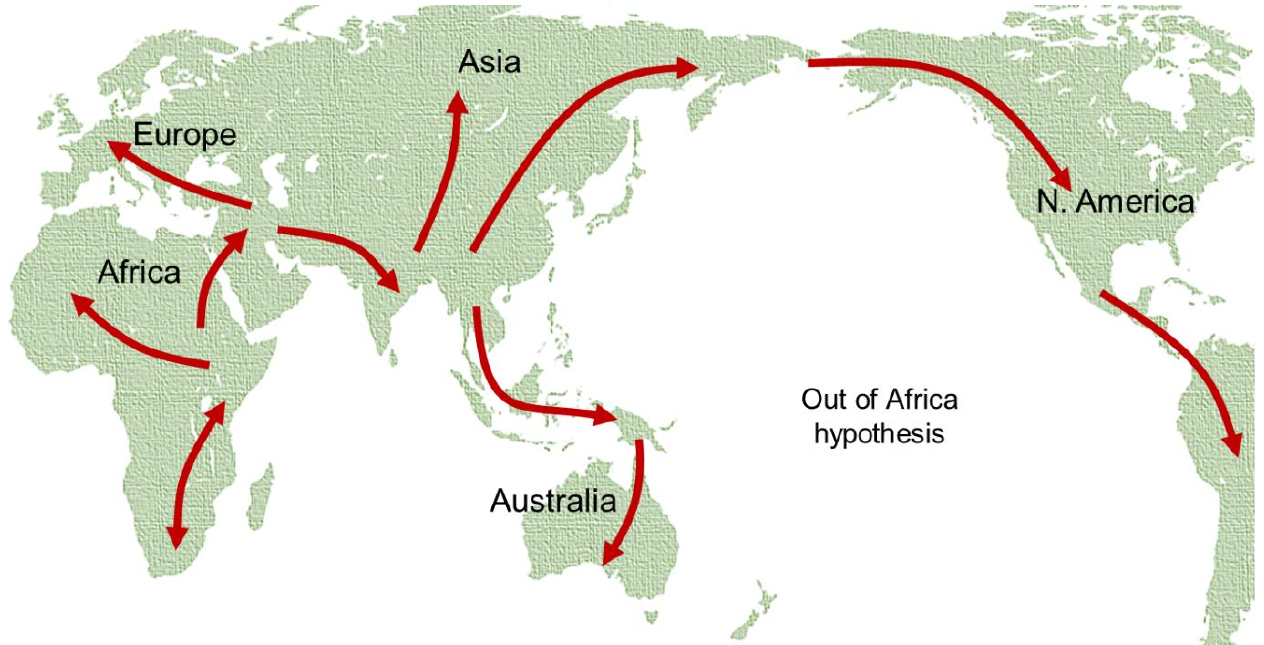
The migration routes show how humans travelled from Africa to different continents. Due to ice age conditions, sea levels were much lower than today, which made it easier for humans to cross bodies of water like the Red Sea. They could then move into the Middle East, then to Europe, Asia, and Australia, and eventually to North America.
Evidence supporting the 'Out of Africa' hypothesis
Scientists use two main types of evidence to support this hypothesis: genetic evidence and the fossil record. Both types of evidence point to the same conclusion - that modern humans originated in Africa.
Genetic evidence using mitochondrial DNA studies
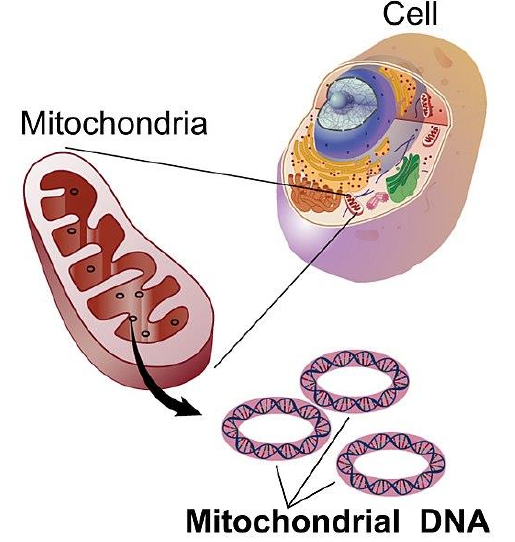
One of the strongest pieces of evidence comes from studying our DNA, particularly a special type called mitochondrial DNA.
Example
Understanding Mitochondrial DNA as Evidence
Step 1: What makes mtDNA special? Mitochondrial DNA (mtDNA) is genetic material found inside mitochondria, the powerhouses of our cells. Unlike other DNA, mitochondrial DNA is passed down unchanged from mother to child.
Step 2: How does it work as a molecular clock? Scientists use mtDNA like a molecular clock. Over time, small changes called mutations occur in the DNA. By studying the rate at which these mutations happen, scientists can determine how old different populations are and trace back to common ancestors.
Key findings from mtDNA studies:
- African populations of Homo sapiens have the greatest number of mtDNA markers, making them the oldest populations
- The most recent common ancestor whose genetic marker appears in all living humans lived in eastern Africa approximately 150,000 years ago
- Based on markers found in non-African populations, scientists believe modern humans left Africa between 60,000 and 70,000 years ago
Note
This timing made sense because during the ice age, lower sea levels would have made migration possible across areas that are now underwater.
The fossil record
The fossil record provides physical evidence that supports the genetic findings. When scientists examine where the oldest human fossils have been discovered, a clear pattern emerges.
Important
Fossil evidence shows:
- Fossils from the earliest human species, Ardipithecus and Australopithecus, have been found only in Africa and nowhere else
- The earliest fossils of Homo habilis have also only been found in Africa
- Homo erectus fossils show this species lived in eastern and southern Africa between 1.9 and 1.4 million years ago, with the oldest fossils found in Africa
- Homo sapiens first appeared in Africa, with the oldest fossils discovered near Ethiopia's Omo River, dating to between 195,000 and 160,000 years ago
This fossil evidence strongly supports the idea that human evolution happened in Africa before spreading to other continents.
South African context
South Africa plays an important role in understanding human evolution. The country has many fossil sites, with the most famous being the Cradle of Humankind.
Note
The Cradle of Humankind is located in Gauteng Province, north-west of Johannesburg. This area includes 15 different fossil sites and has produced more early human fossils than any other location in the world. These discoveries help scientists understand the evolution of early humans and support the 'Out of Africa' hypothesis.
Common misconceptions and exam tips
Important
Common misconception: Some students think humans evolved simultaneously in different parts of the world. However, the evidence clearly shows that modern humans evolved first in Africa.
Exam tip: Remember the two types of evidence - genetic (mtDNA) and fossil record. Be able to explain how each supports the hypothesis.
Exam tip: Pay attention to the timeline - 200,000 years ago for evolution in Africa, 70,000 years ago for migration out of Africa.
Summary
Key Points to Remember:
-
The 'Out of Africa' hypothesis states that all modern humans originated in Africa before migrating to populate the rest of the world
-
Two main types of evidence support this theory: genetic evidence (mitochondrial DNA studies) and fossil record evidence
-
Mitochondrial DNA is passed from mother to child and acts like a molecular clock, showing that African populations are the oldest
-
The fossil record shows that all early human species are found first or only in Africa
-
Modern humans evolved in eastern and southern Africa 150,000-200,000 years ago and migrated out around 60,000-70,000 years ago