RNA – Ribonucleic Acid (Grade 12 NSC Matric Life Sciences): Revision Notes
📚Revision Notes
RNA – Ribonucleic Acid
What is RNA?
RNA stands for ribonucleic acid and is one of the two main types of nucleic acids found in living cells. Like DNA, RNA is made up of building blocks called nucleotides that link together to form longer chains. However, RNA has several important differences from DNA that make it uniquely suited for its roles in the cell.
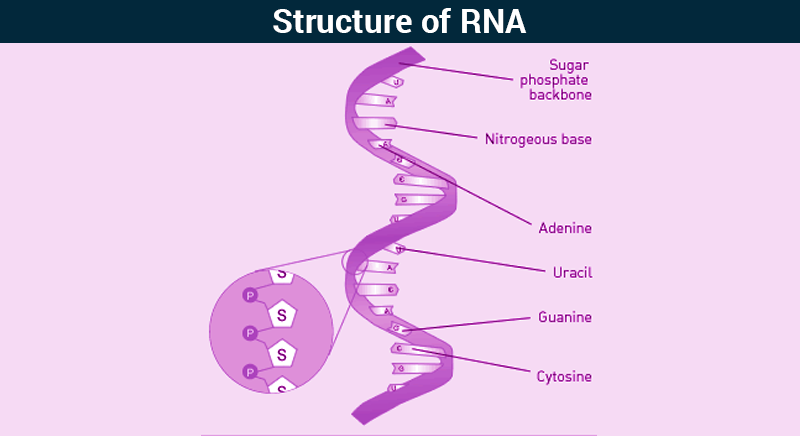
RNA contains four types of nitrogenous bases: adenine (A), uracil (U), guanine (G), and cytosine (C). Notice that RNA contains uracil instead of thymine, which is found in DNA. This is one of the key differences that distinguishes RNA from DNA.
Important
The substitution of uracil for thymine in RNA is not just a minor difference - it fundamentally changes how RNA functions and allows it to perform roles that DNA cannot.
Structure of RNA
Understanding the structure of RNA helps explain how it functions in the cell. RNA is built from the same basic components as DNA but arranged differently.
Each RNA nucleotide contains three main parts:
- A phosphate group
- A ribose sugar molecule
- A nitrogenous base
Note
The most important structural feature of RNA is that it exists as a single-stranded molecule, unlike DNA which forms a double helix. This single-stranded structure allows RNA to fold into different shapes and perform various functions in the cell.
Types of RNA and their functions
There are three main types of RNA, each with a specific role in protein synthesis:
Messenger RNA (mRNA)
- Carries the genetic code from DNA in the nucleus to the ribosomes
- Acts like a molecular messenger delivering instructions for making proteins
- Formed in the nucleus but travels to the cytoplasm to function
Ribosomal RNA (rRNA)
- Forms the structural framework of ribosomes
- Ribosomes are the cellular factories where proteins are made
- Provides the platform where protein synthesis actually occurs
Transfer RNA (tRNA)
- Transports amino acids to the ribosomes during protein synthesis
- Each tRNA molecule carries a specific amino acid
- Acts like a delivery truck bringing the right building blocks to make proteins
Note
All three types of RNA must work together seamlessly for successful protein synthesis. Think of it as a coordinated team effort where each type has a crucial, specialised role.
Location of RNA in the cell
Different types of RNA are found in different parts of the cell, which reflects their specific functions:
- mRNA: Starts in the nucleus where it's made from DNA, then moves to the cytoplasm where it attaches to ribosomes
- rRNA: Found within ribosomes in the cytoplasm of the cell
- tRNA: Moves freely throughout the cytoplasm, carrying amino acids to wherever they're needed
Important
Unlike DNA which remains safely locked in the nucleus, RNA's mobility throughout the cell is essential for its function. This freedom of movement allows RNA to act as the vital link between the genetic information in DNA and the protein-making machinery in the cytoplasm.
Key differences between DNA and RNA
While DNA and RNA are both nucleic acids, they have important structural differences that affect their functions:
The main differences include:
Sugar component: RNA contains ribose sugar, while DNA contains deoxyribose sugar. The extra hydroxyl group in ribose makes RNA less stable than DNA.
Strand structure: RNA is single-stranded and doesn't form a coiled double helix like DNA. This allows RNA to be more flexible and take on different shapes.
Nitrogenous bases: RNA uses uracil (U) instead of thymine (T). This means RNA pairs adenine with uracil rather than thymine.
Cellular location: While DNA stays safely in the nucleus, RNA can be found in multiple locations - the nucleus, ribosomes, and cytoplasm - allowing it to perform its various functions throughout the cell.
The importance of RNA in protein synthesis
All three types of RNA work together in the crucial process of protein synthesis. This process allows cells to use the genetic information stored in DNA to create the proteins needed for life. Without RNA, the genetic code in DNA would remain locked in the nucleus and unable to direct the making of proteins.
Summary
Key Points to Remember:
- RNA is single-stranded while DNA is double-stranded, giving RNA more flexibility to perform different functions
- RNA contains uracil (U) instead of thymine (T) as one of its four nitrogenous bases
- There are three types of RNA: mRNA (messenger), rRNA (ribosomal), and tRNA (transfer), each with specific roles in protein synthesis
- RNA uses ribose sugar rather than the deoxyribose sugar found in DNA
- RNA can be found throughout the cell - in the nucleus, cytoplasm, and ribosomes - unlike DNA which stays in the nucleus