Meiosis (Grade 12 NSC Matric Life Sciences): Revision Notes
📚Revision Notes
Differences and Comparing Mitosis and Meiosis
Understanding the differences between mitosis and meiosis is crucial for grasping how cells reproduce and create genetic diversity. While both processes involve cell division, they serve completely different purposes and occur in different parts of the body.
Understanding meiosis divisions
Meiosis is unique because it involves two separate divisions - meiosis I and meiosis II. Each division has distinct characteristics that work together to reduce chromosome number and create genetic variation.
Note
The two-stage nature of meiosis is what makes it fundamentally different from mitosis. Each stage has a specific purpose: meiosis I focuses on reducing chromosome number and creating genetic diversity, while meiosis II separates sister chromatids similar to mitosis.
How meiosis I differs from meiosis II
The two divisions of meiosis have fundamentally different roles in producing gametes. During the first division, homologous chromosome pairs arrange themselves along the cell's centre line. This pairing is essential because it allows for crossing over and independent assortment. In contrast, the second division sees individual chromosomes positioning themselves at the cell's equator, similar to what happens in mitosis.
The movement patterns also differ significantly between these divisions. In meiosis I, complete chromosomes migrate to opposite ends of the cell. However, during meiosis II, it's the individual chromatids that separate and move to opposite poles, just like in mitosis.
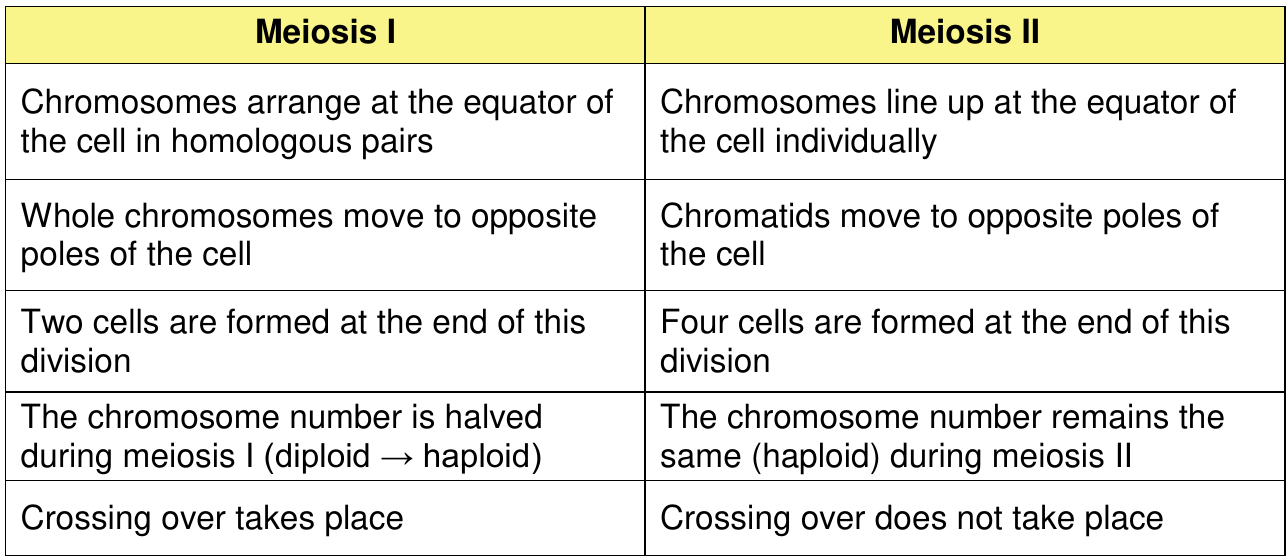
The outcome of each division varies considerably. Meiosis I produces two cells from one parent cell, while meiosis II takes those two cells and creates four final gametes. This is why we end up with four genetically unique sex cells from one original diploid cell.
Important
Critical Concept: Meiosis I is the reduction division where chromosome number drops from diploid (2n) to haploid (n). Meiosis II maintains the haploid number but separates sister chromatids to form individual chromosomes.
Perhaps most importantly, the chromosome number changes differently in each division. Meiosis I is where the actual reduction occurs - chromosome number drops from diploid to haploid. During meiosis II, the chromosome number stays constant at haploid levels, but the chromatids separate to form individual chromosomes.
Crossing over, which creates genetic diversity, only happens during meiosis I. This process doesn't occur in meiosis II, making the second division more similar to mitosis in terms of genetic recombination.
Major differences between mitosis and meiosis
These two types of cell division serve completely different biological functions and occur in different parts of organisms.
Where and why they occur
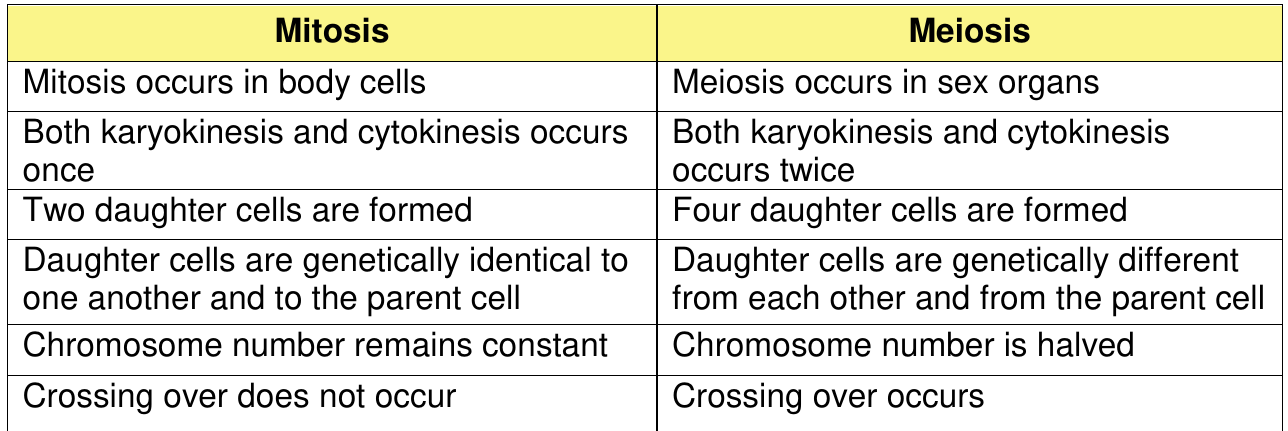
Mitosis takes place in body cells throughout your lifetime, helping with growth, repair, and maintenance of tissues. Think about when you cut your finger - mitosis helps replace the damaged skin cells. Meiosis, however, only occurs in specialised reproductive organs like testes and ovaries, producing gametes for sexual reproduction.
Example
Real-life Example: Cell Division in Action
When you scrape your knee, thousands of skin cells are damaged or destroyed. Your body immediately begins using mitosis to replace these cells with identical copies, ensuring proper healing and tissue repair.
Meanwhile, in reproductive organs, meiosis is creating genetically diverse gametes (sperm or egg cells) that will combine during fertilisation to produce genetically unique offspring.
Number of divisions and resulting cells
One of the most obvious differences is that mitosis involves just one round of division, creating two identical daughter cells. Meiosis requires two consecutive divisions (meiosis I and II), ultimately producing four genetically different gametes from one parent cell.
Genetic outcomes
The genetic consequences of these processes are dramatically different. Mitosis produces daughter cells that are genetically identical to each other and to the parent cell - they're essentially clones. This makes sense for body cell replacement. Meiosis, conversely, creates four genetically unique cells, each carrying different combinations of genetic material from both parents.
Chromosome number changes
Mitosis maintains the same chromosome number throughout the process - if you start with a diploid cell, you end with diploid cells. Meiosis reduces the chromosome number by half, changing diploid cells into haploid gametes. This reduction is essential for maintaining constant chromosome numbers across generations during sexual reproduction.
Note
If meiosis didn't reduce chromosome number, offspring would have double the chromosomes of their parents with each generation. The reduction from diploid to haploid ensures that when gametes fuse during fertilisation, the diploid number is restored.
Crossing over and genetic recombination
Crossing over only occurs during meiosis, specifically in prophase I. This process involves homologous chromosomes exchanging genetic material, creating new combinations of genes. Mitosis doesn't include crossing over, ensuring that body cells remain genetically consistent.
Visual comparison of the processes
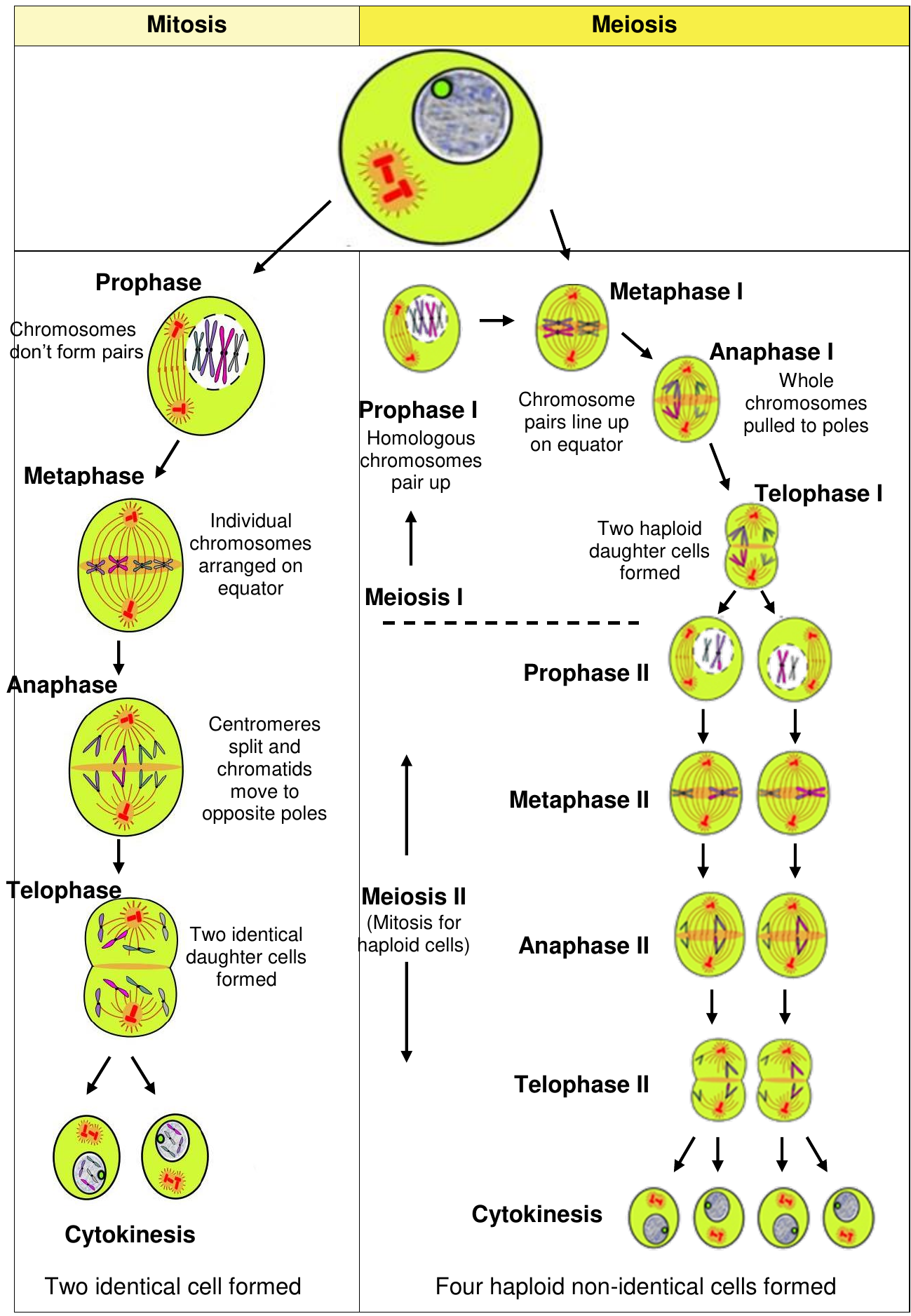
The phases of mitosis and meiosis share some similarities but have crucial differences in their execution and outcomes.
Note
Diagram Analysis: The diagram clearly shows that mitosis follows a straightforward path through prophase, metaphase, anaphase, telophase, and cytokinesis, resulting in two identical cells. Meiosis takes a longer route with two complete sets of divisions, ultimately creating four genetically diverse haploid cells.
Notice how meiosis I includes the pairing of homologous chromosomes during prophase I - this doesn't happen in mitosis. The independent assortment during metaphase I also creates different chromosome combinations in the resulting cells.
Independent assortment in meiosis
One of meiosis's most important features is independent assortment, which contributes significantly to genetic diversity.
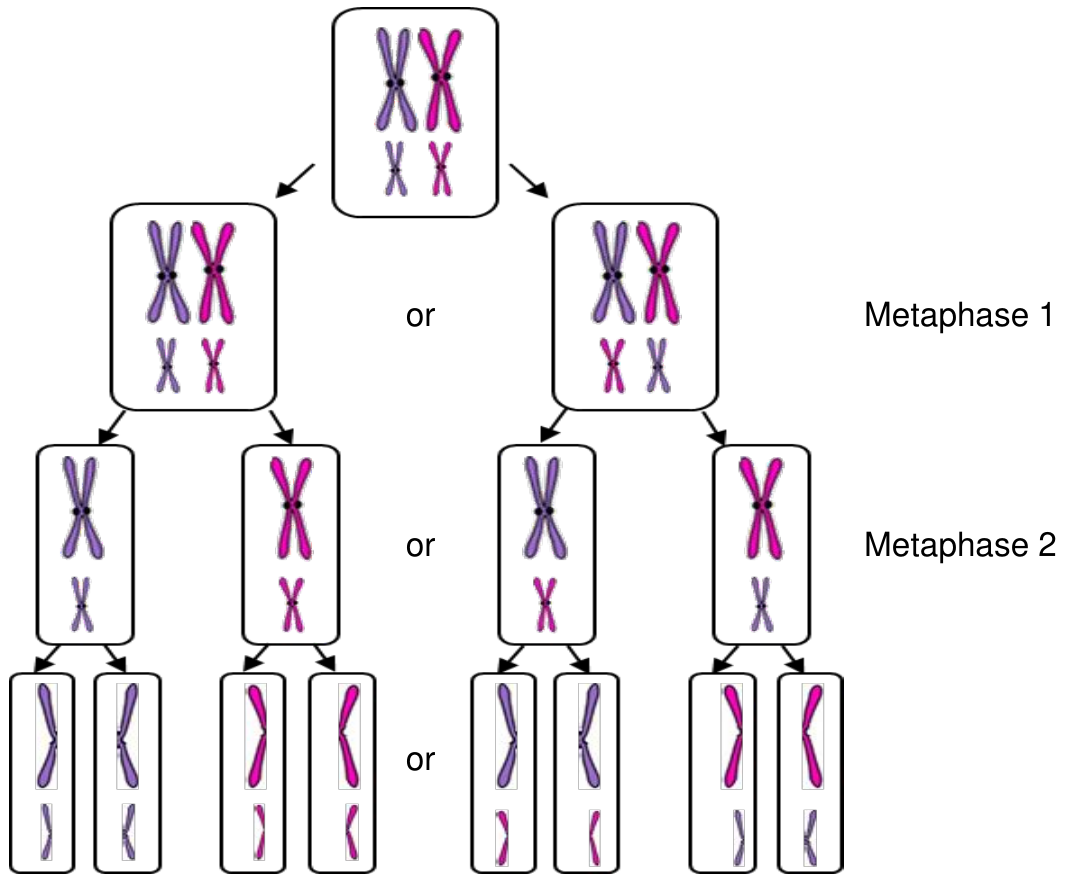
This diagram illustrates how chromosomes can arrange themselves randomly during metaphase I. The maternal and paternal chromosomes can line up in different combinations, leading to various possible arrangements in the final gametes. This random distribution means that each gamete receives a unique combination of maternal and paternal chromosomes, contributing to genetic variation in offspring.
Important
Key Point: The "or" labels in the diagram show the different possibilities - chromosomes don't follow a set pattern but arrange themselves randomly. This randomness, combined with crossing over, ensures that no two gametes (except in the case of identical twins) are genetically identical.
The number of possible combinations from independent assortment can be calculated using the formula , where n is the number of chromosome pairs. For humans with 23 chromosome pairs, this means possible combinations from independent assortment alone!
Common exam focus areas
When studying these concepts for your NSC exams, pay particular attention to these key areas:
Summary
Key Exam Focus Areas:
- Location differences: Body cells vs reproductive organs
- Purpose differences: Growth/repair vs gamete production
- Genetic outcomes: Identical vs genetically diverse cells
- Chromosome number changes: Constant vs reduction by half
- Number of divisions: One vs two
- Crossing over: Absent in mitosis, present in meiosis I only
Important
Exam Tip: Examiners often ask you to compare specific aspects of these processes, so make sure you can clearly explain both the similarities and differences. Practice drawing comparison tables and diagrams to reinforce your understanding.
Remember!
Summary
Essential Points to Remember:
-
Mitosis produces two genetically identical diploid cells for growth and repair, while meiosis creates four genetically different haploid gametes for reproduction
-
Meiosis involves two divisions (I and II) with different characteristics, while mitosis has only one division
-
Crossing over and independent assortment in meiosis create genetic diversity, but these processes don't occur in mitosis
-
Chromosome number is maintained in mitosis but reduced by half in meiosis (diploid → haploid)
-
Meiosis I is the reduction division where chromosome number decreases, while meiosis II resembles mitosis but works on haploid cells