Abnormal Meiosis (Chromosome Mutation) (Grade 12 NSC Matric Life Sciences): Revision Notes
📚Revision Notes
Abnormal Meiosis (Chromosome Mutation)
What is abnormal meiosis?
During the normal process of meiosis, chromosomes are supposed to separate in a very precise and organised way. However, sometimes mistakes occur during this crucial process, leading to what we call abnormal meiosis or chromosome mutations. These errors can have serious consequences for the organisms that result from the affected gametes.
Note
The most common type of error that occurs during meiosis is called non-disjunction. This happens when chromosomes fail to separate properly during cell division. Instead of moving to opposite poles of the cell as they should, some chromosomes may stick together or move to the same side of the cell.
Types of non-disjunction
Non-disjunction can occur at two different stages of meiosis, and understanding the difference is essential for your exams.
Non-disjunction in Anaphase I
During Anaphase I of meiosis, homologous chromosome pairs are supposed to separate and move to opposite poles of the cell. When non-disjunction occurs at this stage, the homologous chromosomes fail to separate properly. This means that both chromosomes from a homologous pair end up in the same daughter cell, while the other daughter cell receives neither chromosome from that pair.
Non-disjunction in Anaphase II
In Anaphase II, sister chromatids are supposed to separate and move to opposite poles. When non-disjunction occurs here, the sister chromatids fail to separate. This results in one daughter cell receiving both sister chromatids, while the other receives none.
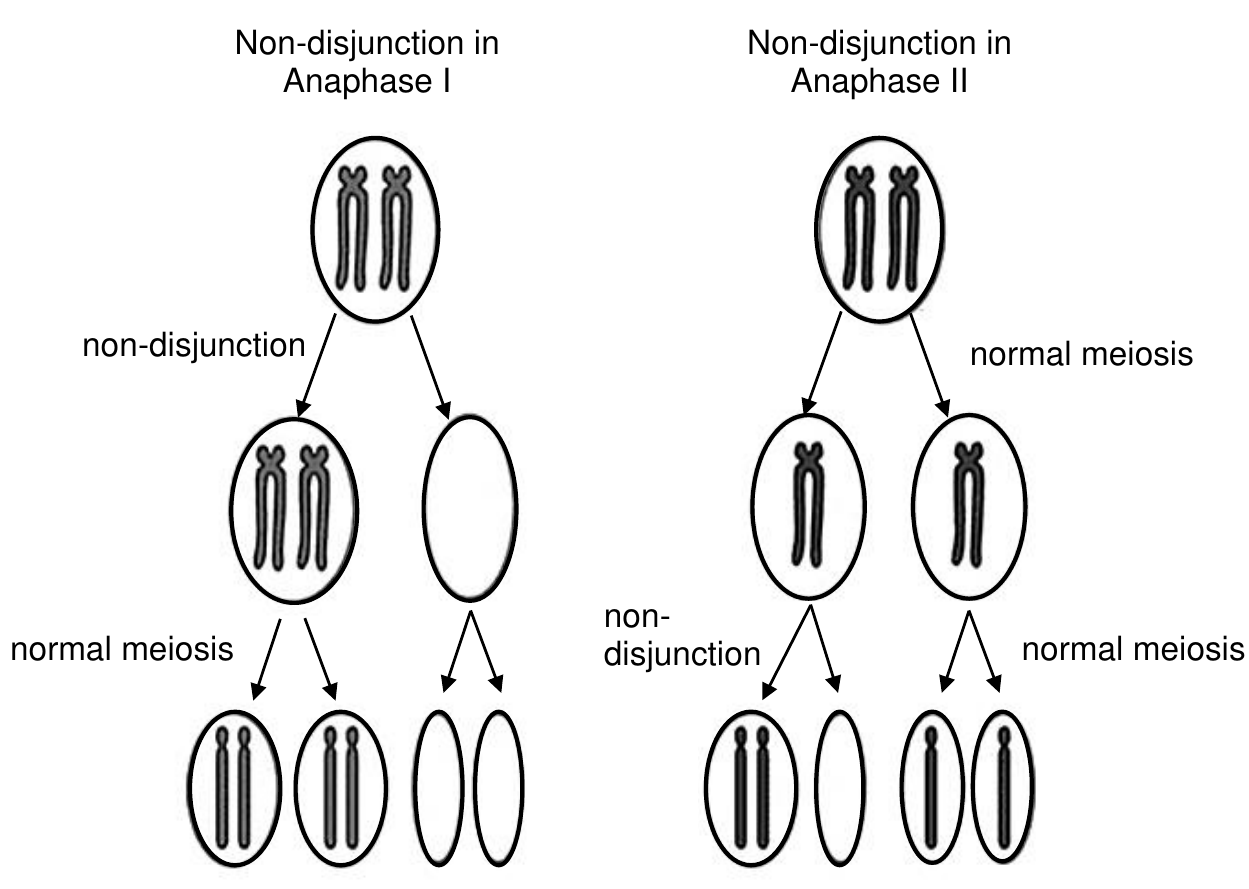
The diagram above clearly shows the difference between these two types of non-disjunction and their outcomes on gamete formation.
Consequences of non-disjunction
Note
When non-disjunction occurs, it leads to the formation of abnormal gametes. These gametes will have either:
- Extra chromosomes (more than the normal 23 in humans)
- Missing chromosomes (fewer than the normal 23 in humans)
Down Syndrome: A real example
One of the most well-known examples of non-disjunction involves chromosome 21 in humans. When non-disjunction of chromosome pair 21 occurs, it can lead to the formation of abnormal gametes.
Example
Worked Example: How Non-disjunction Leads to Down Syndrome
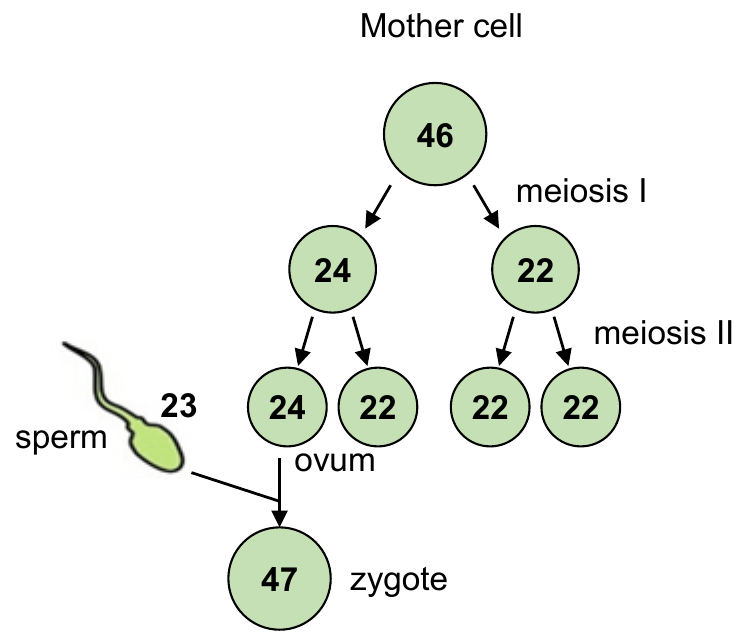
Step 1: Mother cell starts with 46 chromosomes (normal diploid number)
Step 2: Meiosis I with non-disjunction occurs - Instead of producing two cells with 23 chromosomes each, one cell gets 24 chromosomes and the other gets 22 chromosomes
Step 3: Meiosis II continues - This produces gametes with either 24 or 22 chromosomes instead of the normal 23
Step 4: Fertilisation occurs - When a normal sperm (23 chromosomes) fertilises an abnormal ovum (24 chromosomes), the resulting zygote has 47 chromosomes
This condition is called trisomy 21 because there are three copies of chromosome 21 instead of the normal two copies.
This leads to Down Syndrome.
Characteristics of Down Syndrome
Note
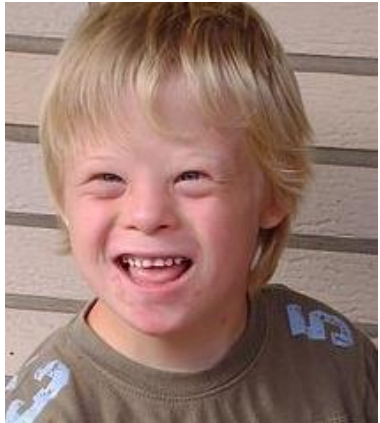
People with Down Syndrome typically show several characteristic features:
- Upwardly slanted eyes
- Small nose with a flat bridge
- Distinctive mouth shape
- Various degrees of intellectual disability
- Decreased muscle tone
- Possible hearing loss
- Heart defects in some cases
Detection and prevention
Amniocentesis is a medical procedure that can detect chromosomal abnormalities like Down Syndrome during pregnancy. During this process, amniotic fluid is removed from around the developing foetus, and the karyotype (chromosome pattern) of foetal cells in this fluid can be analysed. Parents can then make informed decisions about the pregnancy.
It's important to note that the chance of non-disjunction increases with parental age, especially maternal age. This is why older parents are often advised to undergo genetic testing.
Common misconceptions and exam tips
Important
Common misconception: Students often confuse the types of non-disjunction. Remember:
- Anaphase I: Homologous chromosomes fail to separate
- Anaphase II: Sister chromatids fail to separate
Exam tip: When drawing or explaining non-disjunction, always be clear about which phase you're describing and what structures are failing to separate.
Exam tip: Remember that trisomy means "three copies" - so trisomy 21 means three copies of chromosome 21, giving a total of 47 chromosomes instead of 46.
Summary
Key Points to Remember:
-
Non-disjunction occurs when chromosomes fail to separate properly during meiosis, leading to abnormal gametes with extra or missing chromosomes
-
Two types exist: non-disjunction in Anaphase I (homologous chromosomes don't separate) and Anaphase II (sister chromatids don't separate)
-
Down Syndrome is caused by trisomy 21, resulting from non-disjunction of chromosome 21, giving individuals 47 chromosomes instead of 46
-
Risk increases with age, particularly maternal age, making genetic testing important for older parents
-
Amniocentesis can detect chromosomal abnormalities during pregnancy by analysing foetal cells in amniotic fluid