Meiosis – The Process (Grade 12 NSC Matric Life Sciences): Revision Notes
📚Revision Notes
Meiosis - The Process
Introduction to meiosis
Meiosis is a specialised type of cell division that is essential for sexual reproduction. Without meiosis, organisms would not be able to produce gametes (sex cells), and sexual reproduction could not occur.
The primary purpose of meiosis is to create haploid gametes that contain half the number of chromosomes compared to the parent cell. This reduction in chromosome number is crucial because when two gametes fuse during fertilisation, the diploid number is restored. This process ensures that the chromosome number remains constant from generation to generation within a species.

In animals, meiosis occurs in the reproductive organs - specifically in the ovaries and testes - to produce gametes through a process called gametogenesis. Plants also undergo meiosis, producing spores in mosses and ferns, while in flowering plants (angiosperms), meiosis takes place in the anthers and ovules.
Note
Did you know? The word "meiosis" comes from the Greek word meaning "to diminish" or "to make smaller," which perfectly describes how this process reduces the chromosome number from diploid to haploid.
Overview of the meiosis process
To understand meiosis better, it's helpful to use a simplified example. While human cells contain 46 chromosomes arranged in 23 pairs of homologous chromosomes, we'll explain the process using a cell with only 4 chromosomes to make the concept clearer.
Meiosis consists of two consecutive divisions called Meiosis I and Meiosis II. The first division is known as a reduction division because it reduces the diploid number of chromosomes to haploid. The second division resembles mitosis but occurs in cells that are already haploid.
First meiotic division (Meiosis I)
Although meiosis is a continuous process, scientists divide it into distinct phases for easier study and understanding.
Prophase I
During Prophase I, several important events occur that set the stage for genetic variation:
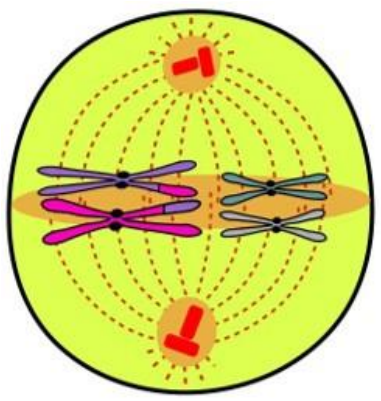
The nuclear membrane and nucleolus begin to disappear, and the centrosome splits, causing two centrioles to move apart and form spindle fibres. The chromatin network condenses into individual chromosomes, and pairs of homologous chromosomes position themselves next to each other, forming structures called bivalents.
Important
Crossing Over - The Key to Genetic Diversity
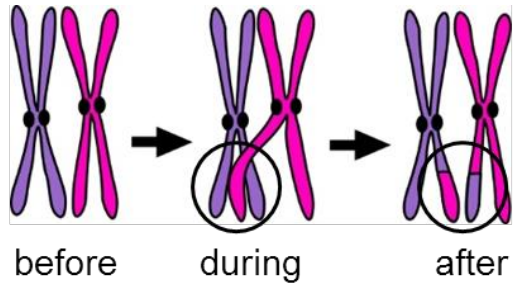
A crucial process called crossing over occurs during this phase. The inner chromatids from each homologous chromosome overlap and touch each other at points called chiasmata (singular: chiasma). During crossing over, chromatid segments break off and exchange genetic material between the homologous chromosomes.
This process is vital because it creates genetic variation by producing new combinations of genetic material. The exchange results in chromosomes that contain a mixture of maternal and paternal genetic information.
Metaphase I
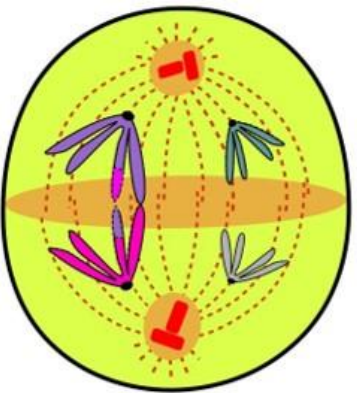
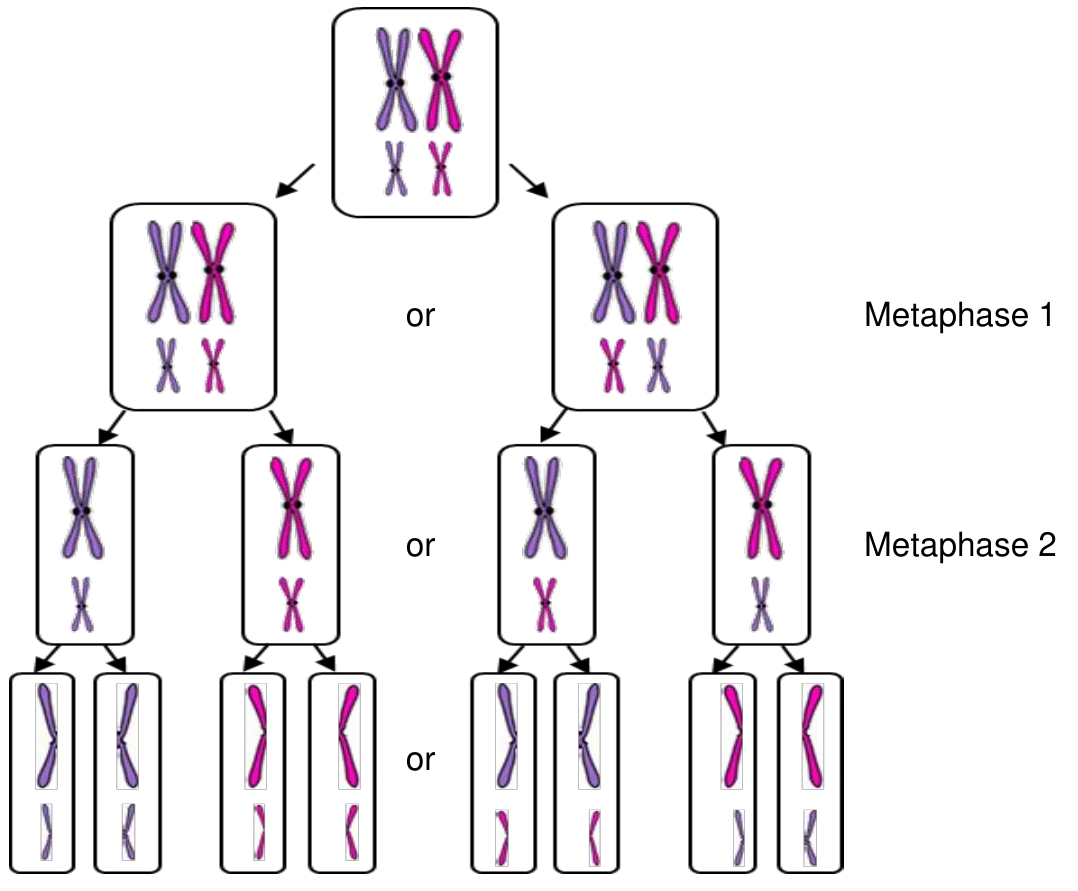
During Metaphase I, homologous chromosomes move to the centre of the cell, known as the equator. The two homologous chromosomes in each pair position themselves on opposite sides of the equator, lying parallel to each other.
An important phenomenon occurs during this phase called random arrangement. Which chromosome from each homologous pair ends up on which side of the equator is completely by chance. This random positioning creates further genetic variation because it determines which chromosomes will end up in each daughter cell.
Each chromosome in the pair becomes attached to a spindle thread that extends from the centromere to one of the cell poles.
Anaphase I
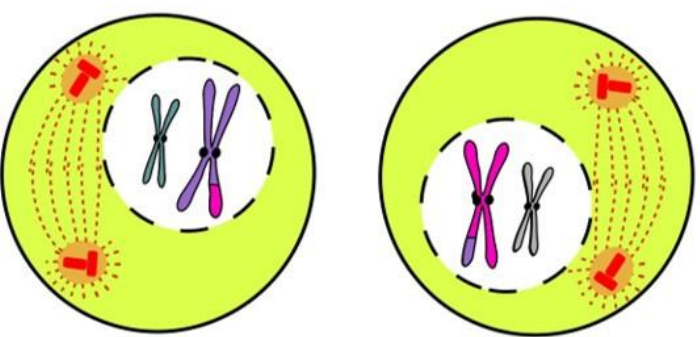
The defining characteristic of Anaphase I is that one whole chromosome from each homologous pair moves to opposite poles of the cell. This movement is caused by the contraction of spindle fibres, which pull the chromosomes apart.
This separation process divides the homologous chromosomes, sending one complete chromosome to each pole. It's important to note that at this stage, each chromosome still consists of two chromatids joined at the centromere.
Telophase I
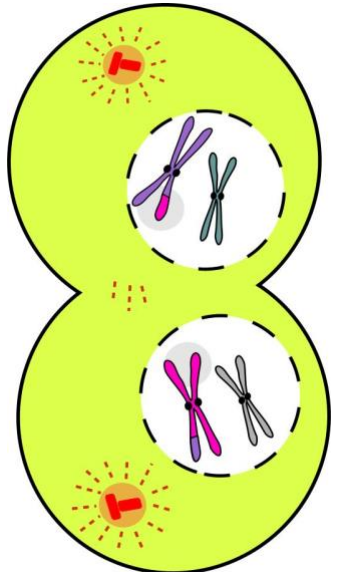
During Telophase I, new nuclear membranes form around the group of chromosomes that have gathered at each pole of the cell. The nucleolus reappears within each new nucleus.
The process of cytokinesis then occurs, which involves the division of the cytoplasm. This splits the original mother cell into two daughter cells.
Note
End of Meiosis I Results:
- Each daughter cell contains half the number of chromosomes compared to the original cell
- Due to crossing over during Prophase I, each daughter cell has a slightly different genetic makeup
Second meiotic division (Meiosis II)
The second meiotic division occurs in both daughter cells that were formed during Meiosis I. This division resembles mitosis but takes place in cells that are already haploid.
Prophase II
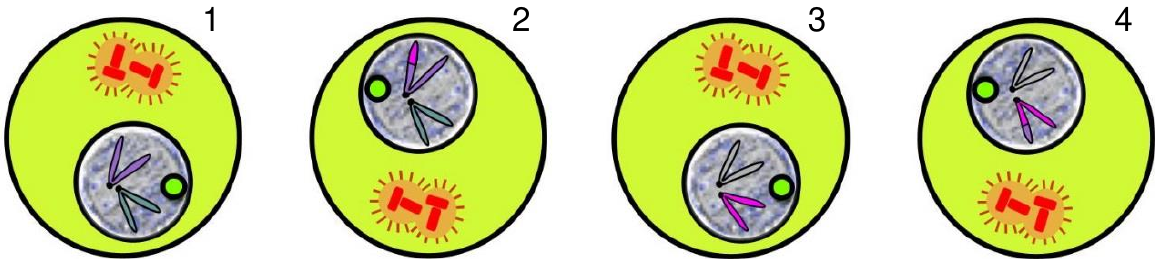
During Prophase II, the nuclear membrane and nucleolus disappear once again. The centrosome splits into two centrioles, and spindle fibres begin to form.
An important difference from Prophase I is that chromosomes are no longer arranged in homologous pairs. Instead, each cell contains individual chromosomes, though each chromosome still consists of two chromatids joined at the centromere.
Metaphase II
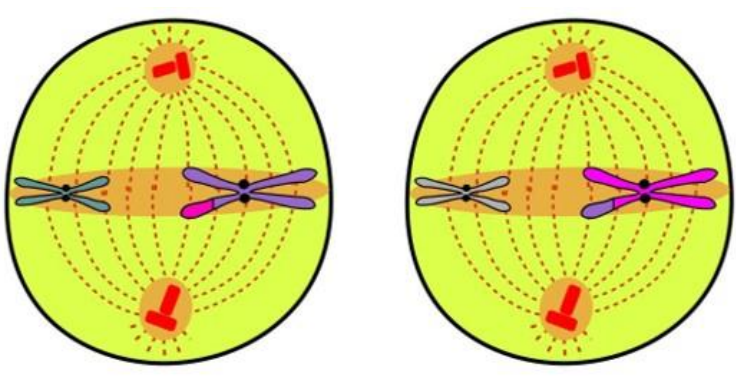
In Metaphase II, individual chromosomes arrange themselves randomly along the equatorial plane of the cell. The centromere of each chromosome aligns with the cell's equator.
Which chromatid faces which pole is entirely random, providing another opportunity for genetic variation. Each chromosome becomes attached to spindle fibres that extend from the centromeres to the poles.
Anaphase II
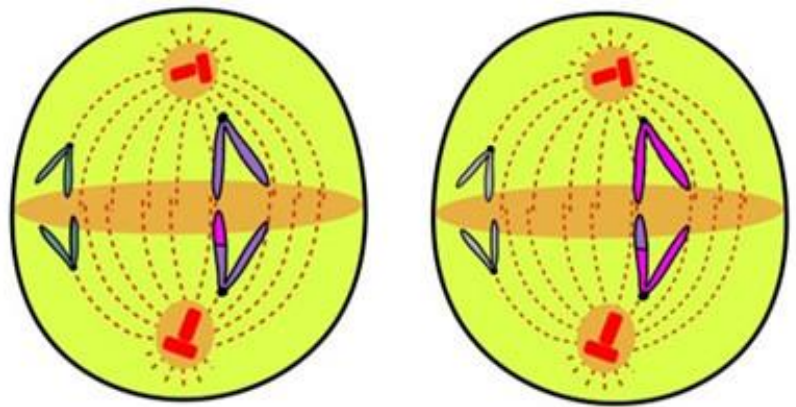
The key event in Anaphase II is the separation of chromatids. The centromere splits, and the two chromatids of each chromosome are pulled to opposite poles of the cell by the contracting spindle fibres.
Telophase II
During Telophase II, nuclear membranes form around the unreplicated chromosomes at each pole. Cytokinesis then divides each cell into two new cells.
Since Meiosis II occurred in both daughter cells from Meiosis I, the final result is four haploid daughter cells. These cells are genetically different from each other due to the processes of crossing over and random arrangement that occurred during the divisions.
Importance of crossing over
Important
Why Crossing Over Matters
Crossing over serves a crucial function in sexual reproduction by creating genetic diversity. During this process, genetic material is exchanged between homologous chromosomes during gamete formation, resulting in new genetic combinations.
This genetic recombination produces gametes that will give rise to individuals that are genetically different from their parents and siblings. Without crossing over, offspring would be much more similar to their parents, reducing the genetic variation that is essential for evolution and species survival.
Memory aid for meiotic phases
Note
PMAT Memory Aid
The four stages of meiosis can be remembered using the mnemonic PMAT:
- Prophase - chromosomes PAIR up (crossing over occurs)
- Metaphase - chromosomes move to the MIDDLE
- Anaphase - chromosomes move APART to the poles
- Telophase - TERMINAL phase where daughter cells are formed
Importance of meiosis
Meiosis serves several critical functions in living organisms:
Production of gametes: Meiosis produces four haploid daughter cells from one diploid parent cell, providing the sex cells necessary for sexual reproduction.
Maintenance of chromosome number: By reducing the chromosome number from diploid to haploid, meiosis ensures that when gametes fuse during fertilisation, the species' chromosome number remains constant across generations.
Introduction of genetic variation: Meiosis creates genetic diversity through two main mechanisms:
- Crossing over during Prophase I, where genetic material is exchanged between homologous chromosomes
- Random arrangement of chromosomes during Metaphase I and II, which determines which combinations of chromosomes end up in each gamete
Differences between meiosis I and meiosis II
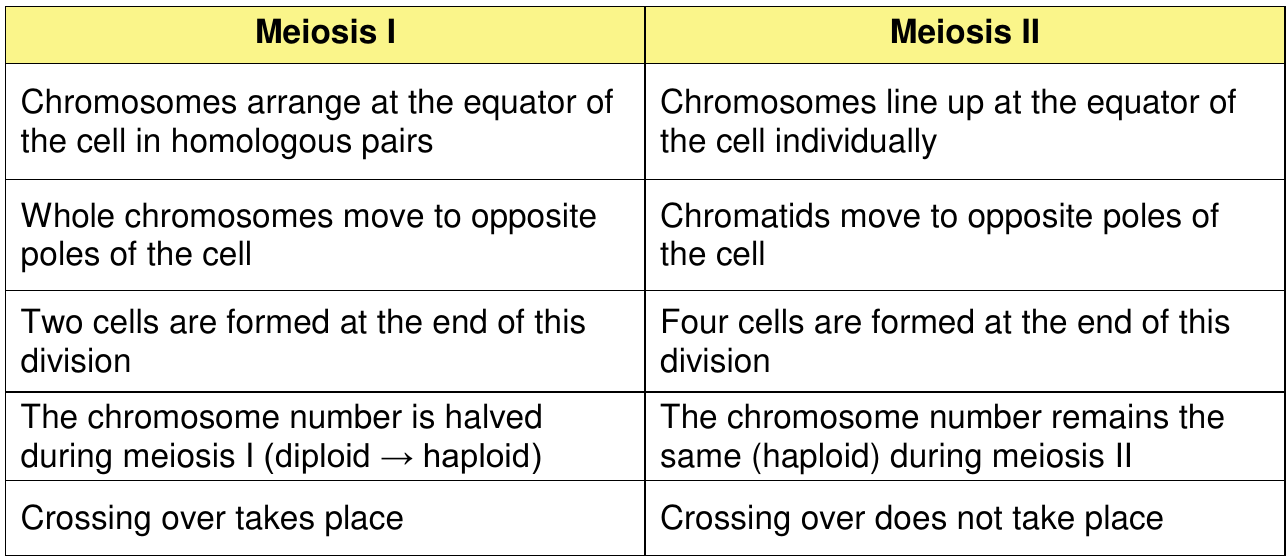
Understanding the key differences between the two meiotic divisions is essential:
Chromosome arrangement: In Meiosis I, chromosomes arrange at the equator in homologous pairs, while in Meiosis II, chromosomes line up individually at the equator.
What moves during anaphase: In Meiosis I, whole chromosomes move to opposite poles, whereas in Meiosis II, individual chromatids move to opposite poles.
Number of cells produced: Meiosis I produces two cells at the end of the division, while Meiosis II produces four cells total.
Chromosome number changes: Meiosis I halves the chromosome number (diploid to haploid), but the chromosome number remains the same during Meiosis II (haploid to haploid).
Crossing over: This genetic recombination process occurs during Meiosis I but does not take place during Meiosis II.
Summary
Key Points to Remember:
- Meiosis produces four genetically different haploid gametes from one diploid parent cell
- Crossing over during Prophase I creates genetic variation by exchanging genetic material between homologous chromosomes
- Random arrangement of chromosomes during metaphase provides additional genetic diversity
- Meiosis I is the reduction division (diploid → haploid), while Meiosis II resembles mitosis in haploid cells
- The PMAT mnemonic helps remember the four phases: Prophase, Metaphase, Anaphase, and Telophase