Applications of Acids and Bases (Grade 12 NSC Matric Physical Sciences): Revision Notes
📚Revision Notes
Applications of Acids and Bases
Industrial production of chlorine and sodium hydroxide
The chlorine-alkali industry represents one of the most important industrial applications of acids and bases in modern chemistry. This industry produces chlorine gas and sodium hydroxide through a process that demonstrates the practical significance of acid-base chemistry in manufacturing.
The electrolysis process
The most common industrial method involves the electrolysis of concentrated brine (sodium chloride solution). This electrochemical process separates the components of salt water using electrical energy to drive chemical reactions that would not occur naturally.
During electrolysis, the following chemical reactions occur at the electrodes:
At the anode (positive electrode):
At the cathode (negative electrode):
The sodium ions (Na⁺) remain in solution with the hydroxide ions (OH⁻), forming the overall reaction:
Note
This process simultaneously produces three valuable industrial chemicals: chlorine gas, hydrogen gas, and sodium hydroxide solution, making it highly economical for industrial production.
Temperature effects on chlorine reactions
When chlorine and hydroxide ions interact, the temperature significantly affects the products formed. Understanding these temperature-dependent reactions is crucial for industrial control.
At low temperatures (below 60°C):
This reaction produces sodium hypochlorite (NaClO), commonly found in household bleach.
At high temperatures (above 60°C):
This reaction produces sodium chlorate (NaClO₃), which has different industrial applications.
Industrial applications and uses
Uses of chlorine include:
- Water purification - chlorine kills harmful bacteria and viruses in drinking water
- Disinfectant - used in swimming pools and cleaning products
- Chemical production for manufacturing:
- Hypochlorous acid (kills bacteria in drinking water)
- Chloroform and carbon tetrachloride
- Paper and food processing chemicals
- Antiseptics, insecticides, and medicines
- Textiles and fabric treatments
- Paints, petroleum products, solvents, and plastics (like PVC)
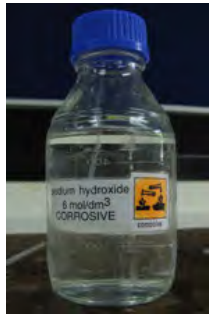
Uses of sodium hydroxide include:
- Soap and cleaning agent production - reacts with fats to make soap
- Aluminium purification - removes impurities from bauxite ore
- Paper manufacturing - breaks down wood fibres
- Rayon production - creates artificial silk fibres
The versatility of these products demonstrates how acid-base chemistry supports numerous industries and everyday applications.
Hair chemistry and structure
Hair provides an excellent example of how acid-base chemistry affects biological materials. Understanding hair chemistry helps explain how various hair treatments work and why pH control is essential in cosmetic applications.
Keratin protein structure
Hair consists primarily of a protein called keratin. This protein forms the structural foundation of hair and contains numerous amino acids linked together in long chains. The strength and flexibility of hair depend on the chemical bonds within and between these protein chains.
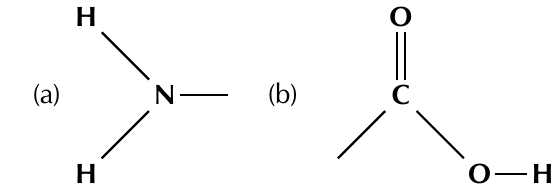
Amino acids are molecules that contain both an amino group (NH₂) - which acts as a base - and a carboxylic acid group (COOH) - which acts as an acid.
Note
This dual nature makes amino acids amphoteric substances, meaning they can act as either acids or bases depending on the chemical environment. This property is crucial for understanding how hair responds to different pH treatments.
Cysteine and disulfide bonds
The amino acid cysteine plays a particularly important role in hair structure. Cysteine contains a sulfur-containing side chain with a thiol group (-SH). When two cysteine molecules come close together, they can form a covalent bond called a disulfide bond (S-S linkage).
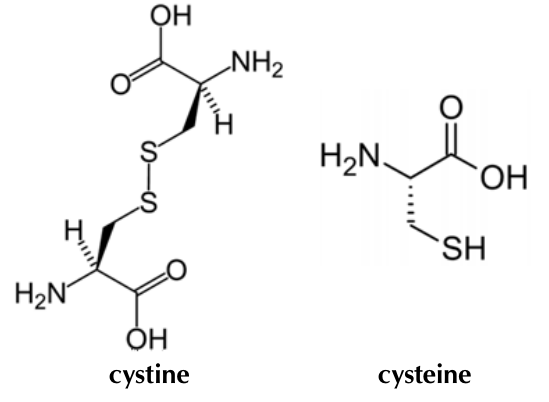
The formation of cystine (two cysteine residues connected by a disulfide bond) creates cross-links between protein chains. These cross-links give hair its natural strength, elasticity, and shape. The more disulfide bonds present, the curlier and stronger the hair appears.
Natural pH of hair
Proteins naturally give hair a slightly acidic pH between 4 and 5. This acidic environment helps maintain the hair's structure and protects it from damage. When hair treatments alter this pH, they can break existing chemical bonds and allow new ones to form, changing the hair's properties.
Hair treatment applications
Hair treatments demonstrate practical applications of acid-base chemistry in everyday life. These treatments manipulate the pH of hair to break and reform chemical bonds, achieving desired cosmetic effects.
Permanent waving (perms)
Permanent waving or perming changes straight hair into curly hair through controlled chemical reactions. The process involves breaking disulfide bonds in the hair and reforming them in new positions.
The chemical used in perms is ammonium thioglycolate, which acts as a reducing agent. The equilibrium reaction that occurs is:
Example
Worked Example: The Perming Process
The perming process follows four main steps:
- Alkaline swelling - ammonia makes hair alkaline and causes it to swell, making it more permeable to chemicals
- Bond breaking - thioglycolate acid reduces disulfide bonds between cysteine molecules, converting cystine back to cysteine
- Neutralisation - the thioglycolate solution is washed out after bonds have been broken
- Oxidation - hydrogen peroxide (H₂O₂) acts as a neutraliser and oxidising agent, reforming disulfide bonds in new positions
This process occurs faster at higher temperatures, which is why heated curling irons are often used during perming treatments.
Hair relaxers
Hair relaxers work by doing controlled damage to hair structure, similar to perms but with the goal of straightening rather than curling hair. There are two main types of hair relaxers with different pH levels and safety profiles.
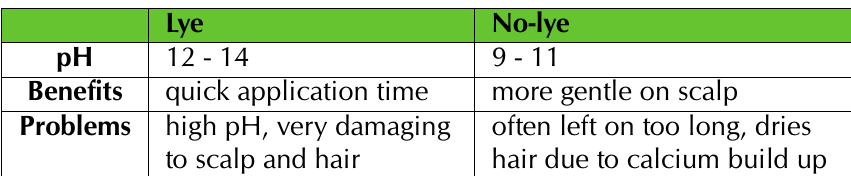
Lye hair relaxers:
- Contain sodium hydroxide (NaOH)
- Have very high pH (12-14) making them strongly alkaline
- Provide quick application time
- Cause significant damage to scalp and hair due to extreme alkalinity
- Often require additional heating, which increases damage risk
No-lye hair relaxers:
- Have lower pH (9-11) making them less alkaline
- Are gentler on the scalp
- Take longer to work but cause less immediate damage
- Can be left on too long, leading to hair dryness
- May cause calcium buildup over time
Note
Some no-lye relaxers use alternative bases such as:
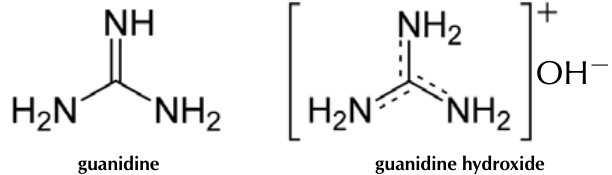
- Calcium hydroxide with guanidine carbonate (forming guanidine hydroxide)
- Lithium hydroxide
- Ammonium thioglycolate (similar to perm solutions)
Hair colouring chemistry
Hair colouring involves different chemical processes depending on the desired permanence and colour change. The chemistry varies significantly between different types of hair dyes.
Permanent hair dyes:
- Contain a diamino compound (molecule with two amino groups)
- Include a coupling agent and an oxidising agent
- Use hydrogen peroxide (H₂O₂) to oxidise the diamino compound, enabling it to bond with the coupling agent
- Have basic pH (9-11, usually from ammonia NH₃) to open hair cuticles and allow dye penetration
- Create larger, more complex molecules that cannot be easily washed out
Demi-permanent hair dyes:
- Use ethanolamine or sodium carbonate as gentler bases (pH 8-9)
- Contain hydrogen peroxide but in lower concentrations
- Cannot lighten dark hair to lighter colours
- Last approximately 12 washes but gradually fade
- Cause less hair damage than permanent dyes
Semi-permanent hair dyes:
- Contain small dye molecules that partially penetrate hair without requiring strong bases
- Use minimal hydrogen peroxide or ammonia
- Last about 4-5 washes
- Depend heavily on original hair colour and porosity
- Do not lighten hair
Temporary hair dyes:
- Use large dye molecules that cannot penetrate hair structure
- Stick to the hair surface only
- Can usually be removed with single washing
- Work better on damaged hair where cuticles are more open
Safety considerations and health effects
Understanding the pH levels and chemical nature of hair treatments helps explain their potential health effects and the importance of proper safety precautions.
pH-related damage
Different pH levels cause different types of damage to hair and scalp:
Important
Critical pH Effects:
- Very high pH (12-14): Causes severe chemical burns, permanent scarring, hair breakage
- High pH (9-11): Can cause scalp irritation, skin drying, and hair weakening
- Natural pH (4-5): Maintains hair health and structural integrity
Potential health risks
Important
Common side effects from improper use of hair treatments include:
- Scalp irritation and chemical burns
- Skin burns and permanent scarring
- Deep ulcerations and dermatitis
- Skin drying and cracking
- Irreversible baldness and eye damage
- Hair breakage and permanent damage
Safety precautions
Professional hair treatments require careful handling of chemicals:
- Use protective equipment (gloves, safety glasses)
- Handle all chemicals with care
- Follow timing instructions precisely
- Perform patch tests before full application
- Ensure proper ventilation
- Have neutralising agents available
The chemistry of hair treatments demonstrates how understanding acid-base principles enables both beneficial cosmetic effects and helps prevent serious chemical injuries.
Summary
Key Points to Remember:
-
Industrial electrolysis of brine produces chlorine, hydrogen, and sodium hydroxide simultaneously through controlled chemical reactions
-
Hair structure depends on disulfide bonds between cysteine amino acids - breaking and reforming these bonds enables permanent hair treatments
-
pH control is critical in hair chemistry - very high pH (12-14) in lye relaxers causes damage, while lower pH treatments (9-11) are gentler but still effective
-
Chemical hair treatments use reducing agents (like thioglycolate) to break bonds and oxidising agents (like hydrogen peroxide) to reform them in new positions
-
Safety considerations are essential because hair treatments involve strong acids and bases that can cause permanent damage to hair and skin if used incorrectly